
Pruning
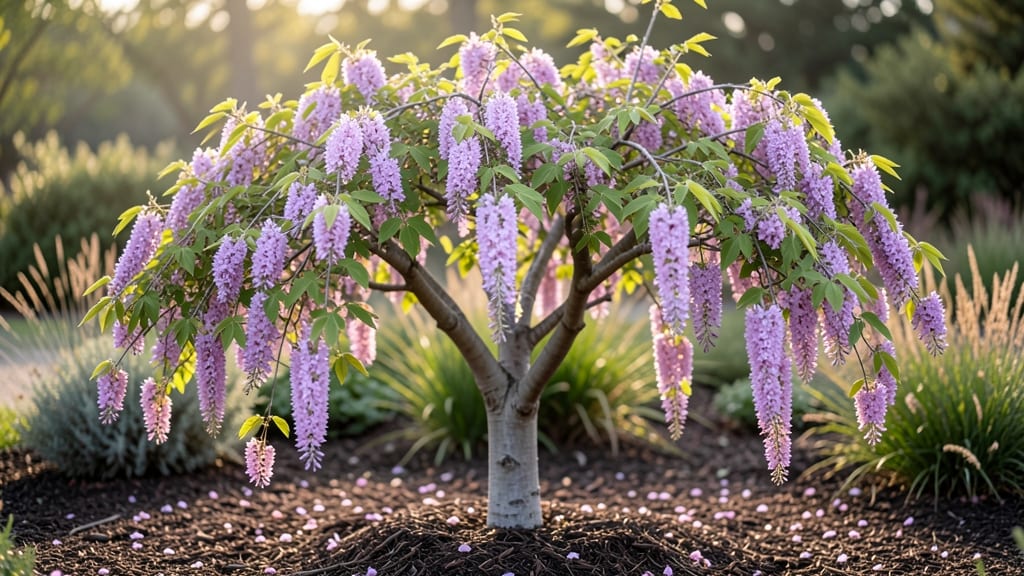
Transform your landscape with a weeping eastern redbud tree—its cascading branches create a living waterfall of lavender-pink blooms that arrive before leaves even unfurl. I planted mine in a sunlit corner last spring, and now it’s the centerpiece of my garden, drawing hummingbirds by early April.
The secret to keeping those graceful branches flowing isn’t complicated, but timing matters: prune after flowering to avoid cutting off next year’s blossoms.
This tree thrives in partial sun to full sun, tolerating everything from rocky soil to clay as long as it drains well. Water deeply once a week during its first year, then let nature take over—drought-tolerant once established.
The weeping habit means it fits perfectly in small spaces, spilling over patios or framing entryways. Just avoid heavy pruning in summer, or you’ll stunt those delicate new shoots.
What you’ll love most is how it rewards patience: spring blooms, summer shade, and fiery orange fall foliage all in one package. The branches stay lush and weeping with minimal effort—just a light trim to shape and remove dead wood.
Even in winter, the silhouette adds structure to the garden. For best results, pair it with hostas or ferns to highlight its cascading form.
Common challenges like powdery mildew or aphids are easy to manage with a simple spray of neem oil. The real magic happens when you let it grow naturally—those graceful arcs form on their own, needing only occasional guidance.
Ready to add a touch of elegance that blooms early and lasts all season? Let’s get your redbud thriving.
📚 In This Guide
- What you need
- Instructions
- Tips and common mistakes
- Wrapping up and next steps
What you need
- ● Pruning shears: Sharp, bypass-style shears (for cuts up to ½ inch thick). Pro tip: 💡 Clean blades with rubbing alcohol before and after use to prevent disease spread!
- ● Loppers: 1 pair (for thicker branches, ¾–1½ inches in diameter). Look for ratcheting or bypass-style for precision.
- ○ Hand pruners: 1 pair (for small twigs and fine-tuning). Optional: Anvil-style for stubborn cuts (but bypass is gentler on branches).
- ● Gloves: Heavy-duty, cut-resistant gloves (to protect from thorns and rough bark).
- ● Pruning saw: 1 curved-tooth saw (for branches thicker than 2 inches). ✨ Tip: A folding pruning saw saves space if you’re tight on storage!
- ● Disinfectant: 70% isopropyl alcohol or a pruning sealant (like Tanglefoot Tree Wound Pruning Seal).
- ● Ladder or step stool: Sturdy and tall enough to reach the highest branches safely. ⚠️ Safety first: Always use a stable ladder with non-slip feet!
- ○ Buckets or bags: 2–3 (for collecting debris and storing cuttings). Optional: A compost bin if you plan to reuse organic material.
- ● Twine or zip ties: For temporarily securing branches during shaping (if needed).
- ● Best time to prune: Late winter to early spring (just before buds swell) or immediately after flowering (to avoid cutting off next year’s blooms).
- ● Weather: Choose a dry, overcast day (humidity can stress fresh cuts). Avoid pruning if rain is forecasted within 24 hours.
- ● Tree health: Inspect the tree for signs of disease (e.g., cankers, oozing sap, or fungal growth). Skip pruning if the tree is already stressed.
- ○ Safety gear: Optional but recommended: Safety glasses (to shield from flying debris) and long sleeves/pants (for protection).
Step-by-Step pruning guide for a weeping eastern redbud tree
This elegant tree thrives with the right pruning approach—here’s how to shape it beautifully while keeping those stunning blooms coming.
Understand the Best Time to Prune
Prune your weeping eastern redbud tree right after flowering—typically in late spring or early summer. This timing ensures you don’t cut off next year’s blooms, which form on old wood. The tree’s delicate branches are also less stressed after flowering, making it easier to shape without shock.
If you notice dead or diseased branches at other times, remove them immediately to protect the tree’s health. But for structural pruning, wait until after the spring bloom showers you with those iconic pink blossoms.
Remove Dead, Diseased, or Crossing Branches
Start by inspecting the tree for dead, broken, or diseased branches—these should be your first priority. Use clean, sharp pruning shears to make 45-degree cuts just outside the branch collar (the swollen area where the branch meets the trunk). This promotes faster healing and prevents disease from entering the tree.
Next, look for branches that cross or rub against each other. These create weak points where bark can tear, inviting pests and disease. Remove the smaller or weaker of the two branches to maintain the tree’s natural shape while reducing stress.
Thin Out Overcrowded Branches for Airflow
Weeping redbuds naturally grow with a cascading habit, but over time, branches can become too dense. To improve airflow and sunlight penetration, selectively thin out branches that are growing too close together. Aim to remove about 20-25% of the foliage in one session to avoid over-stressing the tree.
Focus on branches that are growing inward or downward, as these can block light and air from reaching the center. Cut back to a healthy outward-facing branch or bud, making sure your cuts are clean and precise. This step keeps the tree’s graceful form while encouraging stronger growth.
Shape the Tree for a Graceful Weeping Form
To enhance the tree’s natural weeping shape, prune the outer branches slightly to encourage a more uniform cascade. Avoid cutting back too aggressively—this tree grows best when you guide rather than force its structure. Instead, make small adjustments to redirect growth where needed.
If any branches are growing too upright or stiff, you can lightly trim the tips to encourage a softer, more flowing habit. The goal is to maintain the tree’s elegant silhouette while keeping it balanced. Step back occasionally to check your progress—this helps you see the tree as a whole rather than just focusing on individual branches.
Clean Up and Monitor for New Growth
After pruning, sterilize your tools with rubbing alcohol or a bleach solution to prevent the spread of disease. Collect and dispose of any fallen branches or debris to keep the area clean. This reduces the risk of pests or pathogens taking hold in the pruned areas.
Over the next few weeks, watch for new growth at the tips of the branches. Healthy redbuds should respond with fresh, vibrant foliage. If you notice any signs of stress—like wilting leaves or slow regrowth—reduce watering slightly and avoid pruning for at least a month to let the tree recover.
Tips & tricks for pruning a weeping eastern redbud tree
Here's what nobody tells you about keeping your weeping redbud looking its absolute best—these little details make all the difference.
Timing is Everything: That late spring/early summer window for pruning is non-negotiable if you want next year's blooms. I learned this the hard way after accidentally pruning too early and nearly losing my tree's spring display. Watch for those iconic pink blossoms to fade completely before you start—this ensures you're not cutting off next year's flower buds that form on old wood.
Cut Technique Matters: When making those 45-degree cuts in Step 2, don't just hack away! Aim just outside the branch collar where the branch meets the trunk. This small detail prevents unsightly stubs and helps the wound heal faster. I always test my pruners first on a small branch to make sure they're sharp enough for clean cuts—dull blades tear rather than cut cleanly.
Visual Cues for Pruning: For Step 3's 20-25% thinning guideline, think of it this way: you want to be able to see light through the center of the tree when you stand underneath. If you can't see sunlight filtering through, you're probably still too dense. I often use a flashlight during late afternoon to check for shadowy areas that need more light penetration.
Recovery Watch: After pruning, monitor for new growth at branch tips—this is your tree's way of telling you it's happy. If you see slow regrowth or wilting leaves, that's your cue to back off. I've found that redbuds respond best when you prune in smaller sessions rather than one big cut. For mature trees, I might spread the pruning over two years to minimize stress.
Pro Tips for Weeping Eastern Redbud Tree
- Here's what nobody tells you about keeping your weeping redbud looking its absolute best—these little details make all the difference.
- Timing is Everything: That late spring/early summer window for pruning is non-negotiable if you want next year's blooms.
- Cut Technique Matters: When making those 45-degree cuts in Step 2, don't just hack away!
Frequently asked questions
When is the best time to prune a weeping eastern redbud tree?
The ideal time to prune is late winter or early spring, just before new growth begins (around February–March in most regions). This timing ensures you don’t remove next year’s blooms and promotes healthy regrowth. Avoid pruning in fall, as it can stimulate tender new growth that may not survive winter.
How much can I trim back a weeping eastern redbud?
You can safely remove up to one-third of the tree’s branches in a single pruning session. Focus on thinning out crowded or crossing branches first, then shape the tree to maintain its graceful weeping form. Avoid heavy pruning in one go—space it out over 2–3 years if needed to reduce stress.
Why isn’t my weeping eastern redbud blooming?
Lack of blooms often stems from over-pruning (cutting back too late in the season) or poor sunlight. Ensure your tree gets full sun to partial shade (6+ hours of light daily) and prune only in late winter. If blooms are sparse, fertilize lightly in early spring with a balanced, slow-release fertilizer.
Can I prune a weeping eastern redbud in summer?
Summer pruning is possible, but it’s not ideal. If you must prune, do so early summer (June) to avoid stressing the tree before winter. Focus on removing dead or diseased branches only—avoid heavy shaping. Late-summer pruning can stimulate weak growth that may not harden off before cold weather.
What are some alternatives if my weeping eastern redbud isn’t thriving?
If your tree struggles with disease, pests, or poor growth, consider these low-maintenance alternatives with similar beauty:
- Weeping Cherry (Prunus subhirtella): Cold-hardy with stunning spring blooms.
- Japanese Snowbell (Styrax japonicus): Fragrant white flowers and graceful habit.
- Weeping Smoke Tree (Cotinus obovatus ‘Royal Purple’): Dramatic foliage and year-round interest.
Wrapping up and next steps
The weeping eastern redbud tree is a stunning addition to any landscape, offering delicate blooms and elegant form—but its beauty thrives with thoughtful pruning. By mastering the right techniques, you’ll encourage year-round interest, from vibrant spring flowers to graceful, arching branches.
Whether you’re trimming for shape, health, or blooms, remember: patience and precision are key!
Ready to transform your tree into a showstopper? Grab your tools and schedule your first pruning session—spring or early summer is your best bet! 🌸✂️