
Blooming
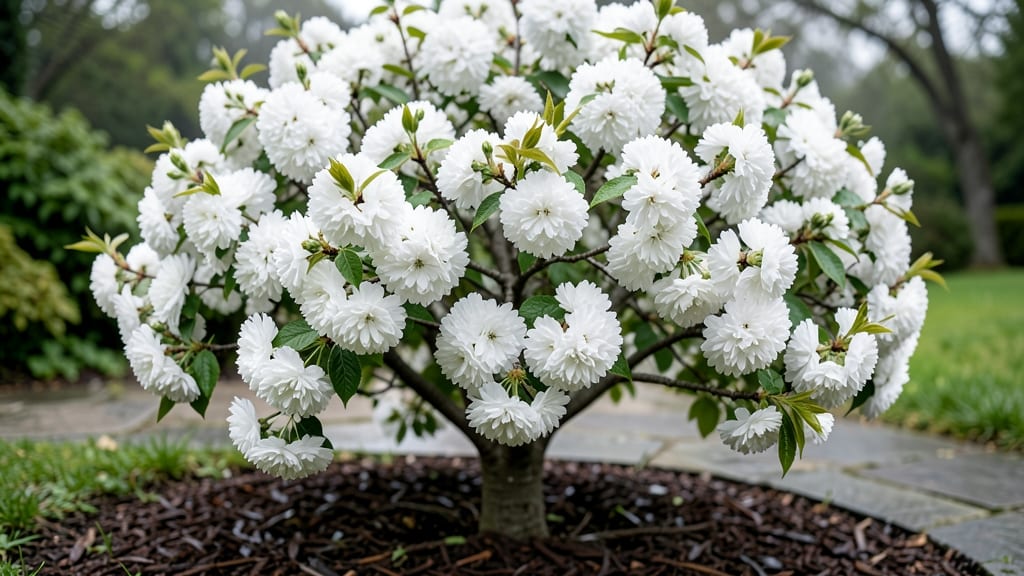
A white blooming cherry tree turns your Pacific Northwest garden into a springtime dream with its frost-resistant branches laden with delicate blossoms. 🌸 I still remember the first time I saw one—its pale pink-white flowers cascading like snow against the evergreen backdrop, transforming an ordinary yard into a serene sanctuary.
This isn’t just a tree; it’s a vertical statement piece that anchors landscapes with grace, whether you’re designing a cottage garden or a modern urban retreat.
The real magic happens in how it works with your space. Plant it where it gets full sun to partial shade, near patios or walkways so you can enjoy the fragrance up close.
Pair it with ferns, hostas, or azaleas for a layered look that stays lush all season. In Japanese-inspired gardens, its weeping branches create natural elegance, while cottage-style plots love its romantic, old-world charm.
You’ll get months of interest—spring blooms, summer shade, and autumn color—plus the bonus of wildlife-friendly foliage that birds adore. The key is positioning it where its height becomes an asset, not a challenge.
Whether it’s a 10-foot dwarf variety or a 25-foot showstopper, this tree grows into a focal point that feels timeless.
Perfect for small yards, large estates, or even urban courtyards with the right pruning. The secret to keeping it thriving? A little seasonal care and the right companions. Let’s make it the centerpiece of your garden’s story.
📚 In This Guide
- What you need
- Instructions
- Tips and common mistakes
- Wrapping up and next steps
What you need
- ● White blooming cherry tree sapling (choose a Prunus avium or Prunus serrulata variety, like ‘Kanzan’ or ‘Stella Rosa’—ensure it’s labeled frost-resistant for PNW climates).
- ● High-quality potting soil or garden loam (50 lbs minimum, well-draining, with a pH of 6.0–7.0).
- ● Organic compost or mulch (10–20 lbs, for nutrient-rich soil).
- ● Slow-release fertilizer (10-10-10 or 20-20-20, 5 lbs, for early growth).
- ○ Tree stake (optional but recommended) (1–2 stakes, 4–6 ft tall, for young trees).
- ● Tree tie or soft garden twine (1 roll, to secure the stake gently).
- ● Shovel or trowel (for digging the planting hole).
- ● Garden gloves (1 pair, to protect your hands).
- ● Watering can or hose with a gentle spray nozzle (for hydration).
- ● Pruning shears (for shaping or trimming).
- ● Measuring tape (to ensure proper spacing—aim for 20–30 ft from structures or other trees).
- ○ Mulch spreader (optional) (for even coverage).
- ● Sunlight: A full-sun spot (6+ hours of direct sunlight daily).
- ● Space: Mature trees need 20–30 ft of clearance (account for root spread!).
- ● Frost resilience: Verify your zone (PNW’s USDA Zones 6–8 are ideal).
- ● Water access: A nearby spigot or soaker hose for deep watering.
- ● Local regulations: Check if your area requires permits for large trees.
Step-by-step guide to planting and caring for a white blooming cherry tree
Here's how to establish your tree for decades of stunning spring blooms and minimal winter stress.
🌱 Step 1: Select the Perfect Planting Site
Choose a location with full sun exposure (6-8 hours daily) and well-draining soil. The Pacific Northwest's cool climate means your tree will thrive in slightly acidic to neutral soil (pH 6.0-7.0). Avoid low spots where frost pools—cherry trees hate soggy roots.
I dig a hole twice as wide as the root ball but only as deep. This prevents burying the graft union, which can weaken the tree. If your soil is heavy clay, amend it with 2-3 inches of compost mixed into the bottom of the hole. Test the soil moisture before planting—it should feel like a wrung-out sponge, not dripping wet.
🪴 Step 2: Plant with Proper Support and Mulching
Position your tree so the top of the root ball sits 1-2 inches above ground level. Backfill with native soil, tamping gently to eliminate air pockets. Stake only if needed (windy sites), using two stakes at 45-degree angles with a spreader bar to avoid girdling the trunk.
Spread 3-4 inches of mulch (wood chips or bark) in a 3-foot diameter circle, keeping it 6 inches away from the trunk. This conserves moisture and regulates soil temperature. Water deeply immediately after planting to settle the soil and remove any air gaps around the roots.
☀️ Step 3: Establish a Year-Round Care Routine
Water deeply once weekly during the first growing season, ensuring moisture reaches 12-18 inches deep. Mature trees need less frequent watering but appreciate deep soakings during dry spells. The key is consistent moisture—never let the soil dry out completely between waterings.
Fertilize in early spring with 10-10-10 fertilizer at ½ pound per 100 square feet, working it into the top 3 inches of soil. Prune in late winter before buds swell, removing dead, crossing, or weak branches at a 45-degree angle. Always sterilize pruners with rubbing alcohol between cuts to prevent disease spread.
⏰ Step 4: Winterize for Pacific Northwest Resilience
Apply 4-6 inches of mulch around the base in late fall to insulate roots from temperature swings. Young trees benefit from wrapping the trunk with tree guard fabric to protect against rodent damage. Avoid heavy pruning in winter—it stimulates new growth that won't harden off before spring.
Watch for signs of winter stress: curled leaves or cracked bark indicate insufficient protection. If your area experiences below 0°F temperatures, consider adding a burlap windbreak on the north side. Cherry trees handle frost better than most, but extreme cold can damage blossoms before they open.
Tips & tricks for perfect white blooming cherry tree planting
Took me years to learn these essentials—here's how to ensure your cherry tree thrives for decades in the Pacific Northwest's challenging climate.
Sunlight Strategy: That 6-8 hours of daily sun is non-negotiable, but here's the trick: position your tree to catch morning sun first—it warms the soil gradually, preventing shock from sudden temperature swings. In cloudy PNW winters, supplemental lighting (like a simple grow light) for 2-3 hours daily can help young trees maintain their energy reserves during dormancy.
Soil Science: The pH 6.0-7.0 range is ideal, but don't stress about perfect numbers. I've seen trees thrive in slightly off-range soil when you focus on drainage instead. For heavy clay soil, mix in that 2-3 inches of compost and create raised beds if needed—roots will thank you by growing deeper for stability. The "wrung-out sponge" test is perfect, but I add: if water pools after 30 minutes, you need more amendments.
Winter Protection Pro Tip: That 4-6 inches of mulch is your first line of defense against winter stress, but here's what nobody tells you—pile mulch higher on the north side where cold winds hit hardest. For extreme cold below 0°F, add a layer of straw over the mulch for extra insulation. And if you notice curled leaves in spring, it's not too late: water deeply and apply a thin layer of compost to help recovery.
Pruning Precision: That 45-degree angle when pruning isn't just for looks—it directs water runoff away from the cut to prevent rot. Sterilizing pruners between cuts (I use 70% isopropyl alcohol) prevents bacterial spread that can cause cankers. Pro move: mark branches you want to remove with flagging tape first, so you can step back and see the tree's natural shape before making cuts.
Pro Tips for White Blooming Cherry Tree
- Took me years to learn these essentials—here's how to ensure your cherry tree thrives for decades in the Pacific Northwest's challenging climate.
- Sunlight Strategy: That 6-8 hours of daily sun is non-negotiable, but here's the trick: position your tree to catch morning sun first—it warms the soil gradually, preventing shock from sudden temperature swings.
- Soil Science: The pH 6.0-7.0 range is ideal, but don't stress about perfect numbers.
Frequently asked questions
Got questions about your white blooming cherry tree? You’re not alone! Here are some of the most common queries from gardeners in the Pacific Northwest—and beyond. Whether you’re troubleshooting, planning, or just admiring, we’ve got you covered.
When is the best time to plant a white blooming cherry tree?
The ideal time to plant is late fall to early spring (October–March) when the tree is dormant. This gives roots time to establish before summer heat. In milder PNW climates, November is a sweet spot—cool temps reduce stress, and winter rains help root growth. Avoid planting in extreme heat or frost.
How cold can a white blooming cherry tree handle?
Most white blooming cherry varieties (like Prunus serrulata) are hardy to USDA Zones 5–8, meaning they tolerate temps down to -20°F (-29°C). However, late spring frosts can damage blooms. Choose late-blooming cultivars (e.g., ‘Kanzan’) for frost resistance. Mulch heavily in winter to protect roots!
Why aren’t my cherry tree’s flowers lasting long?
Short-lived blooms are normal—cherry trees prioritize energy for fruit (if applicable) or leaf growth. To extend the show:
- Water deeply 1–2x/week during bloom season.
- Avoid heavy pruning in fall—it stresses the tree.
- Choose double-blooming varieties (e.g., ‘Shirofugen’) for repeat flowers.
Can I prune a white blooming cherry tree in summer?
Summer pruning is risky—it can invite disease (like silver leaf fungus) through fresh cuts. Stick to late winter/early spring (just before buds swell) for structural pruning. If you must trim in summer, do so after blooming, remove only dead/diseased branches, and sterilize tools with rubbing alcohol. Less is more!
What’s a good small-space alternative to a full-sized cherry tree?
If space is tight, consider these compact or dwarf varieties:
Variety
Height
Notes
Prunus ‘Snow Fountain’
12–15 ft
Columnar shape; great for urban gardens.
Prunus ‘Amanogawa’
10–12 ft
Weeping branches; stunning in containers.
Prunus ‘Spire’
8–10 ft
Narrow, upright growth; ideal for small yards.
For container growing, choose dwarf rootstock and ensure the pot has drainage holes.
Wrapping up and next steps
A white blooming cherry tree isn’t just a stunning addition to the Pacific Northwest landscape—it’s a resilient, frost-resistant vertical masterpiece that brings joy for years. Whether you’re drawn to its delicate blossoms, low-maintenance charm, or ecological benefits, this tree is a dream for gardeners and nature lovers alike.
Ready to transform your space? Start by researching the best varieties for your climate, then roll up your sleeves—planting one could be the first step toward a more vibrant, pollinator-friendly yard. Your future tree (and pollinators!) will thank you. 🌸🌿