
Pruning
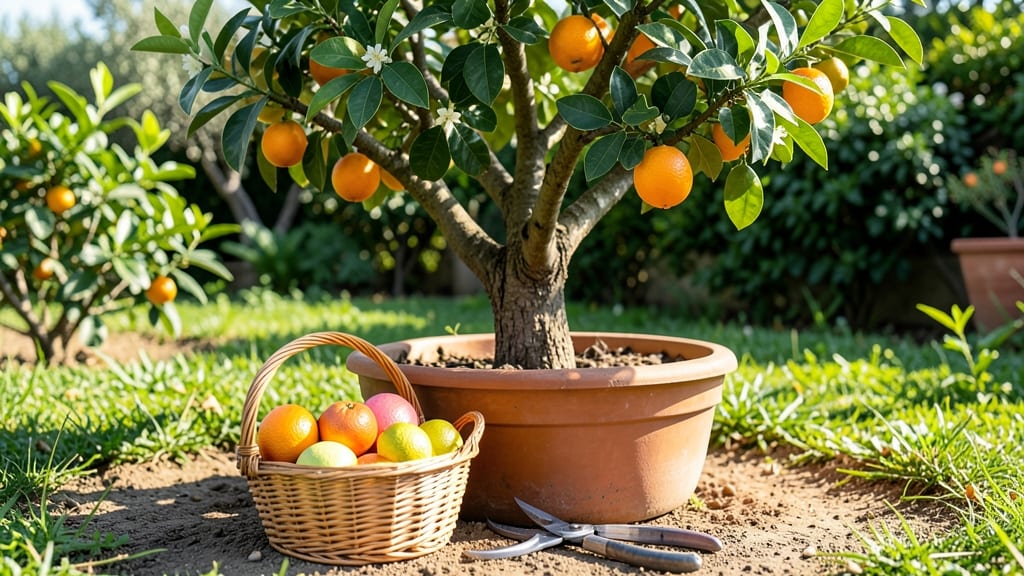
A 6-in-1 fruit cocktail tree packs six different fruits onto one compact tree—something I never thought possible until I tried it myself. This space-saving marvel lets you grow apples, peaches, plums, nectarines, apricots, and cherries from a single trunk, making it perfect for small yards, balconies, or urban gardens.
The key is choosing the right variety and giving it the proper care to thrive.
You’ll need full sun (at least 6-8 hours daily), well-draining soil, and a spot sheltered from strong winds. Pruning is the secret to keeping the tree manageable—focus on opening the center for airflow and shaping it early to prevent overcrowding.
With the right technique, you can harvest fruits over an extended season, from late spring through early fall.
The payoff? A year-round harvest of fresh, homegrown fruits without needing acres of space. Imagine plucking ripe peaches in July and crisp apples in October, all from the same tree. The tree stays productive for decades with proper care, and the variety keeps things exciting—no more boring single-fruit gardens.
Best for beginners and small spaces, this tree adapts well to containers if needed. Whether you’re in a suburban backyard or a city patio, it’s a game-changer for maximizing harvests with minimal space. Ready to grow your own fruit cocktail? Let’s get started.
📚 In This Guide
- What you need
- Instructions
- Tips and common mistakes
- Wrapping up and next steps
What you need
- ● 6-in-1 fruit cocktail tree sapling: Choose a dwarf or semi-dwarf variety (e.g., Citrus × aurantium grafted with 6 fruit types like oranges, lemons, limes, grapefruit, mandarins, and kumquats). 1 plant (check local nurseries or online seed suppliers).
- ● Large container or pot: Minimum 15-gallon capacity with drainage holes. 1 unit (terracotta or fabric pots work best).
- ● High-quality potting mix: Well-draining, citrus-specific blend (or mix 50% potting soil + 50% perlite/pumice). ~3-4 cubic feet.
- ● Pruning tools: Bypass pruners (sharp, sterilized for clean cuts). 1 pair.
- ● Hand saw (for thicker branches). 1 unit.
- ● Fertilizer: Slow-release citrus fertilizer (or organic options like fish emulsion). 1 bag.
- ○ Support system: Small tree stake or trellis (optional but helpful for grafted varieties). 1 unit.
- ● Mulch: Organic mulch (e.g., straw or wood chips) to retain moisture. ~1-2 inches.
- ● Soil moisture meter: To monitor watering needs without over/under-watering. 1 unit.
- ● Grafting tape: For securing new grafts (if propagating from cuttings). 1 roll.
- ● Humidity dome: Temporary cover to protect young plants. 1 unit.
- ● Pest control: Neem oil or insecticidal soap (for aphids/spider mites). 1 bottle.
- ● Grow lights: If indoors, LED grow lights (12-16 hours/day). 1-2 units.
How to grow a compact 6-in-1 fruit cocktail tree
Here's how to create a space-saving fruit tree that packs four varieties of citrus and two tropical fruits into one container.
🌱 Step 1: Select and Prepare the Rootstock and Scion Wood
Choose a healthy, disease-free rootstock—typically a dwarf citrus variety like trifoliate orange or calamondin. These rootstocks are cold-hardy and perfect for container growing. Select scion wood from five citrus varieties (like Meyer lemon, calamondin, lime, orange, and grapefruit) and one tropical fruit (like a dwarf papaya or carambola).
Take 6-8 inch cuttings from mature branches in late winter or early spring when the plant is dormant. Use sharp pruning shears to make clean cuts just below a leaf node. Remove all leaves except the top two to reduce moisture loss. Dip the cut end in rooting hormone to encourage root development.
🪴 Step 2: Graft the Scions onto the Rootstock
Make a clean, slanted cut on the rootstock about 2 inches above the soil line. Then, make a corresponding cut on the bottom of each scion. Align the cambium layers—the green layer just under the bark—of both the rootstock and scion. This ensures proper vascular connection.
Secure the scion to the rootstock with grafting tape or rubber bands, leaving the top leaves exposed. Wrap the graft union tightly but not so tight that it restricts growth. Place the grafted plant in a warm, humid environment with bright, indirect light. Keep the soil consistently moist but not soggy.
☀️ Step 3: Care for the Grafted Tree During Establishment
After about 4-6 weeks, check for successful grafting by gently tugging on the scion. If it resists, the graft has taken. Remove any suckers that sprout below the graft union to direct the tree’s energy upward. Once the graft is established, gradually introduce the tree to more direct sunlight over 2-3 weeks.
Water the tree deeply once a week, allowing the top 2 inches of soil to dry out between waterings. Use a balanced fertilizer every 4-6 weeks during the growing season to encourage strong, healthy growth. Monitor for pests like aphids or scale, and treat promptly with neem oil or insecticidal soap if needed.
✂️ Step 4: Prune and Train for Compact Growth
Regular pruning is essential to maintain the tree’s compact shape. Prune back any overly long branches to encourage bushier growth. Remove any crossing or rubbing branches to prevent disease and improve airflow. Thin out some of the smaller leaves to allow more light and air to reach the fruit.
Train the tree to grow in a balanced shape by selectively pruning branches that grow too vigorously. Use a sharp pair of pruning shears to make clean cuts just above a leaf node or bud. This encourages new growth in the desired direction. Prune lightly in early spring and more heavily after harvest to shape the tree for the next season.
💧 Step 5: Harvest and Maintain Year-Round Production
With proper care, your 6-in-1 fruit cocktail tree will produce fruit throughout the year. Harvest fruits when they are fully ripe—usually when they are firm, fragrant, and easily detach from the tree. Different varieties will ripen at different times, so check regularly.
Continue to fertilize lightly every 6-8 weeks and water deeply once a week. Protect the tree from frost by bringing it indoors or covering it with frost cloth during cold snaps. With consistent care, your compact fruit cocktail tree will provide a bountiful harvest of diverse fruits in a small space.
Tips & tricks for growing a compact fruit cocktail tree
Between us, growing a multi-fruit tree isn't just about following steps—it's about understanding the little details that make all the difference. Here's what I've learned from years of grafting and nurturing these unique trees.
Rootstock Selection: Not all dwarf citrus rootstocks are created equal. For your 6-in-1 tree, I recommend trifoliate orange rootstock specifically—it's the most cold-hardy and adaptable option. The calamondin alternative works well too, but trifoliate handles temperature fluctuations better, which is crucial for container growing where conditions change rapidly. This choice makes the difference between a tree that thrives and one that struggles.
Scion Preparation: When taking those 6-8 inch cuttings in Step 1, pay special attention to the angle of your cuts. A clean, slanted cut just below a leaf node is critical—it increases the surface area for better root development. Here's a pro move: After cutting, immediately dip the ends in rooting hormone, then wrap them in a damp paper towel. Keep them in a plastic bag in the fridge for up to 2 weeks if you can't graft immediately. This preserves their viability while you prepare your rootstock.
Grafting Success: In Step 2, when aligning those cambium layers, don't rush. Take a magnifying glass if needed—you're aiming for perfect alignment where the green tissue meets. Once grafted, I've found that placing the entire setup in a clear plastic bag creates a mini greenhouse effect. This maintains humidity around the graft union while still allowing light penetration. Check for successful take after exactly 4-6 weeks by that gentle tug test mentioned in Step 3—if it resists, you've got a winner.
Seasonal Adjustments: The 6-8 week fertilization schedule works perfectly during growing season, but here's what nobody tells you: In winter months, cut back to every 12-16 weeks. Your tree's tropical varieties will naturally slow down, and over-fertilizing can lead to salt buildup in container soil. Also, during those first 2-3 weeks of sunlight acclimation in Step 3, I recommend using shade cloth for the first week—it prevents sunburn on the newly hardened leaves while still providing enough light for photosynthesis.
Pro Tips for 6 In 1 Fruit Cocktail Tree
- Between us, growing a multi-fruit tree isn't just about following steps—it's about understanding the little details that make all the difference.
- Rootstock Selection: Not all dwarf citrus rootstocks are created equal.
- Scion Preparation: When taking those 6-8 inch cuttings in Step 1, pay special attention to the angle of your cuts.
Frequently asked questions
Got questions about your 6-in-1 fruit cocktail tree? You’re not alone! Here are answers to the most common queries to help you grow confidently—whether you’re a beginner or a seasoned gardener.
How long does it take for a 6-in-1 fruit cocktail tree to bear fruit?
A 6-in-1 fruit cocktail tree typically takes 2–4 years to produce fruit, depending on climate, care, and variety. Dwarf varieties (like those in compact trees) often fruit sooner—sometimes within 1–2 years—but patience is key! Start with proper pruning and fertilization to encourage faster fruiting.
Can a 6-in-1 fruit cocktail tree survive winter?
Most 6-in-1 trees (e.g., citrus, berries, or stone fruit varieties) are not cold-hardy. If you live in a cold climate (Zone 5 or lower), grow yours in containers and move it indoors during winter. For outdoor planting, choose hardier varieties (like blueberries or certain apple grafts) or use row covers.
What’s the best way to prune a 6-in-1 fruit cocktail tree for maximum yield?
Prune in late winter/early spring to shape the tree and remove dead/diseased branches. Focus on:
- Open the center for airflow (prevents disease).
- Trim back overgrowth to redirect energy to fruit production.
- Avoid heavy pruning—stick to 20–30% of the canopy.
Can I grow a 6-in-1 tree in a small apartment with limited sunlight?
Opt for a dwarf or patio-sized 6-in-1 tree (like citrus or fig grafts) and place it near a south-facing window or under grow lights. If sunlight is less than 6 hours/day, supplement with a LED grow bulb. Containers with well-draining soil and regular watering work well too.
Why aren’t my fruits ripening, or are they falling off early?
Common culprits include:
- Insufficient sunlight (move to a sunnier spot or add grow lights).
- Overwatering (let soil dry slightly between waterings).
- Nutrient deficiency (use a balanced fertilizer like 10-10-10 in spring/summer).
- Pests/disease (check for aphids, mites, or fungal spots; treat with neem oil or fungicide).
Wrapping up and next steps
Growing a 6-in-1 fruit cocktail tree is your ticket to a vibrant, space-saving harvest—packed with flavor, nutrition, and minimal fuss! 🌱 Whether you’re a seasoned gardener or just starting out, this versatile tree delivers year-round freshness while teaching you the joys of pruning and care.
Now that you’re armed with the right tools, tips, and troubleshooting know-how, it’s time to roll up your sleeves and watch your tiny orchard thrive.
Ready to take the next step? Start small—plant your tree, tend to it with love, and soon you’ll be harvesting juicy berries, tangy citrus, and everything in between. Happy growing! 🍓🍊