
Planting
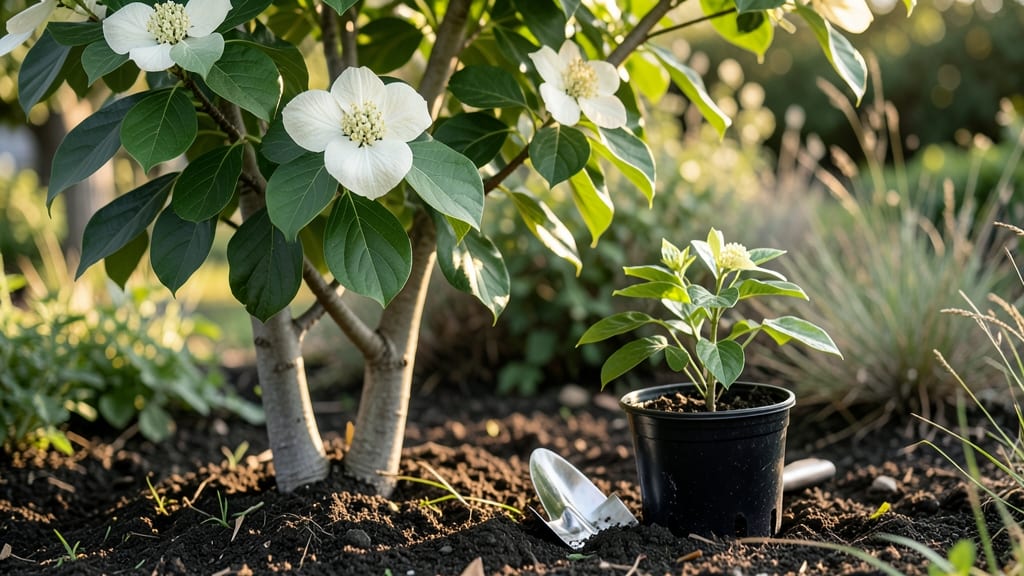
The best place to plant a dogwood tree is where morning sun meets afternoon shade—those sun-dappled spots where the light dances through leaves. 🌿 I learned this the hard way after my first dogwood struggled in full sun, its leaves scorched by midday rays.
The secret lies in mimicking its natural woodland habitat, where it thrives under the forest canopy.
Dogwoods need well-draining soil rich in organic matter, with a pH between 4.5 and 6.0. They’re picky about wind too—plant them where breezes won’t snap their delicate branches.
A spot near other shrubs or under taller trees creates the perfect microclimate for vibrant blooms and glossy foliage that lasts all season.
You’ll end up with a tree that becomes the centerpiece of your garden, its spring flowers drawing hummingbirds and its autumn foliage adding fiery color. The key is patience—dogwoods grow slowly but reward you with decades of beauty, making them a foolproof investment for any landscape.
Works equally well in suburban yards, cottage gardens, or as a focal point near patios. Just remember: the right spot turns a dogwood from ordinary to extraordinary. Let’s get planting!
📚 In This Guide
- What you need
- Instructions
- Tips and common mistakes
- Wrapping up and next steps
What you need
- ● Dogwood tree (bare-root or container-grown, Cornus florida or hybrid variety)
- ● Shovel or digging spade (wide enough for mature roots, 12–18" diameter)
- ● Garden fork or tiller (for loosening compacted soil in the planting hole)
- ● Compost or well-aged manure (5–10 gallons, to enrich soil)
- ● Native soil or topsoil mix (enough to backfill the hole)
- ● Mulch (pine bark, shredded leaves, or wood chips) (3–4 inches, spread in a 3-foot radius around the base)
- ● Watering can or hose with adjustable nozzle (for gentle, deep watering)
- ● Stakes (2–3) + tree ties (if planting in windy areas, 6–8 ft tall)
- ● Soil test kit (to check pH and nutrient levels—dogwoods prefer acidic to slightly acidic soil (pH 5.0–6.5))
- ● Slow-release fertilizer (balanced 10-10-10 or acidic fertilizer like Osmocote)
- ● Root stimulator (e.g., Mycorrhizal fungi or Rootone)
- ● Weed barrier fabric (to suppress weeds while allowing water/moisture through)
- ● Pruning shears (for trimming damaged roots or branches)
- ● Garden gloves (to protect your hands from thorns or rough bark)
Step-by-Step guide to choosing the perfect spot for your dogwood tree
Here’s how to pick the ideal location for showstopping blooms and healthy growth.
🌿 Step 1: Find the Right Light Balance
Dogwood trees thrive in partial shade to partial sun, meaning 4-6 hours of direct sunlight daily. Too much sun scorches leaves, while too little weakens blooms. Look for spots where morning sun warms the tree but afternoon shade keeps it cool—think dappled light under tall trees or near buildings.
Test your spot by observing how sunlight moves across the area. If leaves turn yellow or crisp, the location’s too harsh. If growth slows or flowers fade, it needs more light. A south-facing window or east-facing yard often works best, but avoid west-facing areas where afternoon sun can be brutal.
☀️ Step 2: Ensure Proper Soil Conditions
Dogwoods love moist, well-draining, slightly acidic soil (pH 5.5–6.5). Test your soil with a simple kit—amend with compost or peat moss if it’s too sandy or clay-heavy. Avoid heavy, compacted soil that traps water, as soggy roots lead to rot.
Dig a hole twice as wide as the root ball but no deeper. Loosen the sides to encourage root spread. If your soil drains poorly, mix in 1 part perlite or sand to improve aeration. A slight mound in the hole helps prevent water pooling around the trunk.
🪴 Step 3: Pick a Sheltered Location
Dogwoods hate wind and strong drafts, which stress the tree and damage delicate branches. Plant near a natural windbreak—like a fence, hedge, or cluster of shrubs—to shield it while still allowing airflow. Avoid low-lying areas where cold air settles, as this can stunt growth.
Check for overhead power lines or large trees that could shade the dogwood too much as it matures. A 6–10 foot buffer from other plants gives it room to grow without competition. If planting near a house, ensure the mature height (20–30 feet) won’t interfere with roofs or gutters.
⏰ Step 4: Time Your Planting for Success
Fall (late September–November) is the best time to plant dogwoods, as cool soil and mild weather help roots establish before winter. If planting in spring, do it 4–6 weeks before the last frost—this gives roots time to settle before summer heat arrives.
Water deeply once a week for the first month, then taper to every 10–14 days once established. Mulch with 2–3 inches of organic mulch (like shredded bark) to retain moisture and regulate soil temperature. Keep mulch 6 inches away from the trunk to prevent rot.
🌱 Step 5: Monitor and Adjust Over Time
Watch for signs of stress: yellowing leaves mean too much sun or poor drainage, while drooping branches signal underwatering. If blooms are sparse, the tree may need more sunlight or fertilizer (use a balanced 10-10-10 in early spring).
Prune in late winter or early spring to remove dead wood and shape the tree. Avoid heavy pruning—dogwoods bloom on old wood, so trimming too aggressively reduces flowers. With the right spot, your dogwood will reward you with stunning spring blooms for decades.
Tips & tricks for perfect dogwood tree planting
Here's how to transform your dogwood tree into a garden showstopper with these pro planting secrets.
Light Balance Secret: The 4-6 hours of sunlight mentioned in Step 1 is your golden window—think of it as dogwood's "happy hour." I always check for morning sun exposure because that gentle warmth kickstarts the blooming process. If your spot gets harsh afternoon sun, consider planting near a taller tree or building that provides natural shade during peak heat hours.
Soil Prep Game-Changer: That 5.5-6.5 pH range in Step 2 isn't just a number—it's where dogwoods truly thrive. I've learned the hard way that even slightly alkaline soil can stunt growth. Test your soil first, and if you need to adjust, compost mixed with a bit of sulfur works wonders. The hole being twice as wide as the root ball (Step 2) gives roots room to spread without competition—don't skip this space!
Wind Protection Strategy: Dogwoods are delicate divas when it comes to wind. The natural windbreak mentioned in Step 3 could be anything from a sturdy fence to a row of shrubs. I always plant mine near my arborvitae hedge—it creates that perfect sheltered microclimate. Just remember, the 6-10 foot buffer gives your tree room to grow without feeling crowded.
Timing Insight: Fall planting (Step 4) gives roots time to establish before winter's chill, but here's what nobody tells you—planting in early fall (September) gives you a full growing season before winter, while late fall (November) planting still works because the roots will be dormant anyway. The key is getting that root system settled before the ground freezes.
Pro Tips for Best Place To Plant Dogwood Tree
- Here's how to transform your dogwood tree into a garden showstopper with these pro planting secrets.
- Light Balance Secret: The 4-6 hours of sunlight mentioned in Step 1 is your golden window—think of it as dogwood's "happy hour."
- Soil Prep Game-Changer: That 5.5-6.5 pH range in Step 2 isn't just a number—it's where dogwoods truly thrive.
Frequently asked questions
What’s the ideal sunlight exposure for a dogwood tree?
A dogwood thrives in partial shade—about 4–6 hours of morning sun and dappled shade the rest of the day. Too much direct afternoon sun can stress the tree, while deep shade may reduce blooms. Look for spots with filtered light, like under tall trees or near a building’s east or north side.
When is the best time to plant a dogwood tree?
Plant in early spring or fall (4–6 weeks before the first frost) for the best results. Avoid planting in extreme heat or cold. Bare-root trees can go in spring, while container-grown dogwoods adapt well to fall planting. Give roots time to establish before winter or summer stress sets in!
Can I plant a dogwood tree in a small yard or container?
Dogwoods need space to grow—most varieties reach 20–30 feet tall with a spread of 15–25 feet. For small yards, choose dwarf cultivars like ‘Fluffy Ruffles’ (10–12 ft tall). Containers are tricky—they’ll need large pots (20+ gallons), well-draining soil, and frequent watering. Consider a raised bed instead!
Why aren’t my dogwood blooms as vibrant as they should be?
Fewer or pale blooms often signal over-fertilizing (especially with nitrogen), poor sunlight, or compacted soil. Prune dead branches in late winter, mulch to retain moisture, and fertilize lightly with balanced 10-10-10 in early spring. If blooms drop early, check for powdery mildew—spray with neem oil if needed.
Are there dogwood alternatives for full-sun areas?
If your yard is fully sunny, try these dogwood-like trees:
- Serviceberry (Amelanchier) – Tolerates sun, edible berries, and stunning fall color.
- Fothergilla – Heat-tolerant with fragrant spring blooms and fiery fall leaves.
- Japanese Maple (Acer palmatum) – Thrives in sun with delicate foliage (choose ‘Bloodgood’ for shade tolerance too!).
Wrapping up and next steps
Choosing the perfect spot for your dogwood tree is all about balance—sun-dappled light, well-draining soil, and space to thrive. Whether you’re aiming for stunning spring blooms or a year-round focal point, the right location will reward you with vibrant growth and minimal fuss.
Now that you’re armed with the best practices, roll up your sleeves and get planting! 🌱
🌿 Next Steps:
- Mark your ideal spot with stakes or flags before digging.
- Gather your tools and soil amendments for a seamless planting day.
- Check local climate guidelines to time your planting for success.