
Pruning
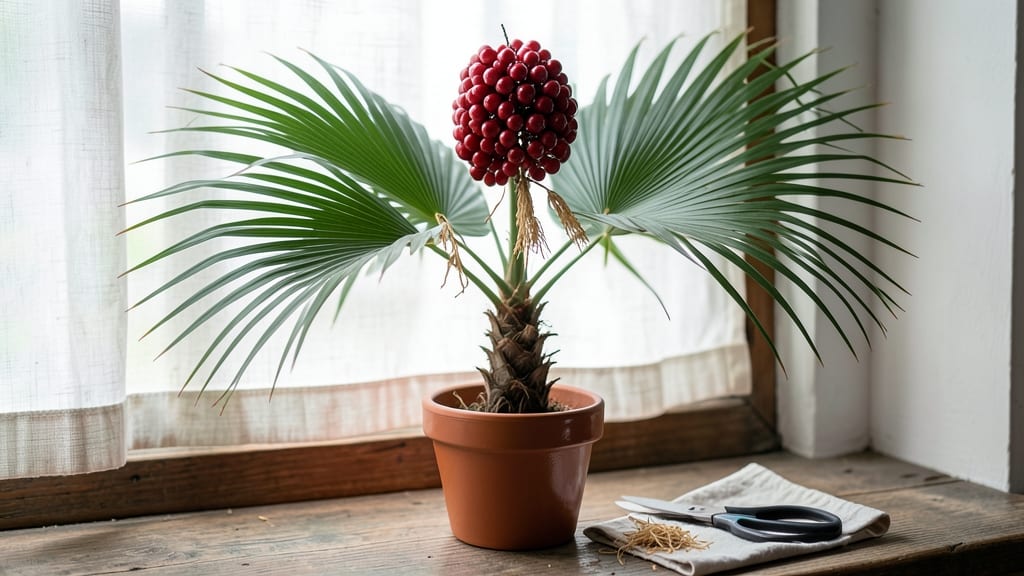
Mastering Christmas palm tree care turns your indoor tree into a year-round lush star with just four easy steps. I’ve kept mine vibrant for five winters now, and the secret isn’t complicated: bright light, occasional pruning, and a little humidity magic.
That striking red fruit isn’t just for holidays—it’s a year-round conversation piece once you get the care right.
The tricky part? Most people overwater or underestimate how much light this palm craves. My plant gets bright, indirect sunlight near a south-facing window, and I water only when the top 2 inches of soil feel dry.
Too much water kills these palms faster than anything else. The slow growth means you won’t need to repot often, but when you do, go up 2-3 inches in pot size—just enough to prevent root crowding.
By summer, you’ll see new fronds unfurling with that signature glossy sheen, and those bright red fruits will appear if you’ve got a male plant nearby. The real payoff? A palm that looks like it belongs in a tropical greenhouse, not a living room.
The only catch is winter—drop humidity with a pebble tray if your home feels like a desert, and you’ll keep those fronds crisp all season.
Whether you’re dealing with dry indoor air or a subtropical climate, these adjustments work. The key is consistency—no dramatic changes in care, just steady attention. Your Christmas palm will reward you with bold foliage and that rare indoor plant confidence boost. Let’s get it growing right.
📚 In This Guide
- What you need
- Instructions
- Tips and common mistakes
- Wrapping up and next steps
What you need
- ● Pruning shears: Sharp, bypass-style shears (for clean cuts). Quantity: 1 pair (sterilized with rubbing alcohol).
- ● Gloves: Heavy-duty gardening gloves (to protect from thorns and sap). Quantity: 1 pair.
- ● Disinfectant: 70% isopropyl alcohol or hydrogen peroxide (to prevent disease). Quantity: Small bottle (4 oz).
- ○ Pruning saw: (For thicker stems, if applicable). Quantity: 1 (optional, but handy for mature trees).
- ● Container or pot: Well-draining pot (1–2 sizes larger than current). Material: Terracotta or plastic with drainage holes.
- ● Potting mix: Fast-draining, palm-specific mix (or cactus/succulent blend). Quantity: 5–10 gallons (depending on pot size).
- ● Mulch: Orchid bark or pine bark fines (for moisture retention). Quantity: 1–2 inches layer.
- ● Slow-release fertilizer: Balanced (10-10-10 or 20-20-20). Quantity: 1–2 tbsp per repotting.
- ● Humidity tray: Pebble tray + water (for tropical ambiance).
- ● Support stake: (If your palm is top-heavy). Material: Bamboo or metal.
- ● Spray bottle: For misting leaves (if humidity is low).
Step-by-Step guide to maintaining a healthy Christmas palm tree
Here's how to keep your palm thriving indoors with minimal effort—no green thumb required.
💧 Step 1: Master the Watering Routine
Christmas palms hate soggy roots but won't tolerate dryness either. Water only when the top 2-3 inches of soil feel completely dry to the touch—stick your finger in to check. Overwatering causes yellow fronds, while underwatering makes leaves crispy at the edges. I use the "squeeze test": if a handful of soil leaves no moisture when squeezed, it's time to water.
When you water, do it thoroughly until water runs out the drainage hole below. Empty the saucer immediately after 10 minutes to prevent root rot. In winter, when indoor air stays dry, you might water every 7-10 days. Watch for brown leaf tips—that's your signal to cut back on watering slightly.
☀️ Step 2: Position for Perfect Light Balance
Place your palm near a bright, indirect light window—east or west-facing works best. South windows can scorch leaves if too intense, while north windows may leave it leggy and sparse. Rotate the pot quarter-turn weekly so all fronds get even light exposure. You'll notice new growth leaning toward the light if it's not balanced.
If your home has low light, supplement with a grow light for 12-14 hours daily. Keep the light 12-18 inches away—closer than that will burn the fronds. Avoid drafts like heating vents or AC units, which dry out the air too quickly. Brown patches on leaves mean it's getting too much direct sun.
🌿 Step 3: Feed and Prune for Year-Round Growth
Fertilize every 4-6 weeks during spring and summer using a balanced liquid fertilizer (10-10-10 ratio). Cut the recommended dose in half—palms are sensitive to over-fertilizing. In fall and winter, skip feeding entirely unless you see new growth slowing down. Yellow fronds often mean it's getting too much fertilizer, not enough.
Prune only dead or brown fronds using clean, sharp pruners. Cut back to the base of the frond where it meets the trunk—never leave stubs. Remove any fronds that are more than 30% brown, as they won't recover. This keeps the plant looking tidy and prevents pests from hiding in dead foliage.
⏰ Step 4: Adjust Care for Seasonal Changes
In summer, when humidity drops below 40%, mist the fronds lightly 2-3 times weekly or place the pot on a tray of pebbles filled with water. The evaporation creates natural humidity around the plant. Avoid wetting the crown (where the fronds meet the trunk)—this can cause rot. You'll see new fronds unfurling more quickly when humidity is right.
Winter care is simpler: reduce watering to every 10-14 days and stop fertilizing unless you see active growth. If your home gets very dry from heating, run a small humidifier nearby or group houseplants together to raise local humidity. Watch for curled or dry leaf edges—this means the air is too dry, not the watering.
Tips & tricks for perfect Christmas palm tree care
Here's what nobody tells you about keeping your Christmas palm thriving without the guesswork.
Soil Test Tip: Before watering in Step 1, run your finger through the soil to check moisture—not just the top layer. The first 2-3 inches should feel completely dry, but don't forget to check deeper. I've seen palms suffer from overwatering because people only test the surface. If the soil feels damp below 2 inches, wait another day or two.
Light Rotation Secret: In Step 2, when you rotate your palm quarter-turn weekly, take a moment to examine the undersides of fronds. This is where light deprivation shows first—pale or yellowing undersides mean your palm needs more bright, indirect light. If you notice this, move it closer to the window or increase grow light time to 14 hours daily.
Fertilizer Timing: The 4-6 week feeding schedule in Step 3 works best when you fertilize right after watering. This prevents salt buildup from fertilizer burning the roots. I also recommend flushing the soil with water every 3 months by running water through the pot for 10 minutes—this removes excess salts that accumulate over time.
Seasonal Humidity Hack: For summer misting in Step 4, use room-temperature water to avoid shocking the plant. I've found that misting in the morning gives the fronds time to dry before evening, reducing the risk of fungal issues. If you notice water droplets sitting on fronds overnight, cut back to every other day until they dry more quickly.
Pro Tips for Christmas Palm Tree Care
- Here's what nobody tells you about keeping your Christmas palm thriving without the guesswork.
- Soil Test Tip: Before watering in Step 1, run your finger through the soil to check moisture—not just the top layer.
- Light Rotation Secret: In Step 2, when you rotate your palm quarter-turn weekly, take a moment to examine the undersides of fronds.
Frequently asked questions
Got questions about keeping your Christmas palm tree thriving year-round? Here are some of the most common concerns—and their solutions!
How often should I prune my Christmas palm tree?
Prune your Christmas palm tree once a year, ideally in late winter or early spring (February–March). This timing mimics its natural growth cycle and prevents stress during colder months. Focus on removing dead fronds, yellowing leaves, and any fronds that drag on the ground. Pro tip: Never prune more than 1/3 of the fronds at once!
Can I keep my Christmas palm tree indoors during winter?
Yes, but with caution! Christmas palms tolerate indoor conditions but need bright, indirect light (like near a south-facing window). Avoid drafts, heat vents, or sudden temperature drops. If indoors, mist the leaves weekly or use a humidifier—dry air is their biggest enemy. Fun fact: They’re one of the few palms that thrive in low-light offices!
Why are the tips of my palm fronds turning brown?
Brown frond tips usually signal underwatering or low humidity. Check the soil—it should stay consistently moist but not soggy. If your home has dry air (common in winter), group plants together or use a pebble tray with water to boost humidity. Brown edges can also mean fluoride buildup from tap water—use filtered or rainwater instead.
What’s the best way to decorate my Christmas palm without harming it?
Skip heavy ornaments that can tear fronds! Opt for lightweight, hanging decorations (like felt stockings or fabric bows) tied to the trunk with soft twine. Avoid wrapping lights tightly around the trunk—use battery-operated fairy lights near the plant instead. Pro tip: Spritz the leaves with water before decorating to make them more resilient to minor friction.
Can I propagate my Christmas palm from cuttings?
Unfortunately, no—Christmas palms (Adonidia merrillii) cannot be propagated from cuttings. They only grow from seeds, which are rare and slow to germinate. If you want a new plant, your best bet is to buy a young palm (3–5 feet tall) and transplant it carefully. Warning: They’re toxic to pets if ingested, so keep them out of reach of curious pups!
Wrapping up and next steps
Caring for your Christmas palm tree doesn’t have to be overwhelming—just follow these four simple steps to keep it thriving year-round! 🌿 With the right pruning, lighting, watering, and seasonal adjustments, your palm will stay vibrant and festive, adding joy to your home for seasons to come.
Now that you’re armed with the know-how, take action today! Start by assessing your palm’s needs and tackle one step at a time.
Whether it’s trimming those overgrown fronds or adjusting the lighting, small efforts lead to big rewards. Your lush, healthy Christmas palm is just a few steps away—happy growing! 🌟