
Trees
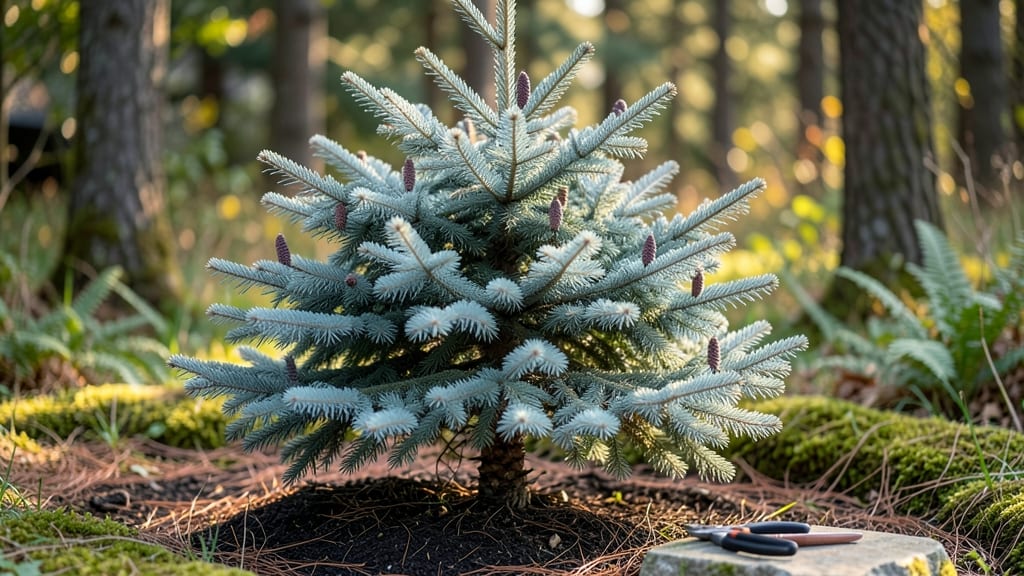
Fir evergreen trees bring that lush, forest-fresh look to your Pacific Northwest yard without the winter brown many trees suffer. I’ve grown them for years—my Douglas fir stands tall and vibrant even after snowfall, proving they’re the secret to year-round greenery.
The key is matching their needs: rich, well-draining soil, partial shade, and consistent moisture. They’re not fussy, but they do demand respect for their slow-growing nature.
You’ll need 6-8 hours of sunlight daily, though they tolerate morning shade better than harsh afternoon sun. Amend heavy clay soil with compost to prevent waterlogging, and mulch yearly to protect roots. Fraser firs stay compact (15-30 feet tall), while Douglas firs reach 60-70 feet—choose based on your space.
Prune only to shape, never to "thin" them, as firs rely on dense foliage for their signature texture.
By year three, your fir will be thriving, its needles soft to the touch and fragrant in a piney way. They resist deer and most pests, but watch for spider mites in dry summers—spray with water to deter them.
Plant them as focal points, windbreaks, or mixed with rhododendrons for a layered Northwest garden. The best part? They age beautifully, their bark developing rich textures over decades.
For beginners, start with a 3-gallon container-grown sapling—they establish faster than bare-root seedlings. Avoid planting near sidewalks (roots spread wide) and give them 10+ feet of clearance for mature growth.
Once established, they’re low-maintenance, drought-tolerant, and the envy of every neighbor. Ready to add that evergreen statement to your yard?
📚 In This Guide
- What you need
- Instructions
- Tips and common mistakes
- Wrapping up and next steps
What you need
- ● Fir evergreen trees: 1-5 saplings (depending on desired spacing; 6-10 ft apart for mature trees)
- ● Species options: Noble fir (Abies procera), Grand fir (Abies grandis), or Pacific silver fir (Abies amabilis)
- ● Soil amendments: 1-2 bags (40-50 lbs each) of peat moss or compost (to improve drainage and fertility)
- ● 1 bag (50 lbs) of slow-release fertilizer (10-10-10 or 20-20-20 NPK ratio)
- ● Planting tools: 1 shovel or spade (for digging holes)
- ● 1 hand trowel (for delicate root adjustments)
- ● 1 pruning shears (for trimming dead branches)
- ● Mulch: 2-3 cubic yards of wood chips or bark mulch (3-4 inches deep)
- ● Watering supplies: 1 hose with a nozzle (for gentle watering)
- ○ 1 watering can (optional, for young seedlings)
- ● 1 tree stake or support (for young or wind-prone saplings)
- ● 1 soil pH test kit (to ensure acidic soil, ideal for firs)
- ● 1 root stimulator (to boost growth during transplanting)
- ● 1 tree guard or wire mesh (to protect from deer/browsing)
- ● 1 weather-resistant tarp (for temporary shade during extreme heat)
Step-by-step guide to planting fir evergreens in the Pacific Northwest
Here’s how to establish healthy, lush fir trees that stay vibrant year-round—no winter browning in sight.
🌱 Step 1: Choose the Right Species and Planting Site
Select a fir variety suited to your Pacific Northwest climate, such as Douglas fir, noble fir, or grand fir. These species thrive in the region’s mild winters and abundant rainfall. Look for 1- to 3-year-old container-grown seedlings with a well-developed root system—avoid bare-root stock unless planting in early spring when the ground is workable.
Choose a location with partial shade to full sun, depending on your microclimate. In hot inland areas, firs appreciate afternoon shade to prevent needle scorch. The site should have well-draining soil—fir trees hate soggy roots. If your soil is heavy clay, amend it with 3-4 inches of compost or organic matter mixed into the top 12 inches before planting. Test the soil pH; firs prefer slightly acidic conditions around 5.0 to 6.5.
🪴 Step 2: Dig and Prepare the Planting Hole
Dig a hole twice as wide as the root ball but only as deep as the container’s height. This encourages roots to spread horizontally rather than settling too deeply. Loosen the sides of the hole with a shovel or hands to reduce compaction—fir roots need room to expand into the surrounding soil.
Remove the fir from its container and gently tease apart any circling roots. If the root ball is tightly bound, make 2-3 vertical slits around the edges to encourage outward growth. Place the tree in the hole so the top of the root ball sits 1 inch above ground level—this prevents water from pooling around the stem and causing rot. Backfill with the native soil, tamping lightly to eliminate air pockets but avoiding compaction.
💧 Step 3: Water Deeply and Mulch for Moisture Retention
Water the newly planted fir deeply and slowly, soaking the root zone until water drains out the bottom of the hole. This helps settle the soil and eliminates air gaps. In the Pacific Northwest’s damp climate, firs generally need 1-2 inches of water per week, but container-grown seedlings may require more frequent watering until established. Check soil moisture by sticking your finger 2 inches deep—if it feels dry, water again.
Apply a 3-inch layer of organic mulch, such as wood chips or shredded bark, over the soil surface, keeping it 6 inches away from the tree trunk to prevent rot. Mulch helps retain moisture, regulates soil temperature, and suppresses weeds. Replenish mulch annually as it breaks down—fir trees are shallow-rooted and benefit from consistent ground cover.
☀️ Step 4: Prune for Shape and Encourage Fullness
Fir trees don’t require heavy pruning, but you can shape them lightly in early spring to encourage a full, symmetrical appearance. Remove any dead, diseased, or crossing branches with clean, sharp pruners, cutting just outside the branch collar. Avoid over-pruning—fir trees rely on their natural density for winter protection, so limit trimming to no more than 10-15% of the foliage at a time.
If your fir develops a lopsided shape, focus on thinning out interior branches to improve airflow and reduce disease risk. Never prune in late summer or fall, as new growth won’t harden off before winter. In the Pacific Northwest’s mild climate, firs grow steadily, so you’ll only need to prune every 2-3 years for maintenance.
Tips & tricks for perfect fir evergreen planting
These essential insights will help you avoid common pitfalls and ensure your fir trees thrive in the Pacific Northwest's unique climate.
Species Selection: When choosing between Douglas fir, noble fir, or grand fir, consider your specific microclimate. Noble firs handle coastal fog well, while Douglas firs tolerate drier inland conditions. I've found that 2-3-year-old container-grown seedlings establish most reliably in our region—younger stock often struggles with transplant shock, and older trees may take longer to adapt.
Soil Preparation: The 3-4 inches of compost mixed into the top 12 inches of soil creates an ideal root environment. For heavy clay soils common in the PNW, I recommend adding perlite or coarse sand to improve drainage. This prevents that dreaded root rot that can kill firs in waterlogged conditions. Test your soil pH before planting—fir trees prefer slightly acidic conditions around 5.0 to 6.5, and you can adjust with sulfur if needed.
Root System Care: The vertical slits you make in tightly bound root balls are crucial for encouraging outward growth. I've seen firs planted without this step develop circling roots that strangle themselves as they grow. When backfilling, don't compact the soil—gentle tamping is all you need to eliminate air pockets while maintaining loose, breathable soil structure that roots love.
Watering Strategy: The 1-2 inches of water per week guideline works well for established trees, but container-grown seedlings need more frequent attention. I water mine every 2-3 days during the first growing season, checking soil moisture at 2 inches deep. Overwatering is just as harmful as underwatering—fir roots need oxygen, and soggy soil suffocates them.
Pro Tips for Fir Evergreen Trees
- These essential insights will help you avoid common pitfalls and ensure your fir trees thrive in the Pacific Northwest's unique climate.
- Species Selection: When choosing between Douglas fir, noble fir, or grand fir, consider your specific microclimate.
- Soil Preparation: The 3-4 inches of compost mixed into the top 12 inches of soil creates an ideal root environment.
Frequently asked questions
Got questions about growing fir evergreen trees in the Pacific Northwest? You’re not alone—these stunning trees require some know-how to thrive without winter browning. Here are answers to the most common queries to help you get started with confidence!
What’s the best fir tree variety for the Pacific Northwest’s rainy climate?
The Noble fir (Abies procera) and Grand fir (Abies grandis) are top picks for the PNW. Both handle wet winters and coastal fog well, plus they resist winter burn better than other varieties. For compact options, try Douglas fir (Pseudotsuga menziesii)—it’s hardy and adaptable to various soils.
Why do my fir trees turn brown in winter, and how do I prevent it?
Winter browning (or "winter burn") happens when cold winds desiccate needles. To prevent it:
- Water deeply before the first frost—fir trees need moisture to survive dry winter air.
- Apply anti-desiccant sprays (like Wilt-Pruf) in late fall for extra protection.
- Avoid pruning in late summer/fall—it stresses trees before winter.
When is the ideal time to plant fir trees in the Pacific Northwest?
The best time to plant is late fall or early spring (September–March). This gives roots time to establish before summer heat or winter cold. Avoid planting in summer—the heat stresses young trees. If you must plant in summer, water daily and use shade cloth for the first few weeks.
Can I grow fir trees in containers, or do they need to be planted in the ground?
Fir trees can grow in large containers (15+ gallons) for 3–5 years, but they’re not long-term potted plants. Use well-draining soil and a container with drainage holes. For mature trees, transplant to the ground in fall for the best success. Dwarf varieties (like ‘Glaucous’ fir) tolerate containers slightly longer but still need yearly root checks.
My fir tree’s needles are dropping—is it dying? What should I do?
Needle drop is normal in spring (old needles fall to make room for new growth), but excessive drop in other seasons signals stress. Check for:
- Overwatering (yellow needles) or drought (brown tips).
- Pests like spider mites or bark beetles (look for webs or sawdust-like frass).
- Root rot (mushy stems, foul smell)—improve drainage immediately.
How close can I plant fir trees to my house or other structures?
Space mature fir trees 20–30 feet from homes, decks, or power lines—they can grow 60–100+ feet tall! Dwarf varieties need 10–15 feet of clearance. Check local HOA rules and utility guidelines before planting. Roots can also damage foundations, so avoid planting too close to walkways.
Wrapping up and next steps
Growing fir evergreen trees in the Pacific Northwest is a rewarding way to enjoy year-round greenery without the dreaded winter brown! 🌲 From selecting the right variety to mastering soil prep and maintenance, you now have all the tools to nurture a thriving, lush landscape.
Whether you’re a beginner or a seasoned gardener, these resilient trees will bring beauty and serenity to your outdoor space.
Ready to take the next step? Start small—plant a sapling this season and watch it grow into a stunning centerpiece. Need more inspiration? Explore local nurseries or join gardening communities for tips and camaraderie. Your green oasis awaits!