
Size
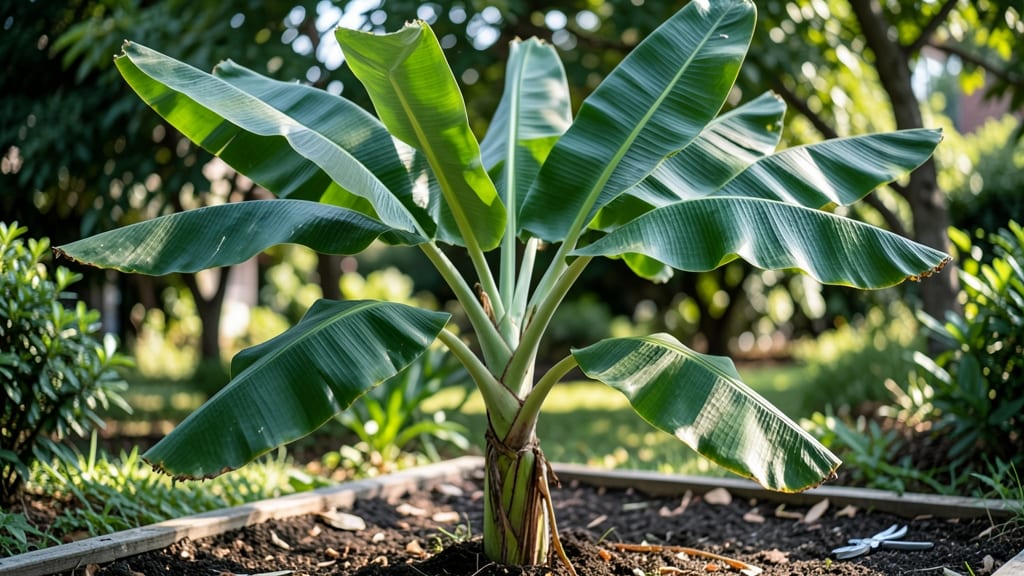
Growing a banana tree in your backyard means breakfast in your own hands—no grocery store required. 🌱 I’ve watched mine go from a 6-inch pot to a 10-foot-tall tropical showstopper in just two years, even in my Zone 7 garden.
The secret isn’t heat or humidity (though that helps)—it’s the right dwarf variety, a deep container, and a little winter coaxing.
You’ll need a 50-gallon container (or in-ground space in warmer zones), well-draining soil mixed with compost, and a spot that gets full sun for at least 6 hours daily.
Dwarf varieties like ‘Dwarf Cavendish’ or ‘Ice Cream’ stay manageable, while regular bananas can bolt to 15 feet—so choose based on your space. Water deeply 2-3 times a week (more in summer), and fertilize monthly with banana-specific mix during growing season.
By summer’s end, you’ll be harvesting small but sweet bananas—yes, even in pots. The leaves rustle like a rainforest breeze, and the fruit tastes like childhood memories. Prune dead fronds in spring, and in cold climates, move containers indoors before frost or wrap the pot for extra insulation.
Patience pays off: it takes 18-24 months for dwarf varieties to fruit, but the wait is worth it.
Works for balconies, greenhouses, or frost-free patios—just adjust water and light as seasons shift. Here’s how to keep yours thriving year-round, no matter where you live.
📚 In This Guide
- What you need
- Instructions
- Tips and common mistakes
- Wrapping up and next steps
What you need
- ● Banana plant (Musa spp.) – Choose a dwarf variety (e.g., Musa acuminata ‘Dwarf Cavendish’) for containers or cold climates. Buy a healthy, potted plant or rhizome from a nursery.
- ● Large container (15–25 gallons) – For potted growth, use a pot with drainage holes and a diameter of at least 18 inches. Terracotta or fabric pots work best.
- ● Well-draining potting mix – A blend of 60% peat moss or coconut coir, 30% perlite, and 10% compost mimics tropical soil. Avoid heavy garden soil.
- ● Organic fertilizer – A balanced 10-10-10 or 20-20-20 fertilizer (diluted to half-strength) or a slow-release banana-specific fertilizer.
- ○ Mulch (optional but helpful) – 3–4 inches of straw or wood chips to retain moisture and regulate temperature.
- ● Warmth – Banana trees thrive in USDA Zones 10–12 (60–90°F). In colder zones, grow in containers and bring indoors during frost (below 50°F).
- ● Sunlight – 6–8 hours of direct sun daily. Use a sunny patio, greenhouse, or south-facing window if indoors.
- ● Water – Keep soil consistently moist but not soggy. Water deeply 2–3 times per week in hot weather.
- ● Humidity – Aim for 50–70% humidity. Use a humidity tray or mist leaves in dry climates.
- ● 🌡️ Cold climates? Overwinter your banana tree indoors near a bright window or under grow lights.
- ● ✨ Boost growth with a monthly foliar spray of diluted fish emulsion or seaweed extract.
- ● 🔄 Rotate containers every few weeks to ensure even sunlight exposure.
Step-by-step instructions for cultivating a banana tree in containers
Here’s how to nurture a thriving banana tree—whether you’re braving cold winters or keeping it in pots.
🪴 Step 1: Select the Right Container and Soil Mix
Start with a large, sturdy container—at least 18 inches wide and deep—since banana trees develop massive root systems. I use fabric grow bags for their breathability, but a heavy ceramic pot works too. Drainage is non-negotiable: drill holes in the bottom if your pot doesn’t have them, then line it with 2 inches of coarse gravel to prevent root rot.
Fill the container with a well-draining mix of 50% potting soil, 30% perlite, and 20% compost. Banana trees hate soggy roots, so avoid garden soil—it compacts and suffocates their fibrous roots. Mix in a handful of slow-release fertilizer (like 10-10-10) to give your tree a nutrient boost right from the start. Tap the pot gently to settle the soil, but don’t pack it down too firmly—roots need air too.
🌱 Step 2: Plant the Banana Psuedostem Correctly
Banana trees grow from corms (thick, underground stems), not seeds. Purchase a healthy mature corm (about 4-6 inches in diameter) from a tropical nursery. Plant it 2-3 inches deep in the soil, with the bud (small bump) facing upward. This is the future trunk—burying it too deep or upside down will stunt growth.
Press the soil lightly around the corm to eliminate air pockets, then water deeply until moisture drains from the bottom. Place the pot in a warm, shaded spot (like a greenhouse or covered patio) for the first 2-3 weeks. You’ll see new shoots emerge within 4-6 weeks—this is your signal the corm is happy. If nothing sprouts after 8 weeks, the corm may be dormant or damaged.
☀️ Step 3: Provide the Right Light and Temperature
Banana trees crave bright, indirect light—think 6-8 hours of morning sun and afternoon shade. Direct afternoon sun will scorch the large leaves. If growing indoors, place it near a south-facing window or supplement with a grow light (14-16 hours daily). You’ll know the light is right when the leaves are deep green and upright, not yellowing or stretching toward the window.
Temperature is critical: keep soil between 75-85°F year-round. In cold climates, move the pot indoors before 50°F nights—banana trees cannot tolerate frost. If you’re overwintering, place it in a sunny, humid spot (like a bathroom with a window) and reduce watering slightly. Watch for brown leaf tips—a classic sign of dry air or cold stress.
💧 Step 4: Water and Fertilize for Maximum Growth
Banana trees thirst heavily but hate soggy roots. Water deeply when the top 2 inches of soil feel dry—this usually means every 2-3 days in summer, but adjust for your climate. Let excess water drain completely; standing water in the saucer will rot the roots overnight. Mulch the soil surface with 2 inches of straw to retain moisture and regulate temperature.
Feed your tree every 4-6 weeks with a balanced liquid fertilizer (like 20-20-20) diluted to half strength. In spring and summer, I also add potassium-rich fertilizer (like 0-0-50) to promote flower development. Stop fertilizing in fall and winter—the tree enters a dormant phase. Yellowing leaves? You’re either overwatering or under-fertilizing. Adjust one at a time to diagnose.
✂️ Step 5: Prune and Support as the Tree Matures
Banana trees grow tall and top-heavy—they’ll need staking once they reach 4-5 feet. Use 3-4 bamboo stakes tied loosely with soft twine to support the pseudostem without restricting growth. Prune only dead or yellowing leaves at the base; never cut healthy leaves, as they feed the tree. If you’re growing in a cold climate, cut back the pseudostem to 12 inches in late fall—this encourages a new, hardier corm to form for next season.
Here’s the thing—banana trees only fruit once before the pseudostem dies. But don’t panic! The corm will sprout new shoots from the base, giving you multiple harvests per plant. When you see a flower bud (a bright red or purple spike) emerge, reduce water slightly—this triggers fruit development. Harvest when the bananas turn mostly yellow with a few brown spots.
Tips & tricks for cultivating a thriving banana tree
Between us, growing a banana tree indoors or in containers isn't just about patience—it's about getting the details right. These insights will help you avoid the common pitfalls that trip up even experienced growers.
Container Size Matters: That 18-inch minimum depth isn't arbitrary—banana trees develop root systems that can grow three times wider than the pot's diameter. If you're using a fabric grow bag, choose one that's at least 24 inches deep for better stability as the tree matures. I've seen trees topple when the roots outgrow their containers, and trust me, you don't want to deal with that mess.
Soil Mix Secrets: The 50-30-20 ratio of potting soil, perlite, and compost is perfect, but here's what nobody tells you—pre-moisten your perlite before mixing. Dry perlite absorbs all the water, leaving your corm thirsty. Also, consider adding 1 part coconut coir to the mix for better moisture retention without compacting. This small tweak makes all the difference in preventing root rot during those critical first weeks.
Lighting Strategy: Those 6-8 hours of morning sun are non-negotiable, but here's how to optimize: if you're using grow lights, position them 12-18 inches above the leaves and adjust the height as your tree grows. Too close and you'll scorch those massive leaves; too far and you won't get enough intensity. I use a full-spectrum LED grow light on a timer for my indoor trees—it mimics natural light cycles perfectly and prevents that leggy growth you see with weak lighting.
Temperature Troubleshooting: Maintaining that 75-85°F soil temperature range can be tricky in cold climates. I've found that placing a heating mat under containers during winter months (when nights drop below 50°F) works wonders. For indoor growers, avoid placing your banana tree near drafty windows or vents—those temperature swings cause more stress than you'd think. A simple digital thermometer buried in the soil gives you real-time readings and prevents guesswork.
Pro Tips for Grow A Garden Banana Tree
- Between us, growing a banana tree indoors or in containers isn't just about patience—it's about getting the details right.
- Container Size Matters: That 18-inch minimum depth isn't arbitrary—banana trees develop root systems that can grow three times wider than the pot's diameter.
- Soil Mix Secrets: The 50-30-20 ratio of potting soil, perlite, and compost is perfect, but here's what nobody tells you—pre-moisten your perlite before mixing.
Frequently asked questions
about growing a garden banana tree—whether in containers or cold climates—can help clear up common hurdles. Here are answers to the most pressing questions:Can banana trees survive winter in cold climates?
Banana trees are tropical and hate frost, but with care, they can survive mild winters. In zones 9-11, mulch heavily and protect the trunk with burlap or a frost cloth. For colder areas (zones 7-8), grow them in containers and move them indoors or to a greenhouse before temperatures drop below 50°F (10°C).
How long does it take for a banana tree to bear fruit?
Patience is key! A young banana tree typically takes 18–24 months to produce its first fruit, depending on the variety and growing conditions. Dwarf varieties (like ‘Dwarf Cavendish’) may fruit sooner, while larger types take longer. Ensure your plant gets full sun, rich soil, and consistent watering to speed up the process.
Can I grow a banana tree in a pot, and what size container do I need?
Banana trees thrive in containers, making them perfect for small spaces or cold climates. Use a 15–25 gallon pot with drainage holes and fill it with well-draining, slightly acidic soil (pH 5.5–7.0). Dwarf varieties can even grow in 10-gallon pots, but larger trees need bigger space. Rotate the pot occasionally for even growth.
Why are my banana tree leaves turning yellow or brown?
Yellow or brown leaves usually signal stress. Overwatering (root rot) or underwatering (drought stress) are common culprits. Check the soil moisture—it should stay evenly damp but not soggy. Pests like spider mites or fungal diseases (like sigatoka leaf spot) can also cause browning. Treat with neem oil or fungicide if needed, and improve airflow around the plant.
Do banana trees produce fruit every year, or just once?
Banana trees are not perennial in the true sense—they’re monocarpic, meaning they produce fruit once and then die. However, they send up pups (offshoots) from the base, which can be replanted to continue your harvest. With proper care, you can enjoy fruit yearly by replacing the parent plant with a healthy pup.
What’s the best temperature range for growing banana trees?
Banana trees love warmth! Ideal temperatures range between 75–85°F (24–29°C) during the day and 60–70°F (15–21°C) at night. They can tolerate brief dips to 50°F (10°C), but prolonged cold (<40°F/4°C) will damage or kill the plant. If you’re in a cooler zone, grow them in containers and bring them indoors during winter.
Wrapping up and next steps
Growing a garden banana tree is a rewarding adventure—whether you’re nurturing one in a cozy container or braving cooler climates! With the right location, soil, and care, you’ll soon enjoy lush foliage and sweet, homegrown bananas. 🌱✨
Ready to take the next step? Start by planting your sapling (or seed) this season and watch your tropical oasis thrive. Need extra tips? Explore our banana tree care guide for year-round success!