
Planting
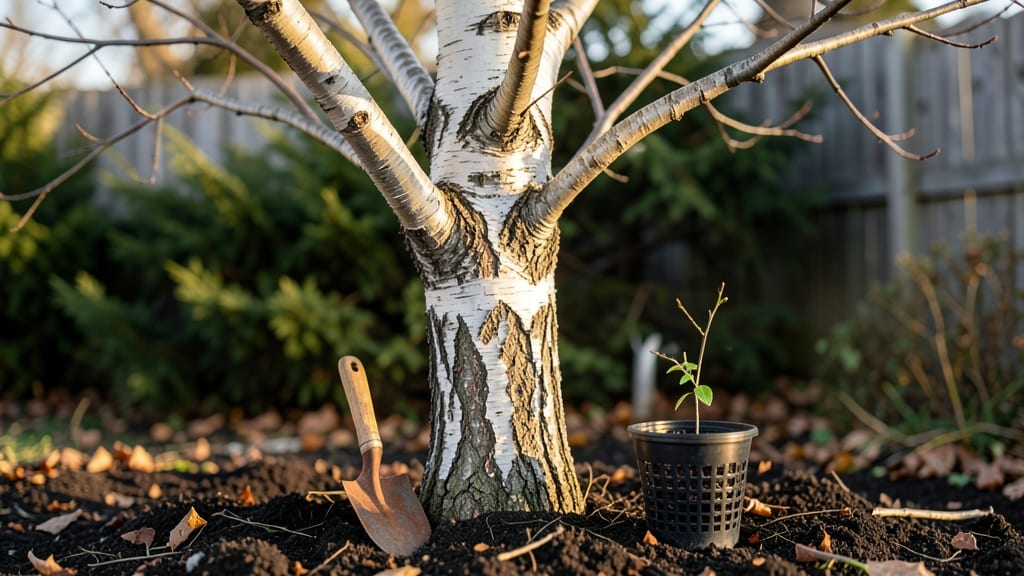
Planting river birch trees the right distance apart—how far apart to plant river birch trees—can mean the difference between a thriving grove and a lifetime of root battles and stunted growth. 🌳 I learned the hard way when my first two birches crowded each other, leaving me with twisted trunks and fewer leaves than I wanted.
The right spacing isn’t just about giving roots room—it’s about creating a future where each tree thrives without fighting for sunlight or nutrients.
For mature river birches, aim for 15 to 25 feet between trunks, depending on your soil and climate. Sandy soil lets roots spread faster, so you can stretch to 25 feet, while heavier clay may need tighter spacing at 15 feet.
Think of it like planting a grove: you want room for their eventual canopies to touch but not overlap, so air circulates and disease stays away.
What you’ll end up with is a natural-looking cluster of birches—peeling bark, golden fall foliage, and that signature river birch grace. Prune young branches now to encourage strong structure, and you’ll have trees that grow straight and full, not leaning or crowded.
The payoff? A backyard that feels like a serene woodland retreat, not a cramped tree farm.
This spacing works for both single specimens and small groves, whether you’re lining a driveway or filling a corner of your property. The key is patience: birches grow slowly at first, but once established, they’ll reward you for years with minimal care.
Let’s get those roots settled right from the start.
📚 In This Guide
- What you need
- Instructions
- Tips and common mistakes
- Wrapping up and next steps
What you need
- ● River birch trees: 1–3 saplings (depending on desired spacing; 5-gallon containers are ideal for mature root systems).
- ● Shovel or spade: A sturdy digging shovel (18–24 inches wide) for planting holes.
- ● Measuring tape or string: For marking precise spacing (15–25 feet apart for mature trees, 8–10 feet for younger ones).
- ● Native soil or compost mix: 1–2 bags of high-quality organic compost (to improve drainage and fertility).
- ● Mulch: 2–3 cubic feet of wood chips or pine straw (to retain moisture and suppress weeds).
- ● Watering can or hose with a gentle nozzle: For deep watering after planting.
- ● Gloves and knee pads: To protect your hands and knees during digging. 🧤👣
- ● Soil pH test kit: River birch prefers acidic soil (pH 4.5–6.0); adjust with sulfur if needed.
- ● Tree stakes and ties: For young saplings in windy areas (use biodegradable stakes!).
- ● Fertilizer (low-phosphorus): A balanced 10-10-10 or acidic fertilizer to boost early growth.
- ● Pruning shears: For trimming dead or damaged branches post-planting.
Step-by-Step guide for planting river birch trees with perfect spacing
Here's how to give your birches room to thrive—no guessing, just science-backed spacing.
🪴 Step 1: Measure Your Site and Plan the Layout
River birch trees need 15-20 feet of space between trunks at maturity. Start by measuring your planting area and marking the center of each tree's future home with stakes and string. I like to use a 20-foot spacing for full-sized trees—this prevents root competition and lets branches develop naturally without crowding.
Sketch your layout first. River birches have dramatic peeling bark, so place them where you'll see the trunks from multiple angles. If planting near a fence or building, leave at least 10 feet of clearance to avoid root damage and allow airflow. Check local utility lines—birch roots can lift sidewalks if planted too close.
☀️ Step 2: Dig Holes with Proper Depth and Width
Dig holes twice as wide as the root ball and as deep as the container the tree came in. For bare-root trees, soak the roots in water for 1-2 hours before planting. I always dig a hole that's 3-4 inches deeper than the root flare—this ensures the tree sits level with the ground once settled.
Loosen the soil at the bottom of the hole with your shovel or hands. This breaks up compaction so roots can spread easily. If your soil is heavy clay, mix in 2-3 inches of compost at the hole's base. Avoid amending the entire hole—too much organic matter can suffocate roots.
🌱 Step 3: Plant Trees and Backfill with Native Soil
Place the tree in the hole so the root flare (where roots meet the trunk) sits 1-2 inches above ground level. This prevents water from pooling at the trunk. Have a helper hold the tree straight while you backfill with the native soil you removed—don't use amended soil here. Tamp down gently every 6 inches to remove air pockets.
Water deeply after planting to settle the soil. The hole should hold 1-2 gallons of water without draining away immediately. Mulch with 2-3 inches of wood chips, keeping mulch 6 inches away from the trunk to prevent rot. Real talk: Over-mulching is a common mistake—too much smothers the roots.
⏰ Step 4: Water and Monitor for First-Growth Signals
Water newly planted birches 2-3 times per week for the first 4-6 weeks, giving 5 gallons per tree each time. You'll know they're getting enough water when the soil 1 inch below the surface stays moist but not soggy. River birches are drought-tolerant once established, but young trees need consistent moisture.
Watch for new growth in 4-8 weeks—this is your signal the roots have taken hold. If leaves appear yellow or wilted, the tree may be too dry or too wet. Adjust your watering schedule based on rainfall: 1 inch of rain per week usually replaces your watering needs.
Tips & tricks for planting river birch trees with perfect spacing
Confession: I planted birches too close once and spent years pruning branches that shouldn't have existed. Here's what I learned the hard way about giving these trees the space they deserve.
Spacing Strategy: For mature river birches, stick with the 20-foot spacing mentioned in Step 1—this accounts for their eventual 15-20 foot mature width while preventing root competition. If you're planting near property lines, consider a staggered layout where alternate trees are spaced 15 feet apart while maintaining 20 feet between rows. This creates a natural, wind-resistant pattern that mimics forest ecosystems.
Root Flare Visibility: In Step 3, when positioning your tree, make the root flare (that swollen area where roots meet trunk) the reference point—not the soil line from the container. The flare should sit 1-2 inches above ground level after settling. I use a small stick marked with this measurement to verify placement before backfilling. This small detail prevents water pooling that leads to rot.
Soil Prep Shortcut: For heavy clay soils mentioned in Step 2, I've found that mixing 2-3 inches of compost only at the hole's base (not throughout) creates a natural root zone without overwhelming the tree. If you don't have compost, use a 50/50 mix of native soil and coarse sand—this improves drainage while maintaining soil structure. The key is to loosen the bottom 6-8 inches of the hole thoroughly with a shovel or garden fork.
Watering Hack: After planting, I test water retention by pouring 1-2 gallons into the hole—if it drains completely within 10 minutes, the hole needs more backfilling. For the 2-3 weekly waterings in Step 4, I use a rain gauge to measure 1 inch of rainfall equivalent. This ensures consistent moisture without overwatering, which is especially critical during the 4-8 week establishment period when roots are most vulnerable.
Pro Tips for How Far Apart To Plant River Birch Trees
- Confession: I planted birches too close once and spent years pruning branches that shouldn't have existed.
- Spacing Strategy: For mature river birches, stick with the 20-foot spacing mentioned in Step 1—this accounts for their eventual 15-20 foot mature width while preventing root competition.
- Root Flare Visibility: In Step 3, when positioning your tree, make the root flare (that swollen area where roots meet trunk) the reference point—not the soil line from the container.
Frequently asked questions
Got questions about spacing river birch trees like a pro?
You’re in the right place! Here are answers to the most common queries—so you can plant with confidence and watch your birches thrive.
How close can I plant river birch trees?
River birches need 15–25 feet of space between trees for optimal growth. Planting them too close (under 12 feet) can lead to competition for water, nutrients, and sunlight, stunting their iconic peeling bark and stately form. Give them room to breathe!
Can I plant river birch trees in rows or clusters?
Yes! For a natural look, plant them in clusters of 3–5 trees spaced 15–20 feet apart. For formal gardens, use straight rows with 20–25 feet between trees. Just avoid overcrowding—birches love airflow to prevent fungal issues like birch borer.
What if my yard is small? Are there dwarf alternatives?
If space is tight, consider dwarf river birch varieties like ‘Fastigiata’ (narrow, upright) or ‘Pendula’ (weeping). These grow 10–15 feet tall and can be planted 8–12 feet apart. Just check your local nursery for cold-hardy options!
Should I plant river birch trees in fall or spring?
Both work, but fall planting (September–November) is ideal—trees establish roots before winter. If planting in spring (March–May), water deeply to help them adjust. Avoid extreme heat or frost periods for best survival rates.
What if my birch trees look crowded after a few years?
Thin them out! If branches overlap or growth slows, remove the smallest or weakest tree to restore spacing. Prune in late winter/early spring to avoid stressing the tree. Over time, proper spacing ensures your birches stay healthy and show off their stunning bark.
Wrapping up and next steps
Planting river birch trees with the right spacing—15–25 feet apart—ensures they thrive while creating a breathtaking natural landscape. Remember to consider soil drainage, sunlight, and future growth habits for long-term success. 🌳
Now that you’re armed with these spacing secrets, it’s time to roll up your sleeves and get planting! Start by marking your spots with stakes, then watch your river birch grove flourish into a stunning, low-maintenance centerpiece. Happy gardening! 🌱