
Propagation
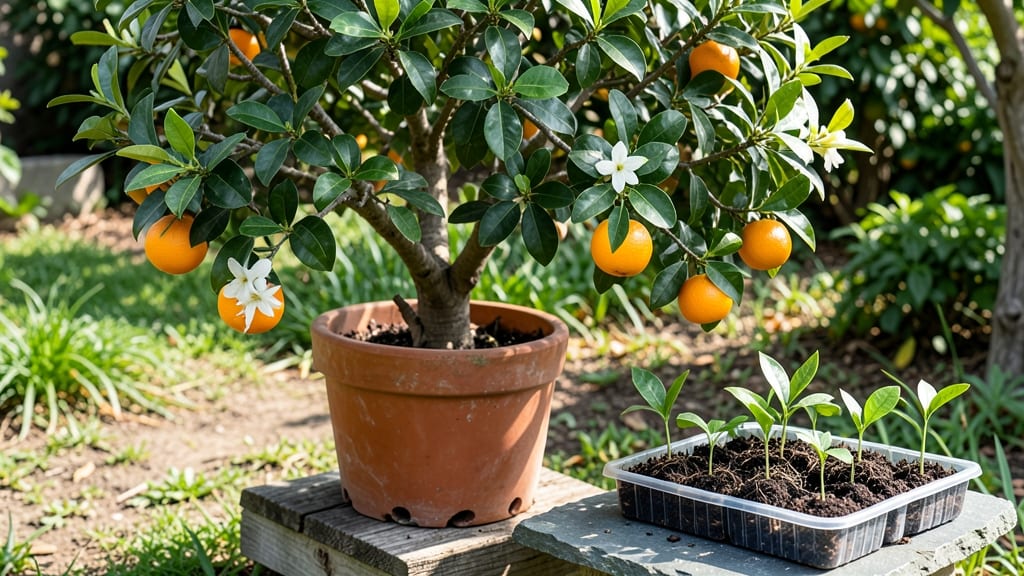
Growing an orange tree from an orange seed is easier than you think—here’s how to start your own citrus wonder. 🌱 I’ve turned grocery store oranges into thriving houseplants (and even a few outdoor trees in warmer climates), and the process is surprisingly simple if you follow a few key steps.
The real magic happens in the waiting: those first green leaves after months of patience make every effort worth it.
You’ll need just four things: a fresh orange, patience, a sunny spot, and a small pot. The trick is getting the seed to sprout—soak it overnight before planting, then keep the soil moist but not soggy.
Most seeds germinate within 2-4 weeks, though some stubborn ones take longer. Once the first leaves appear, you’ve officially started your citrus journey.
Within a year, your seedling could reach 1-2 feet tall with glossy, dark green leaves—though it’ll take 3-5 years before it bears fruit (if you’re lucky enough to live in a warm climate).
The best part? You’ll learn how to nurture a tree that thrives indoors or out, depending on your zone.
Here’s where it gets interesting—citrus trees are finicky about water, light, and temperature. Too much shade? Leggy growth. Too cold? Dropped leaves. But with the right care, you’ll end up with a fragrant, leafy tree that’s as much about the journey as the (eventual) harvest. Let’s get those seeds growing!
📚 In This Guide
- What you need
- Instructions
- Tips and common mistakes
- Wrapping up and next steps
What you need
- ● Fresh, organic orange – Choose a ripe, seed-bearing orange (navel oranges may not work well).
- ● Small pot (3–4 inches wide) – Use a container with drainage holes.
- ● Well-draining potting mix – A blend of peat, perlite, and sand (or a citrus-specific mix).
- ● Watering can or spray bottle – For gentle hydration.
- ● Plastic wrap or humidity dome – To retain moisture during germination.
- ● Sunny windowsill or grow light – A warm spot (70–80°F) with bright, indirect light.
- ● Patience! 😊 – Germination can take weeks to months.
- ● Seed-starting tray – For multiple seeds or better organization.
- ○ Heating mat (optional) – Speeds up germination if your space is cool.
- ● Fertilizer (balanced, low-nitrogen) – Once the seedling sprouts (e.g., 10-10-10).
- ● Pruning shears – For shaping the tree as it grows.
- ● Larger pot (10+ inches) – For transplanting after 6–12 months.
Step-by-step instructions for growing an orange tree from a seed
Here's how I turn kitchen scraps into a thriving citrus tree—no fancy tools needed.
🌱 Step 1: Extract and Prepare the Seed
Save a fresh, organic orange for this project. Cut it in half and scoop out the seeds, rinsing them gently to remove any pulp. I like to use navel or Valencia oranges—they're reliable starters. Place the seeds on a paper towel and cover them with another towel to absorb excess moisture. Leave them in a warm spot for 24 hours to dry slightly.
Here's the thing—you don't want the seeds to rot before they sprout. After drying, pick out the plumpest seeds (they've got the best chance). I tap them gently on the counter to remove any stubborn pulp clinging to the sides. This step ensures faster germination and healthier seedlings down the line.
🪴 Step 2: Plant the Seeds in Moist Potting Mix
Fill a small pot—about 4 inches deep—with the seed-starting mix you've prepared. Press it down lightly so it's firm but not compacted. I make two small holes, about ½ inch deep and 1 inch apart, using a pencil or my finger. Drop one seed into each hole and cover them with a thin layer of the mix, just enough to hide them completely.
Water the soil gently until it's evenly moist but not soggy. You'll know it's right when the surface looks dark and slightly damp—not glistening. Place the pot in a warm spot, ideally around 70-75°F. A sunny windowsill works, but avoid direct sunlight for the first few days. This warmth helps the seeds break dormancy faster.
☀️ Step 3: Provide Consistent Care for Germination
Keep the soil consistently moist by watering lightly every 2-3 days, or whenever the top inch feels dry to the touch. I use a spray bottle for this because it gives me better control—no drowning the seeds. In about 2-4 weeks, you'll see the first green shoots pushing through the soil. That's your signal to move the pot to a brighter location.
Once the seedlings reach about 2 inches tall, thin them so only the strongest one remains. I usually wait until both have sprouted to see which one looks healthier. The weaker seedling can be replanted in its own pot or composted. This step prevents overcrowding and gives your tree room to grow strong.
🌿 Step 4: Transplant and Nurture the Seedling
After the seedling has its first set of true leaves—those are the second pair after the initial seed leaves—it's time to transplant it into a slightly larger pot, about 6 inches deep. Use the same seed-starting mix and gently loosen the roots before placing it in the new pot. Fill in around the roots with fresh mix, pressing lightly to secure the plant.
Place the pot in a spot where it gets 6-8 hours of sunlight daily. If you're growing indoors, a south-facing window is ideal. Outdoor seedlings should be hardened off gradually—start by placing them outside for a few hours a day, then increase the time over 1-2 weeks. This slow transition helps the plant adjust to outdoor conditions without shock.
Tips & tricks for growing an orange tree from a seed
Real talk: Turning an orange pit into a thriving tree takes patience—but these little tricks make all the difference.
Seed Selection: Not all orange seeds are created equal. Navel and Valencia oranges produce the most reliable seedlings. I've found that larger, plump seeds (about the size of a pea) germinate faster than tiny ones—think of them like baby birds in an egg. After your 24-hour drying period, float-test your seeds: Drop them in a glass of water. The ones that sink are your winners—they're packed with energy for sprouting.
Germination Environment: That warm spot you place your seeds in (around 75°F) is crucial—it's like giving your seeds a cozy blanket to wake up from dormancy. I've had best success with a seedling heat mat set to low, or placing the pot on top of my fridge (not inside!). Avoid direct sunlight during germination—think of it as a baby bird that gets sunburned too soon. A bright, indirect light source is perfect until those little green shoots appear.
Watering Wisdom: The "dark and slightly damp" soil check is your golden rule for Step 2. Too much water drowns seeds, too little dries them out. I use a spray bottle because it mimics natural rainfall—gentle and even. After planting, I give the soil a light misting every other day, then check the top inch with my finger. If it feels dry, it's time to water again. Remember, citrus trees hate soggy roots but also can't handle drought.
Transplanting Timing: Waiting for true leaves (not those first seed leaves) before transplanting is key—it means your seedling has enough energy to handle the move. I've seen seedlings with just seed leaves struggle after transplanting, while those with true leaves thrive. When you move to that 6-inch pot, give the roots a little wiggle room in the new space. Think of it like giving your tree a new room in the house—it needs space to grow into its new home.
Pro Tips for Grow An Orange Tree From An Orange
- Real talk: Turning an orange pit into a thriving tree takes patience—but these little tricks make all the difference.
- Seed Selection: Not all orange seeds are created equal.
- Germination Environment: That warm spot you place your seeds in (around 75°F) is crucial—it's like giving your seeds a cozy blanket to wake up from dormancy.
Frequently asked questions
Got questions about growing an orange tree from a seed? You’re not alone! Here are some of the most common queries—and their answers—to help you succeed.
Can I grow an orange tree from any orange?
Not all oranges work! Choose a navel or valencia orange for the best results—these varieties are easier to propagate. Avoid seedless or hybrid oranges, as they may not produce a true citrus tree. Stick to fresh, organic oranges for the highest germination success.
How long does it take for an orange seed to sprout?
Germination can take anywhere from 2 to 4 weeks, depending on warmth and moisture. Keep the soil consistently damp (not soggy) and place the pot in a warm spot (70–85°F). Patience is key—some seeds may take up to 6 weeks to crack open!
Will my homegrown orange tree actually produce fruit?
Probably not for years—and maybe not at all! Seed-grown trees are not grafted like commercial varieties, so fruit may be small, bitter, or take 5–10 years to appear. For faster, better fruit, consider grafting later or buying a grafted sapling instead.
Can I grow an orange tree indoors?
Yes! Start indoors near a sunny window or under grow lights. Once the tree is 1–2 feet tall, move it outdoors in spring after the last frost. Use a large pot (at least 12 inches deep) with drainage holes and repot every 2–3 years. Just remember: Citrus trees love warmth!
What should I do if my seedling turns yellow or wilts?
Yellow leaves often mean overwatering or nutrient deficiency. Let the top inch of soil dry out between waterings, and fertilize lightly with citrus-specific food (half-strength) every 2–3 months. Pests like aphids or fungus can also cause wilting—inspect leaves and treat with neem oil if needed.
Do orange trees need cold weather to grow?
Not necessarily! While many citrus trees tolerate mild cold, young seedlings are sensitive to frost (below 30°F). If you live in a cold climate, grow your tree in a container and bring it indoors during winter. Mature trees in warmer zones (USDA 9–11) can thrive outdoors year-round.
Wrapping up and next steps
Growing an orange tree from a seed is a rewarding journey that blends patience with the joy of nurturing life! 🌱 With the right care—sunlight, water, and a little love—you’ll watch your tiny seedling transform into a thriving citrus tree.
Whether you’re growing it for fresh fruit, shade, or just the fun of it, your green thumb is already on the right track.
Ready to take the next step? Start by monitoring your tree’s growth—soon, you might even be sharing homegrown oranges with friends or neighbors! 🍊💚