
Size
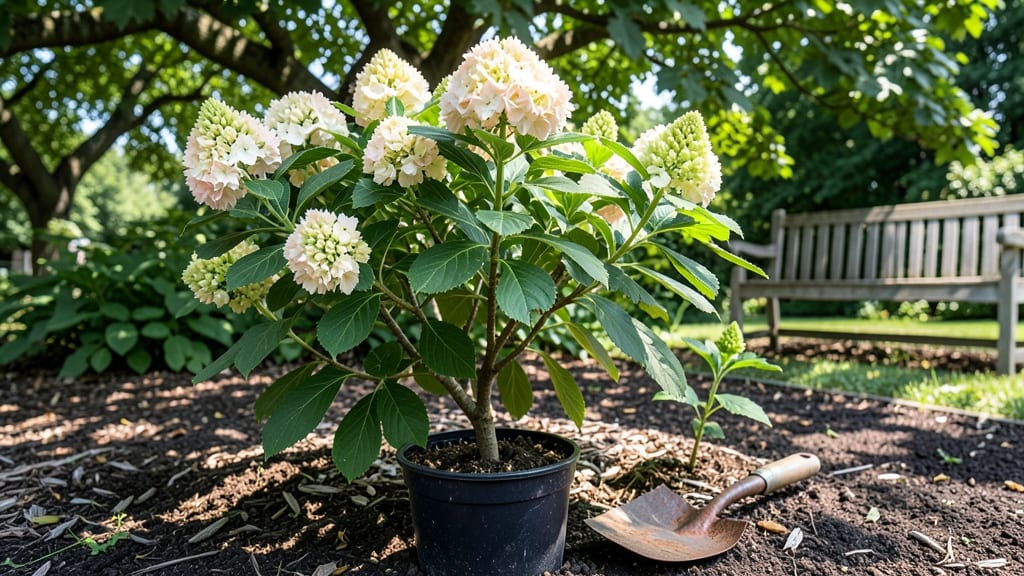
Growing a hydrangea tree starts with the right variety—Hydrangea paniculata is the tough, tree-like choice that thrives in heat and handles pruning like a champ.
I planted mine in late spring after a frost scare, and now it towers over my patio, its cone-shaped blooms lasting from summer straight through fall. The key isn’t just picking the plant; it’s matching it to your yard’s sunlight and soil.
These trees love full sun but tolerate partial shade, making them versatile for small yards or city balconies. Amend heavy clay soil with compost before planting, and water deeply after the first year to establish strong roots.
A balanced fertilizer in early spring jumpstarts growth, while mulch keeps moisture steady—no high-maintenance fuss here. My tree blooms without extra pampering, proving these are the low-drama hydrangeas.
Pruning in late winter or early spring is where the magic happens—cut back old stems by a third to encourage fresh, vigorous growth. The result? Bigger blooms and a shape that stays neat without constant trimming.
By summer, you’ll have a tree that’s both a privacy screen and a showstopper, with flowers that change color as the season shifts from green to pink to deep purple.
Perfect for beginners and busy gardeners, hydrangea trees handle neglect better than most shrubs. They’re disease-resistant, deer-proof, and even survive light frost. Once established, they’ll reward you for years with minimal effort—just remember to prune annually and keep the soil moist. Ready to grow one that outshines the rest?
📚 In This Guide
- What you need
- Instructions
- Tips and common mistakes
- Wrapping up and next steps
What you need
- ● Hydrangea Tree (Panicle or Oakleaf Variety): 1 healthy, nursery-grown Hydrangea paniculata or Hydrangea quercifolia (3–5 gallons in size for best results)
- ● Verify the plant is disease-free and has vibrant buds.
- ● Planting Site: Sunlight: 6+ hours of direct sun (morning sun + afternoon shade works for some varieties)
- ● Space: 10–15 feet in diameter (hydrangeas spread!)
- ● Soil: Well-draining, slightly acidic (pH 5.2–6.2) (amend with peat moss or sulfur if needed)
- ● Tools: 1 shovel or trowel (for digging)
- ● 1 garden fork (to loosen soil)
- ● 1 pruning shears (bypass pruners, sterilized)
- ● 1 measuring tape (to mark planting depth)
- ● 1 watering can or hose (with adjustable nozzle)
- ● Amendments (if needed): Compost or aged manure (5–10 gallons to enrich soil)
- ● Sulfur or aluminum sulfate (to lower pH if soil is alkaline)
- ● 1 mulch (2–3 inches of pine bark or shredded leaves to retain moisture)
- ● 1 soil pH tester (to monitor acidity levels)
- ● 1 fertilizer (balanced 10-10-10 or hydrangea-specific formula)
- ● 1 plant support stake (if planting in windy areas)
- ● 1 gardening gloves (to protect your hands)
Step-by-step guide to cultivating a thriving hydrangea tree
Pick the right variety and follow these precise steps for a lush, long-lived shrub.
🌱 Step 1: Select and Prepare the Planting Site
Hydrangeas thrive in partial shade with 4-6 hours of morning sun—too much afternoon sun scorches leaves, while too little light produces weak stems. Test your site by observing how much sun it gets daily before planting. The ideal spot has well-draining soil with a pH between 5.5 and 6.5 for blue blooms or 6.5-7.5 for pink flowers.
Dig a hole twice as wide as the root ball but only as deep as the container’s height. Loosen the roots gently if they’re circling—this prevents transplant shock. I always mix the excavated soil with 2 inches of compost to improve fertility and drainage.
☀️ Step 2: Plant and Water for Immediate Establishment
Place the hydrangea in the hole so the top of the root ball sits 1 inch above ground level—this prevents rot during heavy rains. Backfill with the soil-compost mix, pressing lightly to remove air pockets. Water deeply until moisture reaches 6 inches down, then let the soil settle for 24 hours before adding 2-3 inches of mulch around the base (but keep it 6 inches away from the trunk to avoid rot).
Here’s the thing—hydrangeas hate soggy roots. If your soil drains poorly, amend it with sand or perlite before replanting. After watering, check the soil moisture by sticking your finger 2 inches deep—it should feel damp but not wet.
✂️ Step 3: Prune for Shape and Flowering Success
Timing matters: Prune in late winter or early spring (before new growth appears) for panicle or cone-shaped hydrangeas, or right after flowering for mophead or lacecap varieties. Never prune in fall—you’ll cut off next year’s buds. Use clean, sharp pruners to make cuts at a 45-degree angle just above a leaf node or outward-facing bud.
For established trees, remove 10-20% of last year’s growth to encourage bushiness. Deadhead spent blooms in late summer to redirect energy to next year’s flowers. If your hydrangea blooms poorly, check for over-pruning—this is the #1 mistake gardeners make.
💧 Step 4: Maintain Soil Moisture and Fertility
Water deeply once a week (or more in extreme heat) to encourage deep roots. Hydrangeas show stress by drooping leaves or brown edges—this means they’re thirsty. Always water at the base, not overhead, to prevent fungal diseases like powdery mildew. A 5-gallon watering can delivers enough for mature plants.
Feed with a balanced 10-10-10 fertilizer in early spring, then switch to acid-loving plant food (like cottonseed meal) in summer if you want blue blooms. I test soil pH every 2 years—if it’s off, adjust with sulfur (to lower pH) or lime (to raise pH). Never fertilize in fall, as it promotes tender new growth that won’t survive winter.
Tips & tricks for perfect hydrangea tree cultivation
These practical insights will help you avoid common pitfalls and cultivate a thriving, long-lived hydrangea that blooms beautifully year after year.
Site Selection Wisdom: When testing your site for that perfect 4-6 hours of morning sun, pay special attention to the afternoon hours. Even if your spot gets morning sun, check if late afternoon rays hit it—this is when leaves are most vulnerable to scorching. I've seen otherwise perfect locations fail because gardeners overlooked this afternoon sun exposure. For extra protection, consider planting near taller shrubs or trees that provide natural shade during those critical afternoon hours.
Root Care During Planting: The 24-hour settling period after planting is crucial, but don't let it become a waiting game. Use this time to create a protective watering schedule. Set up a slow drip irrigation system or soaker hose around the base—this ensures consistent moisture without the risk of overwatering. The goal is to keep that 2-inch deep soil consistently damp but never soggy during those first critical days. This setup gives you peace of mind while the roots establish themselves.
Pruning Precision: When removing that 10-20% of last year's growth, focus on the oldest stems first. These are typically the thicker branches that can become woody and less productive. I always start pruning from the center of the plant working outward—this opens up the interior for better air circulation and sunlight penetration. For the 45-degree angle cuts, imagine you're cutting just above where a leaf would grow if you were continuing that branch's natural growth pattern.
Soil Maintenance Strategy: That weekly deep watering with a 5-gallon can is perfect, but here's a pro tip: divide that water into two sessions. Give half in the morning and the rest in the evening. This two-part approach prevents water from evaporating too quickly and ensures it penetrates deeper into the soil. During extreme heat, increase to three sessions—morning, midday, and evening—to keep roots consistently hydrated without overwhelming the plant.
Pro Tips for Grow Hydrangea Tree
- These practical insights will help you avoid common pitfalls and cultivate a thriving, long-lived hydrangea that blooms beautifully year after year.
- Site Selection Wisdom: When testing your site for that perfect 4-6 hours of morning sun, pay special attention to the afternoon hours.
- Root Care During Planting: The 24-hour settling period after planting is crucial, but don't let it become a waiting game.
Frequently asked questions
Got questions about growing your own hydrangea tree?
You’re not alone—this stunning plant can be tricky for beginners! Here are answers to the most common queries to help you nurture a thriving hydrangea tree with confidence.
1. What’s the best time of year to plant a hydrangea tree?
Plant your hydrangea tree in early spring or early fall when temperatures are mild (50–70°F). Avoid extreme heat or frost, as these can stress young roots. If planting in summer, keep the soil consistently moist and provide afternoon shade to protect the roots.
2. How often should I water my hydrangea tree, and how do I know it’s getting enough?
Water deeply 1–2 times per week, aiming for 1–1.5 inches of water per session. Check soil moisture by sticking your finger 2 inches deep—if it’s dry, it’s time to water. Pro tip: Mulch around the base (2–3 inches) to retain moisture and regulate temperature.
3. When and how should I prune my hydrangea tree to encourage blooms?
Timing depends on your variety:
- Bigleaf hydrangeas (e.g., 'Endless Summer'): Prune right after flowering (late summer/early fall) to shape and remove dead wood.
- Oakleaf or panicle hydrangeas: Prune in late winter or early spring before new growth emerges.
4. Why are my hydrangea leaves turning yellow or brown?
Yellow leaves often signal overwatering or poor drainage, while brown edges may mean underwatering or sunburn. Check for pests like aphids or spider mites (tiny webs on undersides of leaves). Adjust watering, improve soil drainage, or move the tree to partial shade if it’s in harsh sunlight.
5. Can I grow a hydrangea tree in a pot, and what’s the best container size?
Yes! Choose a container at least 15–20 gallons with drainage holes. Opt for oakleaf or panicle varieties (like 'Limelight'), as they adapt better to containers. Use well-draining potting mix and repot every 2–3 years to refresh nutrients. Place the pot in a spot with morning sun and afternoon shade.
Wrapping up and next steps
Growing a hydrangea tree is a rewarding journey—whether you’re drawn to their show-stopping blooms or their low-maintenance charm! With the right variety, location, and pruning know-how, you’ll soon enjoy lush, vibrant foliage and clusters of color that brighten any landscape.
Remember, patience and consistency are key, especially when it comes to watering, soil health, and seasonal care.
Now that you’re armed with the secrets, roll up your sleeves and give it a try! Start by selecting a healthy plant from a local nursery, then follow your pruning schedule to keep your hydrangea thriving. Before you know it, your garden will be the talk of the neighborhood! 🌸✨