
How To
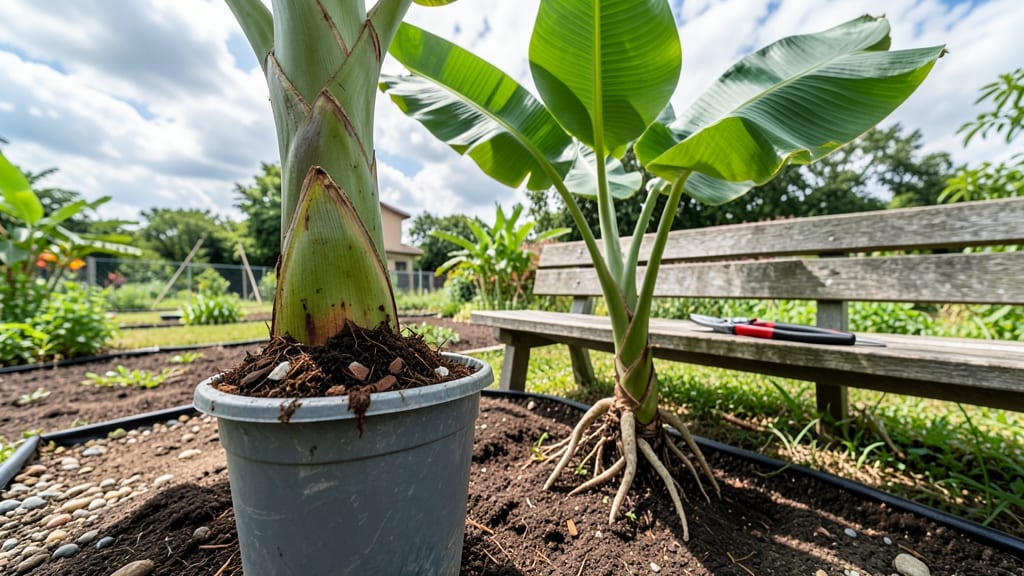
Transplanting a banana tree feels like moving a diva—get it wrong, and you’ll spend years watching it sulk. But with the right timing and technique, your plant will thrive in its new home.
The key is working during the coolest months of your climate, when growth slows naturally, and roots establish without stress.
Start by prepping the new spot with well-draining soil and space for the tree’s eventual size (10+ feet wide). Dig a hole twice as wide as the root ball but no deeper, then gently loosen the roots before transferring.
Water deeply before and after transplanting—this keeps the soil moist and reduces shock. Avoid fertilizing for the first 6-8 weeks, as new roots need time to settle.
📚 In This Guide
- What you need
- Instructions
- Tips and common mistakes
- Wrapping up and next steps
What you need
- ● Banana tree (Musa spp.) – Healthy, mature plant (3+ years old) with a well-developed root ball. Pro tip: 🌡️ Choose a tree in early spring or late fall for optimal survival rates!
- ● Shovel or spade – A sturdy, sharp-edged tool (18–24 inches wide) to dig around the root ball.
- ● Pruning shears or loppers – For trimming dead or overgrown leaves and pseudostems.
- ● Garden fork or root knife – Helps loosen compacted soil around the roots without damaging them.
- ● Wheelbarrow or tarp – To transport the root ball and soil to the new location.
- ● Compost or well-aged manure – 5–10 gallons, mixed into the planting hole for nutrient-rich soil.
- ● Organic mulch (e.g., straw, wood chips) – 2–3 inches thick to retain moisture and regulate temperature.
- ● Garden hose with spray nozzle – For thorough watering before and after transplanting.
- ○ Support stake (optional but helpful) – A 6–8 ft bamboo or wooden stake to stabilize the tree if needed.
- ● Root stimulator or mycorrhizal fungi – Boosts root growth and stress recovery.
- ● Slow-release fertilizer (balanced NPK, e.g., 10-10-10) – 1–2 cups mixed into the planting hole.
- ● Anti-transplant shock spray (e.g., seaweed extract) – Spritz lightly on leaves post-transplant.
- ● Soil moisture meter – Ensures the root ball stays hydrated during the process.
- ● Gloves and knee pads – Because banana trees are heavy, and comfort matters!
Step-by-step instructions for transplanting banana trees
Here's my foolproof approach to relocating banana trees without shocking their roots.
Choose the Right Time and Prepare the New Location
Banana trees thrive when transplanted during their active growing season, typically in spring or early summer when temperatures stay above 65°F. Avoid moving them during drought or extreme heat—roots need moisture to recover. The new spot should mirror the old one: partial shade to full sun and protection from strong winds.
Dig a hole twice as wide as the root ball but only 1-2 inches deeper than the current planting depth. Banana trees hate sitting too low—the crown (where roots meet trunk) should end up at ground level. Loosen the soil at the bottom of the hole with a fork to improve drainage, especially if your soil compacts easily.
Carefully Dig Up the Banana Tree
Water the tree 2-3 days before transplanting to encourage root growth and reduce shock. On moving day, use a sharp spade to cut a clean circle around the trunk, 12-18 inches from the stem. Angle the spade slightly downward to avoid severing roots. Lift the tree gently by the base—banana roots are heavy, so enlist help if needed.
If the root ball is too large to handle, wrap it in burlap or a tarp to protect the roots while you carry it. Never let the roots dry out during transport. Keep the root ball intact; even a few broken roots can set back recovery by weeks. If you must divide the root ball, use a clean, sharp knife to make clean cuts.
Transplant and Secure the Banana Tree
Lower the banana tree into the prepared hole, ensuring the crown sits at ground level. Backfill with the original soil, tamping down gently in 3-inch layers to eliminate air pockets. Avoid compacting too firmly—banana roots need loose soil to spread. Water thoroughly after planting to settle the soil and hydrate the roots.
Stake the tree if it’s tall or top-heavy. Use 2-3 bamboo stakes tied loosely to the trunk with soft fabric strips. Don’t cinch too tight—banana stems grow fast and need room to expand. Mulch the base with 2-3 inches of organic mulch (like wood chips) to retain moisture and regulate soil temperature.
Maintain Recovery for Strong Regrowth
Keep the soil consistently moist but not soggy for the first 4-6 weeks. Water deeply every 2-3 days until new leaves emerge—this signals the roots have begun regrowing. Avoid fertilizing during this period; the tree needs energy to recover, not to produce fruit. Yellowing leaves are normal at first, but if they persist beyond 2-3 weeks, the tree may need more shade.
Monitor for pests like aphids or scale, which thrive on stressed plants. A light spray of neem oil can prevent infestations without harming the tree. Once the banana tree shows 3-4 new leaves, it’s ready for normal care—watering every 5-7 days and occasional feeding with a balanced fertilizer.
Tips & tricks for transplanting banana trees without stress
Moving banana trees can feel intimidating, but these practical tips will help you avoid common pitfalls and give your tree the best chance to thrive in its new home.
Timing is Everything: The 65°F minimum temperature guideline is non-negotiable—banana roots are sensitive to cold stress. If your spring or early summer falls outside this range, wait until temperatures consistently stay above 65°F. I once transplanted in late spring when nights dipped into the 50s, and the tree took twice as long to recover. Check your local 10-day forecast before scheduling your move day.
Root Ball Protection: When you need to wrap the root ball in burlap or a tarp, make sure it's breathable. Plastic suffocates roots and traps moisture, leading to rot. I learned this the hard way after losing a tree to root rot during transport—now I use only natural fiber wraps. If you must cut the root ball, use a clean, sharp knife and make clean vertical slices rather than jagged tears.
Staking Strategy: Those 2-3 bamboo stakes aren't just for show—they're critical for tall or top-heavy trees. Position them at a 45-degree angle away from the trunk to prevent girdling as the tree grows. I recommend using soft fabric strips (like old T-shirts) instead of wire, which can cut into the bark as the stem thickens. Check the stakes weekly and loosen them if the tree outgrows the support.
Post-Transplant Care: The 4-6 week recovery window is your tree's critical healing period. During this time, focus on moisture retention rather than fertilization. I've found that applying a 2-3 inch layer of mulch not only conserves water but also helps regulate soil temperature—banana roots prefer warmth. If your area gets sudden heatwaves, provide afternoon shade with a temporary shade cloth until new growth appears.
Pro Tips for Transplant A Banana Tree
- Moving banana trees can feel intimidating, but these practical tips will help you avoid common pitfalls and give your tree the best chance to thrive in its new home.
- Timing is Everything: The 65°F minimum temperature guideline is non-negotiable—banana roots are sensitive to cold stress.
- Root Ball Protection: When you need to wrap the root ball in burlap or a tarp, make sure it's breathable.
Frequently asked questions
Got questions about transplanting banana trees? You’re not alone! Here are some of the most common concerns—and their stress-free solutions.
When is the best time to transplant a banana tree?
The ideal window is during the dormant season (late fall to early spring) when temperatures are mild. Avoid extreme heat or frost—banana trees hate stress! If you’re in a warm climate, transplant after a light rain to minimize shock.
How long does it take for a banana tree to recover after transplanting?
Recovery time varies, but most banana trees show new growth within 4–8 weeks if cared for properly. Focus on consistent watering and shade during the first month. Patience is key—don’t rush it!
Can I transplant a banana tree in a pot instead of the ground?
Potted banana trees thrive in large containers (at least 18–24 inches deep) with drainage holes. Use well-draining soil and repot every 2–3 years. Just ensure the pot gets full sun and regular fertilization.
What if my banana tree’s leaves turn yellow after transplanting?
Yellowing leaves are often a sign of transplant shock or overwatering. Check the soil—it should be moist but not soggy. Trim damaged leaves and reduce watering slightly. A balanced fertilizer can also help revive growth.
How do I know if my banana tree is ready to be transplanted?
Look for these signs: healthy roots (1–2 feet long), new shoots, and a sturdy trunk. Avoid transplanting if the tree is flowering or fruiting—wait until the cycle completes. A mature tree (2+ years old) is the best candidate!
Wrapping up and next steps
Transplanting a banana tree may seem daunting, but with the right preparation and care, you’ll give your plant the best chance to thrive! 🌱 Remember to choose the perfect time, gather essential tools, and handle the roots with gentleness.
Patience is key—your banana tree will reward you with lush growth and delicious fruit in no time.
Now that you’re ready to take action, mark your calendar for the ideal transplanting window and get your hands dirty! Whether you’re a seasoned gardener or a beginner, this stress-free method will set you up for success. Happy planting! 🌴✨