
Trees
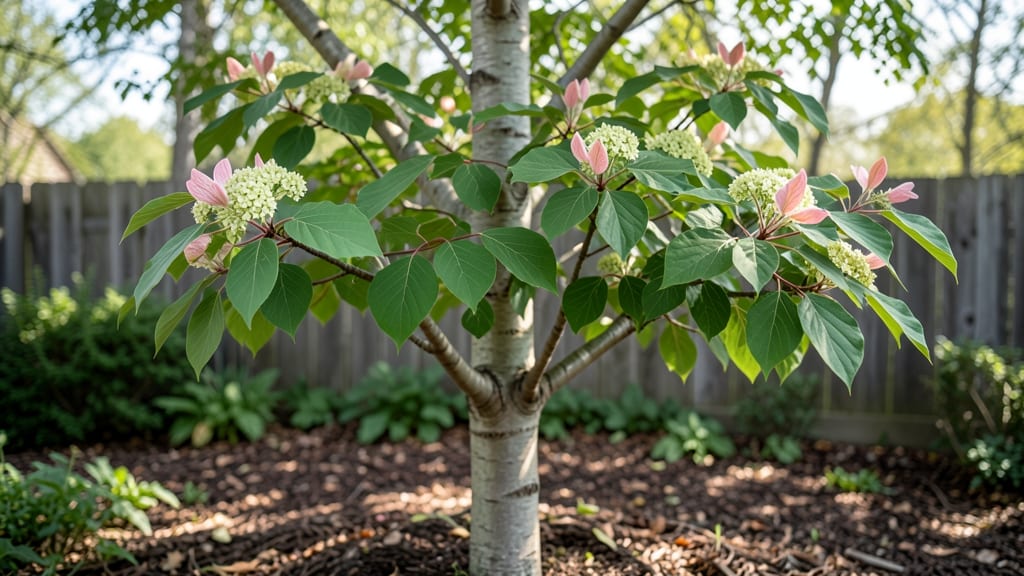
Pink flowering dogwood trees turn Pacific Northwest gardens into living art galleries—especially when you place them as year-round color anchors. 🌸 Their cloud-like blooms in spring, fiery red foliage in fall, and sculptural branches year-round create drama no other tree matches.
I’ve used them as focal points in shade gardens, mixed borders, and even as dramatic accents near patios where their branches frame seating areas.
Their 4-8 foot spread makes them perfect for medium-sized yards, while their 20-30 foot height gives them star power in any landscape. Pair them with ferns, hellebores, or hydrangeas for a lush understory, or let their branches stand alone against a dark evergreen backdrop.
The key? Plant them where their horizontal branches can be admired from all angles—near walkways, patios, or even as a standalone specimen.
What you’ll love most is how they transform seasons: pale pink flowers in spring, glossy green leaves in summer, fiery red foliage in fall, and even winter interest with their exfoliating bark. Their shade-tolerant nature means they thrive where other trees struggle, making them the ultimate low-maintenance showstopper.
For best results, choose a location with morning sun and afternoon shade—this protects their delicate blooms while keeping foliage vibrant. Mulch well to retain moisture, and prune only to shape, never to remove more than 25% of the canopy at once.
With the right placement, this tree becomes the heart of your garden’s story—one that unfolds beautifully, season after season.
📚 In This Guide
- What you need
- Instructions
- Tips and common mistakes
- Wrapping up and next steps
What you need
- ● Pink flowering dogwood tree: 1-3 bare-root or container-grown saplings (3–6 feet tall, depending on desired maturity speed). Choose disease-resistant varieties like ‘Cherokee Brave’ or ‘Pink Icing’ for optimal PNW conditions.
- ● High-quality potting soil: 5–10 gallons (mix with 20% perlite or sand for drainage). Avoid heavy clay soils—amend with compost if needed.
- ● Organic mulch: 2–3 cubic feet of shredded bark or wood chips (3–4 inches deep) to retain moisture and suppress weeds.
- ● Slow-release fertilizer: 1–2 pounds of 10-10-10 or balanced organic fertilizer (e.g., fish emulsion) for initial planting.
- ● Shovel: 1 medium-sized digging spade (for planting holes 2–3 times wider than the root ball).
- ● Garden gloves: 1 pair (heavy-duty, waterproof) to protect hands from thorns and soil.
- ● Pruners: 1 pair of sharp, sterilized pruners (for trimming dead branches post-planting).
- ● Watering can or hose: With a gentle spray nozzle (dogwoods hate soggy roots!).
- ● Measuring tape: 1 (to ensure proper spacing—15–25 feet apart for mature trees).
- ○ Optional: Soil pH test kit (ideal range: 5.0–6.0 for dogwoods).
- ● Tree stake (if planting in windy areas).
- ● Drip irrigation system (for long-term watering efficiency).
- ● Sunlight: A partially shaded site (4–6 hours of dappled sun daily). Avoid full sun in hotter PNW summers.
- ● Soil: Well-draining, acidic soil (test and amend if needed). Dogwoods hate waterlogged roots!
- ● Timing: Plant in early spring (March–April) or fall (September–October) for best establishment.
- ● Space: Account for mature size (20–35 feet tall/wide). Plan for understory plants (e.g., ferns, hostas) to thrive beneath.
Step-by-step guide to planting and establishing pink flowering dogwood
This stunning Pacific Northwest native thrives with the right site prep and care.
🌱 Step 1: Select and Prepare the Perfect Planting Site
Pink flowering dogwood (Cornus florida 'Rubra') demands partial shade—think 4-6 hours of dappled sunlight daily. In the PNW's dense forests, these trees naturally grow under taller conifers, so mimic that environment. Avoid full sun spots where leaves scorch, and steer clear of deep shade where flowers won't develop.
Test your soil's moisture retention by digging a 12-inch deep hole. If water pools after 30 minutes, amend with 2-3 inches of compost to improve drainage. Dogwoods hate soggy roots but need consistent moisture—this balance is critical. The ideal soil pH is acidic (5.0-6.5), so test with a kit if unsure. If your soil runs alkaline, mix in 1-2 pounds of peat moss into the planting hole.
🪴 Step 2: Plant at the Right Time and Depth
Fall planting (October-November) gives roots time to establish before winter, but spring (March-April) works too. Dig a hole twice as wide as the root ball but no deeper—dogwoods resent being buried too deeply. Gently tease apart any circling roots with your fingers (never a knife—you'll cut them).
Place the tree so the top of the root ball sits 1-2 inches above ground level. This prevents stem rot from sitting water. Backfill with native soil mixed with 1 part compost to the original hole size, tamping lightly every 4 inches to eliminate air pockets. Water deeply until soil settles—you'll see the hole shrink slightly. Mulch with 3 inches of wood chips in a 3-foot diameter ring, keeping mulch 6 inches away from the trunk to prevent rot.
☀️ Step 3: Water Deeply and Monitor Early Growth
Newly planted dogwoods need 1-2 gallons of water per week during their first growing season. Water deeply twice weekly (or daily in summer heat) until the top 6 inches of soil feel moist. Use a soaker hose to deliver water slowly at the base—avoid overhead sprinklers that promote fungal diseases like powdery mildew.
Watch for new leaf growth in spring as your signal everything's working. If leaves appear yellow between veins, your soil is too alkaline—add 1 pound of sulfur to the root zone and water thoroughly. Dogwoods are slow to establish, so don't expect dramatic growth the first year. Instead, focus on keeping soil consistently moist and protecting young stems from deer with tree guards if needed.
✂️ Step 4: Prune Strategically for Health and Bloom
Dogwoods flower on old wood, so prune immediately after blooming (June-July) to avoid cutting off next year's flowers. Remove only dead, diseased, or crossing branches—never more than 25% of the canopy at once. Use clean, sharp pruners to make cuts at a 45-degree angle just outside the branch collar.
Here's the thing—dogwoods develop lenticels (those tiny raised dots on branches) that signal healthy wood. Prune back to a lenticel when removing branches to encourage proper healing. Thin out crowded branches from the center to improve airflow, which prevents powdery mildew. Never "top" the tree—this weakens the structure and reduces flowering.
Tips & tricks for perfect pink flowering dogwood establishment
Transforming your yard into a Pacific Northwest paradise with vibrant dogwoods starts with these game-changing insights.
Site Selection Secret: That 4-6 hours of dappled sunlight is non-negotiable—think of it as the dogwood's golden rule. I've seen too many beautiful trees struggle in full sun where leaves crisp like autumn leaves. For true PNW forest mimicry, plant near evergreens where sunlight filters through branches naturally. If your yard lacks natural shade, consider installing a partial shade cloth during peak afternoon sun hours.
Root Zone Mastery: The 12-inch deep hole test reveals everything about your soil's moisture balance. I learned this the hard way after losing two dogwoods to root rot from poorly draining soil. If water pools after 30 minutes, you're dealing with clay-heavy soil—amend with that 2-3 inches of compost to create perfect drainage. For alkaline soil, I've had great success with 1-2 pounds of peat moss mixed directly into the planting hole, but always test your pH first.
Planting Precision: Those 1-2 inches above ground level are crucial for preventing stem rot. I've seen many gardeners bury the root ball too deeply, thinking it would help stabilize the tree—wrong! The root flare (where roots meet trunk) should be visible above soil level. When backfilling, tamp every 4 inches to eliminate air pockets, but don't compact the soil too firmly. Think "gentle pressure" like settling a cake batter, not packing a snowball.
Watering Wisdom: The 1-2 gallons per week during the first year is your dogwood's lifeline. I use a simple rain gauge buried near the tree to track moisture—when it reads 1 inch, that's my cue to water. For summer heatwaves, switch to daily watering but always deliver it at the base with a soaker hose. Overhead watering invites fungal diseases like powdery mildew, which can devastate your young tree's foliage.
Pro Tips for Pink Flowering Dogwood Flowering Tree
- Transforming your yard into a Pacific Northwest paradise with vibrant dogwoods starts with these game-changing insights.
- Site Selection Secret: That 4-6 hours of dappled sunlight is non-negotiable—think of it as the dogwood's golden rule.
- Root Zone Mastery: The 12-inch deep hole test reveals everything about your soil's moisture balance.
Frequently asked questions
Got questions about the stunning pink flowering dogwood? You’re not alone! Here are answers to the most common queries from gardeners and landscapers alike—whether you're planning a new tree or troubleshooting an existing one.
When is the best time to plant a pink flowering dogwood?
The ideal window is early spring or fall when soil temperatures are mild (50–70°F). Planting in late winter or early spring ensures roots establish before summer heat, while fall planting lets the tree settle in before winter dormancy. Avoid planting in extreme heat or freezing conditions.
How fast does a dogwood tree grow, and how big will it get?
Pink flowering dogwoods are moderate growers, adding about 12–24 inches per year. At maturity, they typically reach 20–35 feet tall with a 25–40 feet spread. Dwarf varieties, like ‘Pocahontas’, stay compact (10–15 feet), making them perfect for smaller yards.
Why aren’t my dogwood flowers pink this year?
Missing pink blooms often stem from stress or poor conditions. Check for:
- Insufficient sunlight: Dogwoods thrive in partial shade but need at least 4–6 hours of sun for vibrant flowers.
- Over-pruning: Cutting back too aggressively (especially in late winter) can reduce flowering.
- Nutrient deficiencies: Apply a balanced fertilizer in early spring if leaves look yellow or sparse.
- Pests/disease: Look for signs of powdery mildew or dogwood borers.
If the issue persists, consult a local arborist!
What are some great alternatives to pink flowering dogwoods?
If you love the look but need a low-maintenance or disease-resistant option, consider:
- Kousa dogwood (Cornus kousa): More resistant to pests/disease, with longer-lasting flowers and edible fruit.
- Serviceberry (Amelanchier): Offers white spring blooms and edible berries, plus stunning fall color.
- Oakleaf hydrangea (Hydrangea quercifolia): Features pinkish-white flowers and vibrant fall foliage.
- Fothergilla (Fothergilla gardenii): A fragrant spring bloomer with fiery fall leaves.
Each brings unique charm to your landscape!
How do I care for dogwood trees in winter?
Dogwoods are hardy to USDA Zones 5–9, but a little winter prep helps:
- Mulch 3–4 inches deep around the base (keep mulch away from the trunk to prevent rot).
- Water deeply before the ground freezes to hydrate roots.
- Avoid heavy pruning in late winter—wait until late spring to promote new growth.
- Protect young trees with burlap wraps if your area gets extreme wind or salt spray.
With minimal effort, your dogwood will reward you with bold spring color year after year!
Wrapping up and next steps
The pink flowering dogwood isn’t just a stunning addition to your Pacific Northwest landscape—it’s a year-round star that brings beauty, shade, and wildlife support with minimal fuss.
Whether you’re drawn to its vibrant blooms, striking fall foliage, or elegant winter silhouette, this tree delivers effortless charm while thriving in the region’s climate. 🌸
Ready to transform your outdoor space? Start by assessing your yard’s sunlight and soil, then choose your favorite variety—whether it’s the classic ‘Cherokee Brave’ or a compact cultivar. With the right care (and a little patience!), you’ll soon have a showstopping centerpiece that keeps giving for decades.
- 📌 Next step: Sketch a planting plan or consult a local nursery for expert advice!
- 🌱 Pro tip: Mulch well to protect those delicate roots—your future tree will thank you!