
Pruning
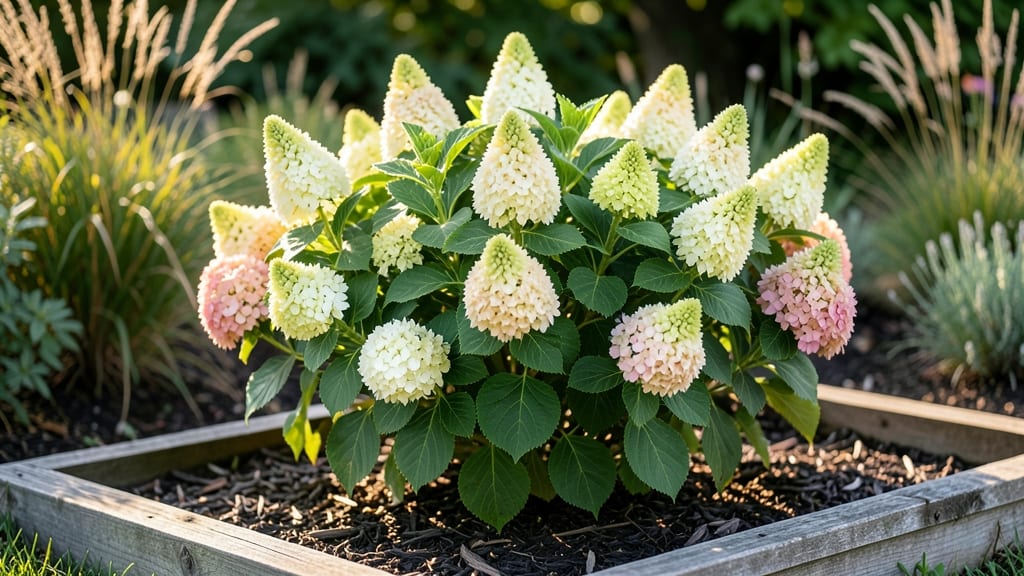
The Quick Fire hydrangea tree grows faster than most shrubs—12-24 inches per year—while delivering those signature big-leaf blooms we all love. 🌿 I planted mine last spring in my damp Pacific Northwest corner, and by summer, it was already throwing out stems taller than me.
The secret? This variety thrives on our cool, moist climate while still handling frost like a champ.
Here's the thing—this hydrangea isn't just fast, it's foolproof for our region. It handles our wet winters without rot, blooms on old wood (so late pruning won't ruin your flowers), and even tolerates partial shade if your yard's shadier than a Seattle afternoon.
The blooms? Those classic pink-to-purple pom-poms that last from midsummer through fall, even after frost hits.
By late winter, you'll prune back the previous year's growth to encourage fresh, vigorous stems—30 minutes max—and watch it explode with new blooms by June.
The foliage stays lush all season, and the tree shape is naturally tidy without needing constant shaping. Even my neighbor's black thumb could handle this one.
Works equally well as a standalone specimen or mixed into shrub borders. The only real rule? Don't plant it where kids can climb it—the branches get sturdy fast. Let's get yours growing!
📚 In This Guide
- What you need
- Instructions
- Tips and common mistakes
- Wrapping up and next steps
What you need
- ● Healthy hydrangea plant: Choose a mophead (Hydrangea macrophylla) or oakleaf (Hydrangea quercifolia) variety, 3–5 years old, with multiple stems (3–5 inches in diameter).
- ● Pruning shears: Bypass pruners (sharp, 6–8 inch blades) for clean cuts. Disinfect with rubbing alcohol between cuts to prevent disease.
- ● Loppers: For thicker stems (up to 2 inches), opt for bypass loppers with a ratcheting mechanism for leverage.
- ○ Hand pruners (falcon-type): For precision trimming of smaller branches (optional but handy).
- ● Pruning saw: Bow saw or pruning saw for stubborn, woody stems (if needed).
- ● Gloves: Heavy-duty gardening gloves (nitrile-coated for grip and protection).
- ● Rubbing alcohol (70% isopropyl): 8 oz bottle for sterilizing tools.
- ○ Pruning sealant (optional but recommended): Tree wound dressing (e.g., Tanglefoot Tree Wound Pruning Seal) for cuts larger than ½ inch.
- ● Stake and ties: 3–4 bamboo stakes (1/2 inch diameter, 3 feet tall) + soft garden twine to support the tree shape.
- ● Mulch: 3–4 inches of wood chips or shredded bark (avoid fresh mulch near the base).
- ● Watering can or hose: With a gentle spray nozzle for post-pruning hydration.
- ● Ladder: If your hydrangea is taller than 6 feet, a lightweight step ladder ensures safe reach.
- ● Plant food: Balanced fertilizer (10-10-10 or 20-20-20) to boost growth after pruning (apply in early spring).
- ● Frost cloth: Lightweight row cover for young trees in late fall (if PNW winters are extra harsh).
- ● Camera or sketchbook: To document your design before and after pruning!
Step-by-step pruning for a quick Fire hydrangea tree
Here's how to shape your hydrangea for bold, frost-resistant blooms—fast and without stress.
✂️ Step 1: Time It Right for Pacific Northwest Growing
Prune your Quick Fire hydrangea in late winter or early spring, right after your last frost date but before new growth starts. In the PNW, this usually means February through March. You'll know it's time when the plant looks dormant but buds are swelling slightly—this ensures you don't cut off next year's blooms.
If you missed the window, wait until mid-spring but avoid pruning after June. Late pruning encourages tender growth that won't survive PNW frosts. I always check the forecast for a 3-day warm stretch before pruning—this prevents shock if a cold snap hits right after.
✂️ Step 2: Cut Back Old Wood for Stronger New Growth
Use clean, sharp bypass pruners to remove 1/3 of the oldest stems at ground level. Quick Fire hydrangeas bloom on both old and new wood, so never cut back more than this—you'll sacrifice next year's flowers. Look for stems that are thin, woody, and gray—these are last year's growth.
Make cuts at a 45-degree angle, about 1/4 inch above an outward-facing bud. This angle helps water run off the cut and prevents rot. If a stem is dead (brown inside when cut), remove it entirely. You'll notice the plant's center opens up immediately—this improves airflow and reduces fungal diseases common in PNW's damp climate.
☀️ Step 3: Shape for Sun Exposure and Frost Hardiness
Thin out crowded branches to allow sunlight to reach the center—this prevents the classic hydrangea problem of leggy growth and weak blooms. Aim for an open vase shape with branches spaced 6-8 inches apart. In the PNW, where winters can be wet, this shape also helps snow slide off without breaking branches.
Step back and visualize the plant's natural form. Remove any branches growing inward or crossing others—these compete for nutrients and create weak points. You'll see the plant's structure more clearly from a few feet away. For larger branches over 1/2 inch thick, use loppers to avoid tearing the bark.
💧 Step 4: Water and Fertilize for Quick Recovery
After pruning, water deeply at the base to help the plant recover. Quick Fire hydrangeas need 1-2 inches of water weekly during growing season, but avoid overhead watering—it spreads fungal spores. I like to use a soaker hose for 20 minutes to deliver water directly to the roots without wetting the foliage.
Apply a balanced fertilizer (10-10-10) in early spring and again after pruning. In the PNW's acidic soils, I add 1 pound of sulfur per 100 square feet annually to maintain the 5.2-5.5 pH these hydrangeas prefer. You'll notice new growth emerging within 2-3 weeks—this is your signal the plant is thriving.
⏰ Step 5: Monitor for Frost Resistance
Watch for new growth in late spring—this is when Quick Fire hydrangeas develop their frost-resistant buds. In the PNW, late frosts can still hit in May, so protect tender new shoots with frost cloth if temperatures dip below 28°F. The plant's dark green leaves will harden as summer progresses, indicating it's building resilience.
By mid-summer, your hydrangea should show bold, compact blooms with fewer gaps than before. If you see weak stems or sparse flowers, it's a sign you pruned too aggressively last time—next year, cut back just 10% less. The goal is controlled renewal, not drastic reshaping.
Tips & tricks for perfect quick Fire hydrangea pruning
Here's what nobody tells you about getting those perfect, frost-hardy blooms without the guesswork.
Timing is Everything: The February-through-March window is non-negotiable for PNW growers. I've learned this the hard way—pruning too early risks cutting off next year's buds, while waiting too long means tender new growth won't survive winter. Check for those tiny swollen buds on dormant stems; that's your cue. If you missed the window, mid-spring is better than nothing, but don't go past June—those late pruned plants will struggle with our cold winters.
The 1/3 Rule for Old Wood: Never cut back more than one-third of the oldest stems, no matter how tempting it looks. Quick Fire hydrangeas bloom on both old and new wood, so aggressive pruning means fewer flowers next year. I mark the stems I'm removing with a ribbon first—it helps visualize that 1/3 ratio before making any cuts. And always make those 45-degree cuts above outward-facing buds; I've seen too many pruning jobs go wrong from people cutting at random angles.
Shape Matters More Than You Think: That open vase shape isn't just for looks—it's about survival. Branches spaced 6-8 inches apart let sunlight penetrate to the center, preventing those leggy, weak stems. I step back every few cuts to check the overall shape. In our damp PNW climate, proper spacing also helps prevent fungal diseases that thrive in crowded, shaded conditions. And for branches thicker than 1/2 inch, loppers are your friend—they prevent that ugly tearing you get with regular pruners.
Post-Pruning Care Makes All the Difference: That 20-minute soaker hose session after pruning is crucial for recovery. I've seen plants wilt dramatically after heavy pruning, but proper watering gets them back on track. And don't forget the fertilizer—Quick Fires need that 10-10-10 boost to bounce back quickly. The 2-3 weeks until new growth appears might feel like forever, but it's worth the wait for those bold, compact blooms you'll get in mid-summer.
Pro Tips for Quick Fire Hydrangea Tree
- Here's what nobody tells you about getting those perfect, frost-hardy blooms without the guesswork.
- Timing is Everything: The February-through-March window is non-negotiable for PNW growers.
- The 1/3 Rule for Old Wood: Never cut back more than one-third of the oldest stems, no matter how tempting it looks.
Frequently asked questions
When is the best time to prune my hydrangea tree in the Pacific Northwest?
For quick fire hydrangea trees (like Hydrangea paniculata), late winter or early spring—before new growth starts—is ideal. Aim for February to March in the PNW. This timing ensures you remove dead wood while preserving next year’s blooms. Avoid pruning in fall, as late-season cuts can leave tender growth vulnerable to frost. Pro tip: If you missed the window, wait until after flowering to trim spent blooms.
How do I protect my hydrangea tree from frost in the PNW?
PNW winters can be harsh, but quick fire hydrangeas are resilient! Start by pruning before the first hard frost to reduce stress. Wrap young trees in burlap or use tree blankets for extra protection. Mulch the base with 3–4 inches of wood chips to insulate roots. Water deeply before winter to help cells withstand cold. Pro tip: Avoid heavy pruning in fall—it stimulates new growth that’s frost-sensitive!
Can I prune my hydrangea tree too much? What are the signs?
Yes! Over-pruning quick fire hydrangeas can stunt blooms or weaken the tree. Signs of over-pruning:
- No new buds forming in spring
- Leaves turning yellow or wilting
- Stunted growth or fewer flowers
Why aren’t my hydrangea blooms as vibrant as last year?
Dull or sparse blooms often stem from poor pruning, nutrient deficiencies, or environmental stress. Check these fixes:
- Pruning: Did you cut back old wood (last year’s growth) or new wood (current year’s)? Quick fire hydrangeas bloom on new wood, so avoid heavy pruning until spring.
- Sunlight: Ensure your tree gets 6+ hours of sun daily—shady spots reduce blooms.
- Soil: Test for acidic soil (pH 5.5–6.2)—hydrangeas love it! Amend with sulfur or peat moss if needed.
- Watering: Drought stress causes poor blooms. Water deeply 1–2 times per week during dry spells.
Are there frost-resistant alternatives to quick fire hydrangeas?
If you love hydrangeas but want even more frost resilience, consider these PNW-friendly alternatives:
Variety
Frost Hardiness
Bloom Time
Hydrangea arborescens (Oakleaf Hydrangea)
Zones 4–9 (survives -30°F)
Mid-to-late summer
Hydrangea macrophylla (Bigleaf Hydrangea)
Zones 5–9 (survives -15°F with protection)
Summer (varies by type)
Hydrangea quercifolia (Oakleaf Hydrangea)
Zones 5–9 (survives -20°F)
Late summer
Wrapping up and next steps
Ready to transform your quick-fire hydrangea tree into a frost-resistant, bloom-packed stunner? 🌸 The Pacific Northwest’s chilly winters don’t have to dim your garden’s magic—just prune with confidence, timing, and the right tools.
You’ve got this! Now grab those shears and start planning your next pruning session (or treat yourself to a well-earned cup of coffee while admiring your hard work!).
🌿 Next Steps:
- Mark your calendar for late winter/early spring pruning.
- Gather your supplies—sharp shears, gloves, and a ladder if needed!
- Observe and adjust—hydrangeas love feedback, so tweak your approach each year.