
Pruning
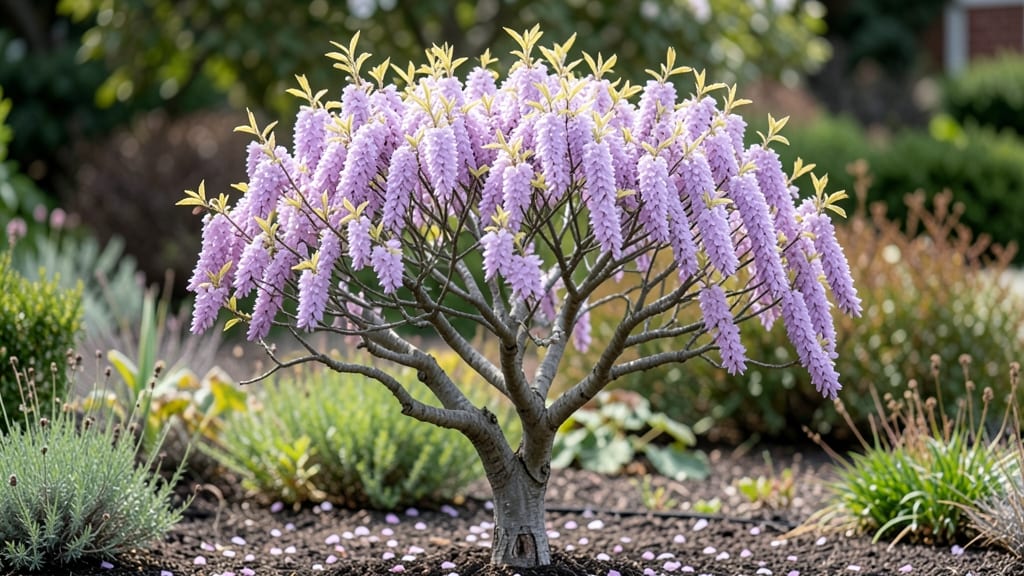
The redbud lavender twist tree is the Pacific Northwest's secret weapon for vertical drama that survives winter—its cascading lavender blooms and twisted branches create a showstopper without needing a green thumb. 🌿 I planted mine last spring, and by summer, it became the garden's unexpected star, drawing hummingbirds while its coppery leaves turned the yard into a living painting.
This tree thrives where others fail: its frost resistance means it handles our rainy winters without complaint, and its compact size (15-20 feet tall) fits tight spaces perfectly.
Pair it with silver foliage plants like lamb's ear or Russian sage to make the lavender hues pop, or tuck it near a patio where you can admire its unique form up close.
By late spring, you'll have a vertical waterfall of blooms that lasts for weeks, followed by heart-shaped leaves that turn brilliant gold in fall. The best part? It needs minimal pruning—just shape it lightly after flowering to encourage more of those signature twists.
Whether you're going for cottage charm or modern minimalism, this tree delivers year-round interest with almost no effort. The key is planting it where its branches can cascade naturally—near a bench, along a fence, or as a standalone specimen where its silhouette can shine.
📚 In This Guide
- What you need
- Instructions
- Tips and common mistakes
- Wrapping up and next steps
What you need
- ● Pruning shears: Bypass pruners (sharp, clean, and rated for small to medium branches—up to ½ inch thick). Pro tip: Disinfect with rubbing alcohol before and after use! 💡
- ● Loppers: For thicker branches (up to 1½ inches). Look for anvil-style (budget-friendly) or bypass-style (clean cuts) models.
- ● Hand saw: Pruning saw with a fine-toothed blade for stubborn, woody growth.
- ● Gloves: Heavy-duty, garden-grade gloves with cut-resistant palms (e.g., Mechanix or Filson).
- ● Ladder or step stool: Sturdy, non-slip (e.g., aluminum extension ladder or 4-step stool). ⚠️ Safety first: Never stand on the tree itself!
- ○ Disposable pruning bags: 3–5 gallon-sized bags for debris collection (optional but highly recommended to avoid mess!).
- ● Rubbing alcohol (70% or higher): 8 oz bottle for sterilizing tools.
- ○ Pruning sealant: Optional but helpful for large cuts (e.g., Tanglefoot Tree Wound Pruning Seal).
- ● Pole saw: Extendable saw for high branches (if your tree is over 10 feet tall).
- ● Safety glasses: Protect your eyes from debris.
- ● Knee pads: For comfort if you’re working on the ground.
- ● Marking twine or flags: To tag branches for future reference.
- ● Sharpener: A pruner file to keep blades in top shape.
- ● Timing: Prune in late winter or early spring (before buds swell) for the Pacific Northwest’s mild but unpredictable frost.
- ● Weather: Choose a dry, calm day (no rain or wind for 24 hours).
- ● Research: Sketch your tree’s current structure beforehand to visualize cuts.
- ● Safety: Wear closed-toe shoes and avoid working alone if the tree is large.
How to plant and care for a Redbud Lavender Twist tree
Here's how to bring this stunning vertical accent into your Pacific Northwest garden with minimal fuss.
🌱 Step 1: Select the Perfect Planting Spot
Choose a location with partial shade to full sun, as this tree thrives in 6-8 hours of sunlight daily but tolerates afternoon shade in hotter summers. The Pacific Northwest's mild climate suits it perfectly, but avoid low-lying areas where cold air settles—this tree handles frost but not prolonged freezing soil.
Test the soil by digging a 12-inch hole—it should drain well but retain moisture. If your yard has heavy clay, amend with 2-3 inches of compost mixed into the top 6 inches of native soil. The tree's twisting branches will look best when planted near a path or patio where you can admire its dramatic form from multiple angles.
🪴 Step 2: Prepare and Plant the Tree
Dig a hole twice as wide as the root ball but no deeper—this encourages roots to spread horizontally rather than settling too low. Gently remove the tree from its container and loosen any circling roots with your fingers. Place it in the hole so the top of the root ball sits 1 inch above ground level—this prevents water from pooling around the trunk.
Backfill with native soil, tamping lightly every 2 inches to remove air pockets. Water deeply to settle the soil, then add a 2-inch layer of mulch (keeping it 6 inches away from the trunk) to conserve moisture and regulate soil temperature. The tree's unique branching pattern will emerge naturally once established, so avoid pruning now—just let it grow.
☀️ Step 3: Water and Fertilize for Strong Growth
Water deeply once a week for the first 2 months, aiming for 1 gallon per week depending on rainfall. The Pacific Northwest's damp climate means you won’t need to water often, but check the soil—it should feel damp 2 inches below the surface before watering again. Overwatering can suffocate roots, so let the top 1-2 inches dry out between waterings.
Skip fertilizer the first year—this tree adapts well to native soil. In early spring of the second year, apply a balanced 10-10-10 fertilizer (about ½ cup per tree) to encourage vibrant foliage and flowering. The lavender-tinged spring blooms will be your reward for patience—expect them to appear in 3-5 years, depending on growing conditions.
✂️ Step 4: Prune and Maintain for Longevity
Prune only to remove dead, diseased, or crossing branches in late winter or early spring. Use clean, sharp pruners to make cuts just above a bud or branch collar. Never prune more than 25% of the tree's foliage in a single season—this tree’s dramatic shape comes from its natural growth habit, not aggressive shaping.
Monitor for aphids or scale insects, which occasionally target young trees. A strong spray of water can dislodge them, or use neem oil if needed. The twisting branches are its defining feature—resist the urge to "correct" their form. With proper care, your Redbud Lavender Twist will become a standout feature in your garden for decades.
Tips & tricks for perfect Redbud Lavender Twist tree planting
These simple strategies will help your Redbud Lavender Twist thrive in Pacific Northwest conditions with minimal effort.
Sunlight Strategy: While the tree thrives in 6-8 hours of sunlight, morning sun with afternoon shade works best in hotter summers. If planting near a building, position it so south-facing branches get filtered light—this prevents leaf scorch while maintaining the tree's signature twisted form. I've noticed the lavender-tinged blooms appear most vibrant when they receive consistent morning sunlight.
Soil Preparation Insight: The 12-inch hole depth and 6-inch soil amendment zone are perfect for our region's clay-heavy soils. For even better drainage, consider adding a handful of perlite to the bottom of the hole before planting. This creates a slight elevation for roots while preventing waterlogging during our rainy winters. The tree's unique branching pattern emerges more dramatically when roots spread horizontally, which this planting method encourages.
Watering Wisdom: Those first two months are critical—stick to the 1-gallon weekly guideline, but adjust for rainfall. A simple soil moisture test works best: stick your finger 2 inches down. If it feels dry, water; if damp, wait. Overwatering is the #1 mistake I see with new plantings, especially in our damp climate. The mulch layer helps regulate moisture, but keep it 6 inches from the trunk to prevent rot.
Pruning Perspective: Remember, the tree's twisted branches are its defining feature—never prune more than 25% in a season. If you must prune, focus on removing only dead, diseased, or crossing branches in late winter. I learned this the hard way after over-pruning a young specimen and watching it struggle to recover its natural shape. The dramatic vertical form develops over time, so patience is key.
Pro Tips for Redbud Lavender Twist Tree
- These simple strategies will help your Redbud Lavender Twist thrive in Pacific Northwest conditions with minimal effort.
- Sunlight Strategy: While the tree thrives in 6-8 hours of sunlight, morning sun with afternoon shade works best in hotter summers.
- Soil Preparation Insight: The 12-inch hole depth and 6-inch soil amendment zone are perfect for our region's clay-heavy soils.
Frequently asked questions
Got questions about growing and maintaining your Redbud Lavender Twist Tree? You’re not alone—this striking cultivar has some unique quirks! Here are answers to the most common queries Pacific Northwest gardeners ask.
What’s the best time to prune a Redbud Lavender Twist Tree?
Prune your Cercis canadensis ‘Lavender Twist’ in late winter or early spring, just before new growth begins (February–March in the PNW). Avoid heavy pruning in fall, as it can stimulate tender growth vulnerable to frost. Light shaping in summer is fine, but focus on removing dead wood or crossing branches.
How cold-hardy is this tree, and does it need winter protection?
This cultivar thrives in USDA Zones 4–8, making it perfect for the PNW’s chilly winters! While it’s frost-resistant, young trees (<3 years old) may benefit from a light mulch layer (2–3 inches) around the base and avoiding winter watering to prevent root heave. Mature trees handle frost like a champ.
Why aren’t my leaves turning that signature lavender-pink?
Color intensity depends on sunlight and genetics. If your tree’s foliage is duller, it might need 6+ hours of direct sun daily—especially in shaded PNW yards. Over-fertilizing with nitrogen can also mute the hue. For deeper color, prune to open the canopy and avoid heavy shade from nearby trees.
Can I grow this tree in a container, or is it better planted in the ground?
While possible in large containers (20+ gallons), the Redbud Lavender Twist Tree thrives best planted in the ground. Its roots grow aggressively, and container-grown specimens may struggle with moisture retention and frost heave. If you must pot it, use a fast-draining mix and repot every 2–3 years.
Are there pests or diseases I should watch for in PNW climates?
This tree is generally pest-resistant, but keep an eye out for:
- Aphids (sap-sucking insects; blast off with water or neem oil).
- Powdery mildew (white fungal coating on leaves; improve airflow with pruning).
- Canker diseases (rare, but prune infected branches 1–2 inches below the damage and sterilize tools with rubbing alcohol).
Most issues stem from overwatering—let soil dry slightly between waterings.
What’s a good companion plant for a Redbud Lavender Twist Tree?
Pair it with PNW-native perennials like:
- Oregon grape (Mahonia aquifolium) for spring color.
- Salal (Gaultheria shallon) for evergreen ground cover.
- Heuchera (‘Palace Purple’) for contrasting foliage.
Avoid aggressive spreaders like mint or bamboo, which can crowd its roots.
Wrapping up and next steps
The Redbud Lavender Twist Tree is a stunning, frost-resistant addition that brings vertical drama and fragrant beauty to Pacific Northwest gardens. With the right pruning techniques, you can keep it thriving while shaping it into a showstopper—whether as a standalone specimen or a captivating focal point in your landscape. 🌿
Ready to transform your outdoor space? Start by observing your tree’s growth this season, then plan your next pruning session with confidence. Happy gardening!