
Pruning
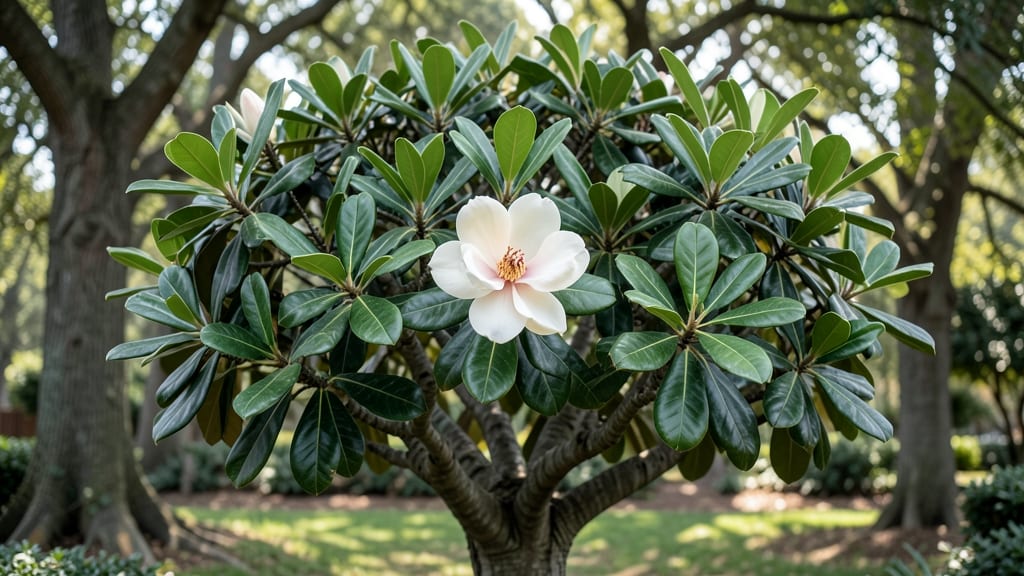
Royal magnolia trees (Magnolia grandiflora) bloom like clockwork—when you prune them right. I’ve learned the hard way that skipping this step means fewer flowers and a scraggly silhouette, but four strategic cuts at the right time can transform your tree into a lush, fragrant centerpiece.
The secret isn’t cutting wildly—it’s understanding when and where to trim for maximum bloom potential.
Most gardeners prune in late winter or early spring, but royal magnolias respond best to light shaping after blooms fade in summer. Avoid heavy pruning in fall, as new growth won’t harden off before winter.
Grab your loppers and focus on removing dead wood, crossing branches, and thinning the canopy to let sunlight reach the center—this is where the magic happens for next year’s flowers.
By the time summer rolls around, you’ll see the difference: fuller branches, fewer bare spots, and more abundant blooms the following spring. The tree’s glossy leaves will stay vibrant, and pests like scale or spider mites will have less cover to hide in.
It’s a win-win for both beauty and health.
This method works for young trees and mature giants alike—just adjust the scale. If your magnolia is still small, you can shape it more aggressively; older trees need gentler touch-ups. Either way, consistency is key. Start now, and your tree will thank you for years to come.
📚 In This Guide
- What you need
- Instructions
- Tips and common mistakes
- Wrapping up and next steps
What you need
- ● Pruning shears: Bypass shears with sharp, clean blades (for small branches, ¼"–½" thick).
- ● Loppers: Bypass or anvil type (for branches ½"–2" thick).
- ● Pruning saw: Curved-tooth for branches 2"–4" in diameter.
- ○ Extension pole saw: For hard-to-reach branches (optional but handy!).
- ● Disposable gloves: Heavy-duty to protect against thorns and sap.
- ● Rubbing alcohol (70%+) or bleach solution: 1 part bleach to 9 parts water for sterilizing tools.
- ○ Pruning sealant (optional): Tree wound paint (for cuts > ½" in diameter).
- ● Ladder or step stool: Sturdy and tall enough to reach branches safely.
- ● Trash bags: For collecting pruned branches and debris.
- ● Handheld leaf blower: For clearing debris post-prune.
- ● Safety glasses: To shield eyes from flying sap or debris.
- ● Tree pruning rope: For lowering large branches to the ground.
- ● Notebook & pen: To sketch a pruning plan before you start!
- ● Check the weather forecast—prune on a dry, overcast day (avoid extreme heat or cold).
- ● Wear long sleeves and pants to protect against thorns and sap.
- ● Have a clear workspace—remove obstacles and lay down tarps if needed.
- ● Know your tree’s growth habits—royal magnolias bloom on old wood, so avoid heavy pruning after flowering!
How to prune a royal magnolia for continuous, lush blooms
Royal magnolias reward precise pruning with breathtaking, year-round flowers. Here's my method for shaping and revitalizing yours.
✂️ Step 1: Clean Up After Last Year's Blooms
Start in late winter or early spring, just as new growth begins to appear. Remove any dead, damaged, or crossing branches first—these compete with healthy growth and block light. I always use sharp, clean pruners to make clean cuts just outside the branch collar (that swollen area where the branch meets the trunk). This prevents disease from entering the wound.
Look for branches that grew too long or sprawled awkwardly. Cut these back to a strong lateral branch or bud, never leaving a stub. You'll see the tree's natural shape emerge as you remove the worst offenders. Aim to open up the canopy so sunlight reaches the center—this is where next year's blooms form.
✂️ Step 2: Thin Out for Better Airflow and Light
Royal magnolias bloom best when they receive plenty of sunlight and air circulation. In late spring, after the first flush of flowers has faded, focus on thinning out crowded branches. Remove about one-third of the oldest, thickest branches to encourage new growth. Select branches that are growing inward or rubbing against others—these will only create weak wood.
Make your cuts at a 45-degree angle just above an outward-facing bud. This directs growth away from the center of the tree. You'll notice the interior of the tree brighten up immediately. Healthy magnolias have a balanced structure with branches evenly spaced around the trunk. If you see bare spots, this is your cue to prune more aggressively in those areas.
✂️ Step 3: Shape for Balance and Encourage New Growth
Summer is the time to refine the tree's shape. Lightly prune any branches that are growing too vigorously or out of proportion. Never remove more than 25% of the tree's foliage in one season—this can stress the magnolia and reduce flowering. Focus on maintaining a natural, open vase shape that allows sunlight to reach all parts of the tree.
Look for "water sprouts"—those fast-growing, upright shoots that appear after heavy pruning. These are energy vampires that drain nutrients from the tree. Cut them back to a lateral branch or bud as soon as you spot them. You'll see the tree's energy redirect toward stronger, more productive branches over time.
✂️ Step 4: Light Pruning to Maintain Year-Round Blooms
In early fall, give your royal magnolia a final light pruning to prepare for winter. Remove any dead or diseased branches that may have appeared during the growing season. Also, trim back any branches that grew too long or became leggy. This keeps the tree compact and encourages a fresh flush of blooms in late winter or early spring.
Pay special attention to branches that are growing too close together. These can create shaded areas where flowers won't develop. Cut back the weaker of the two branches to a strong lateral bud. You'll see the tree's structure improve with each passing season, and the blooms will become more abundant and vibrant.
Finally, clean up any fallen leaves or debris around the base of the tree. This prevents disease and pests from taking hold over winter. With these four strategic cuts, your royal magnolia will thrive and reward you with stunning, continuous blooms.
Tips & tricks for royal magnolia tree pruning
Pruning a royal magnolia might seem intimidating, but these key insights will help you transform your tree into a blooming powerhouse without stress.
Tool Selection: Always use sharp, clean pruners designed for woody plants—dull tools crush branches and create jagged wounds that invite disease. I sterilize my pruners with rubbing alcohol between cuts, especially when removing diseased branches. This simple step prevents infections from spreading throughout the tree.
Seasonal Timing: The four-step method in the instructions is your roadmap, but here's the secret: late winter/early spring is the absolute best time for Step 1 because the tree is still dormant. You can see the branch structure clearly without leaves getting in the way. For Step 2, wait until after the first flush of flowers has faded—this ensures you're not accidentally removing next year's blooms.
Cutting Technique: The 45-degree angle mentioned in Step 2 isn't just for looks—it creates a natural water runoff that prevents moisture from pooling at the cut site. When making your cuts, imagine you're shaving the bark away just above that outward-facing bud. This small detail makes all the difference in how quickly new growth appears.
Visual Cues: In Step 3, when you're looking for water sprouts, think of them as the tree's way of saying "I need help focusing my energy!" These vertical shoots grow straight up like flags, while healthy branches grow at more natural angles. Cutting them back redirects the tree's energy toward stronger, more productive branches that will produce more flowers.
Pro Tips for Royal Magnolia Tree
- Pruning a royal magnolia might seem intimidating, but these key insights will help you transform your tree into a blooming powerhouse without stress.
- Tool Selection: Always use sharp, clean pruners designed for woody plants—dull tools crush branches and create jagged wounds that invite disease.
- Seasonal Timing: The four-step method in the instructions is your roadmap, but here's the secret: late winter/early spring is the absolute best time for Step 1 because the tree is still dormant.
Frequently asked questions
Got questions about keeping your royal magnolia tree (Magnolia grandiflora) thriving with year-round blooms? Here are answers to the most common concerns—from timing to troubleshooting—so you can prune like a pro!
When is the best time to prune a royal magnolia tree?
The ideal window is late winter to early spring (February–March), just as buds swell but before new growth starts. This ensures you don’t accidentally remove next year’s flowers. Avoid pruning in fall or summer, as it can stress the tree or disrupt blooming cycles. Pro tip: If you must prune outside this window, do it after flowering (late spring) to minimize impact.
Can I prune a royal magnolia tree in summer?
While not ideal, light summer pruning (e.g., removing dead or crossing branches) is better than nothing. Heavy summer cuts can stimulate weak, leggy growth and reduce next year’s blooms. If you must prune, limit it to 10–15% of the canopy and focus on deadwood or safety hazards. Always sterilize tools to prevent disease.
Why isn’t my royal magnolia blooming after pruning?
Royal magnolias bloom on old wood, so aggressive pruning (especially in late spring/summer) can delay or reduce flowers for 1–2 years. If blooms are sparse, check for:
- Over-pruning (stick to the 4 strategic cuts method).
- Poor sunlight (they need 6+ hours of sun daily).
- Nutrient deficiencies (fertilize in early spring with acid-loving plant food).
- Age-related decline (young trees <10 years may bloom lightly).
What’s a good alternative if my royal magnolia isn’t thriving?
If your tree struggles with disease, pests, or poor growth, consider these low-maintenance magnolia alternatives with similar beauty:
- Southern magnolia (Magnolia grandiflora ‘Little Gem’) – Compact, disease-resistant, and evergreen.
- Saucer magnolia (Magnolia × soulangeana) – Stunning spring blooms, easier to prune.
- Yulan magnolia (Magnolia denudata) – Fragrant white flowers, tolerates partial shade.
- Star magnolia (Magnolia stellata) – Early bloomer, cold-hardy, and petite.
How do I fix a royal magnolia tree with dead branches?
Dead branches are a red flag but fixable! Here’s how:
- Identify the issue: Check for fungal spots (powdery mildew), cankers, or pest damage (e.g., scale insects).
- Prune aggressively: Cut dead branches back to healthy wood (use sterilized shears to prevent spread).
- Improve airflow: Thin the canopy to reduce humidity (fungi love damp foliage).
- Fertilize & water: Use a balanced fertilizer (10-10-10) and deep-water weekly during dry spells.
- Monitor: If problems persist, consult a local arborist—it may need fungicide treatment.
Wrapping up and next steps
The royal magnolia tree is a stunning addition to any garden, and with the right pruning techniques, you can ensure it thrives year-round with vibrant blooms. By focusing on four strategic cuts—early spring cleanup, post-bloom shaping, summer thinning, and winter structural adjustments—you’ll promote healthy growth and breathtaking flowers.
Remember, patience and consistency are key!
Now that you’re armed with the know-how, grab your pruners and get started! 🌿 Whether you’re a seasoned gardener or a beginner, every small effort will make a big difference. Happy pruning—and enjoy your magnolia’s majestic beauty for seasons to come!