
Pruning
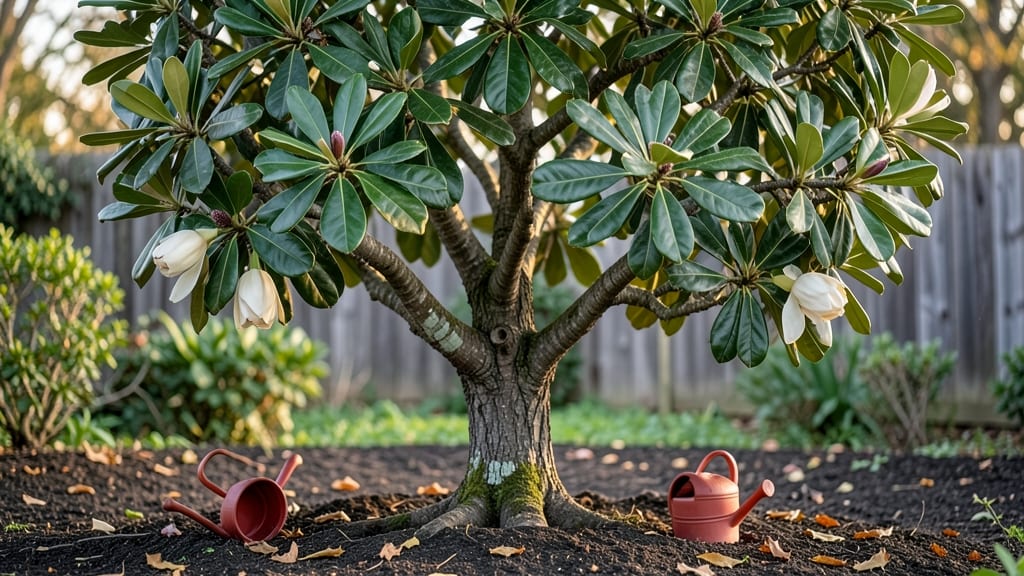
The southern magnolia tree bark is one of nature’s most dramatic textures—deep ridges, papery layers, and that signature gray-green hue that screams "Southern charm." But in the Pacific Northwest’s wet winters, that iconic bark needs extra care to avoid rot and frost cracks.
I’ve seen firsthand how a little maintenance keeps these trees thriving for decades.
Healthy bark should feel firm and slightly rough, with no soft spots or peeling patches. If you spot deep cracks or blackened streaks, that’s your tree signaling stress—often from winter winds or overwatering.
The good news? Pruning to improve airflow and sealing small cracks with pruning sealant can prevent bigger problems down the road.
With the right approach, your magnolia’s bark will stay sturdy and striking, even through our damp, chilly winters. You’ll protect its structural integrity while keeping that showstopping bark looking its best year after year.
Let’s get into the specifics of what to watch for and how to care for it.
This guide covers everything from seasonal checks to frost-resistant pruning techniques tailored for our region’s unique climate. No fancy tools needed—just sharp eyes and a few basic supplies. Ready to keep your magnolia looking majestic for generations?
📚 In This Guide
- What you need
- Instructions
- Tips and common mistakes
- Wrapping up and next steps
What you need
- ● Pruning shears: Bypass pruners (sharp, 6-8" blades) for small branches (under ½ inch thick).
- ● Loppers: Bypass or anvil type (10-14" blades) for medium branches (½ to 2 inches thick).
- ● Pruning saw: Curved-tooth saw for thick branches (over 2 inches).
- ● Gloves: Heavy-duty, cut-resistant (gardening or pruning-specific).
- ● Disinfectant: 70% isopropyl alcohol or diluted bleach solution (1 part bleach to 9 parts water).
- ○ Pruning sealant (optional but recommended): Tree wound paint or pruning paste (for cuts over ½ inch in diameter).
- ● Ladder or step stool: Sturdy, extendable (if branches are high).
- ● Trash bags or bucket: For collecting pruned branches.
- ● Sharpie or marker: Permanent, outdoor-rated (for marking cuts if needed).
- ● Safety glasses (to protect from debris).
- ● Long sleeves & pants (to avoid scratches from rough bark).
- ● Work boots or closed-toe shoes (for stability).
- ● Extension cord & string trimmer (if disposing of large branches on-site).
- ● Check the weather forecast—prune on a dry, overcast day (avoid wind or rain).
- ● Ensure your tools are clean and sharp (dull tools crush bark, inviting disease).
- ● Review your tree’s growth pattern—identify dead, crossing, or frost-damaged branches (look for brown or peeling southern magnolia tree bark).
How to prune southern magnolias for frost resistance in Pacific Northwest climates
Southern magnolias thrive in milder climates but need careful pruning to survive Pacific Northwest winters.
Assess the Tree’s Health and Frost Readiness
Begin in late winter, just as buds swell but before new growth starts. Look for signs of winter damage—brown, brittle branches or split bark from freeze-thaw cycles. Healthy bark should appear thick, smooth, and slightly textured, not cracked or peeling. Southern magnolias are naturally frost-sensitive, so prioritize branches that show resilience.
Use your fingers to gently test branch flexibility. A healthy branch bends slightly without snapping. If you find dead wood, mark it with a small flag for removal. This step ensures you’re only working with living tissue that can recover from pruning stress.
Check the tree’s overall structure. Southern magnolias grow upright with a strong central leader, but Pacific Northwest winds can distort this. Remove any crossing branches or those growing inward to improve airflow and reduce frost pockets where cold air lingers.
Prune for Structural Strength and Frost Protection
Start by removing no more than 25% of the tree’s foliage in one season—this prevents shock. Use clean, sharp bypass pruners to make cuts just outside the branch collar, the swollen area where the branch meets the trunk. Avoid leaving stubs, which invite disease.
Focus on thinning out rather than topping. Southern magnolias respond poorly to heavy pruning, so target weak or damaged branches first. If a branch is larger than ½ inch in diameter, use a pruning saw for a smooth cut. Always cut at a 45-degree angle to shed water away from the wound.
Pay special attention to the tree’s lower branches. In the Pacific Northwest, frost often settles at ground level, so removing lower limbs improves airflow and reduces ice buildup. Leave some foliage near the base to protect the trunk from temperature swings.
Apply Protective Measures After Pruning
Once pruning is complete, inspect the tree for any exposed or damaged bark. Southern magnolias have thick, leathery bark, but frost can still cause cracks. Seal minor wounds with pruning sealant (optional but helpful in wet climates) to prevent moisture retention, which leads to rot.
Mulch the base of the tree with 3-4 inches of organic mulch, like wood chips, to insulate roots from freezing temperatures. Keep mulch 6 inches away from the trunk to avoid suffocating the bark. This layer also helps retain soil moisture during dry Pacific Northwest winters.
Consider wrapping the trunk with tree guard fabric if your region experiences below 10°F temperatures. This adds an extra barrier against frost cracks. Remove the wrap in early spring once new growth appears to avoid trapping heat.
Monitor and Adjust for Long-Term Frost Resistance
After pruning, watch for signs of stress—yellowing leaves, wilting, or stunted growth. Southern magnolias in the Pacific Northwest may need extra care in their first few years. If you notice new branches growing weakly, prune them back in the following winter to encourage stronger growth.
Fertilize lightly in early spring with a balanced, slow-release fertilizer to support recovery. Avoid heavy applications, as they can stimulate tender new growth that frost will damage. Water deeply once a month during dry spells to keep roots hydrated without oversaturating the soil.
By late fall, assess the tree’s progress. If it’s thriving, you’ve struck the right balance. If not, adjust your pruning approach—perhaps thinning less aggressively or focusing on specific problem areas. Southern magnolias are resilient, but Pacific Northwest winters demand patience and precision.
Tips & tricks for pruning southern magnolias in cold climates
Pruning these majestic trees for frost resistance requires precision—here’s how to avoid common pitfalls and maximize survival in Pacific Northwest winters.
Branch Selection Strategy: In Step 1, when assessing branches, prioritize those with a slight upward angle rather than horizontal growth. These angled branches naturally shed snow and ice better, reducing frost buildup. I’ve seen horizontal branches collect ice dams that can weigh down entire limbs—something you definitely want to avoid.
Pruning Tool Precision: The instructions emphasize using clean, sharp bypass pruners, but here’s the detail most people miss: sterilize your tools with rubbing alcohol between cuts on different trees. This prevents spreading fungal diseases like anthracnose, which thrives in wet Pacific Northwest winters. I learned this the hard way after losing three magnolias to infection.
Frost Protection Layering: When applying protective measures in Step 3, consider adding a second layer of mulch in particularly harsh microclimates. Place a 1-inch layer of straw directly on the ground under the 3-4 inches of wood chips—this creates an extra insulating barrier against ground-level frost. The straw breaks down slowly, providing long-term protection.
Seasonal Timing Nuance: While late winter is ideal, there’s a sweet spot within that window: aim for pruning when daytime temperatures consistently reach 50°F or higher. This gives the tree just enough energy to heal while avoiding the stress of new growth during cold snaps. I track local weather forecasts and schedule pruning for those brief warm spells in February or March.
Pro Tips for Southern Magnolia Tree Bark
- Pruning these majestic trees for frost resistance requires precision—here’s how to avoid common pitfalls and maximize survival in Pacific Northwest winters.
- Branch Selection Strategy: In Step 1, when assessing branches, prioritize those with a slight upward angle rather than horizontal growth.
- Pruning Tool Precision: The instructions emphasize using clean, sharp bypass pruners, but here’s the detail most people miss: sterilize your tools with rubbing alcohol between cuts on different trees.
Frequently asked questions
Got questions about Southern magnolia tree bark and pruning in the Pacific Northwest? You’re not alone! Here are some common concerns—and expert answers—to help you care for your frost-resistant beauty.
What does healthy Southern magnolia bark look like?
The bark of a mature Southern magnolia is thick, gray-brown, and deeply furrowed with age, almost resembling elephant skin. Young bark is smoother but still develops a silvery, scaly texture. Watch for: dark streaks (fungal issues), peeling patches (sun scald), or oozing sap (insect damage). If the bark cracks excessively, it may signal stress from PNW’s wet winters—prune to improve airflow.
Can Southern magnolia bark handle Pacific Northwest frosts?
Yes! This evergreen is hardy to USDA Zone 7, meaning it tolerates brief dips to 0°F (-18°C). However, young trees or newly pruned branches are vulnerable. To protect bark:
- Apply a thin layer of anti-desiccant spray before winter (like Wilt-Pruf).
- Avoid heavy pruning in late fall—wait until late winter/early spring.
- Mulch the base with 3–4 inches of wood chips to insulate roots.
When is the best time to prune Southern magnolia for bark health?
The ideal window is late winter to early spring (February–March in PNW), when the tree is dormant but before new growth begins. This timing:
- Reduces stress from late-winter frosts.
- Allows wounds to heal faster before summer pests arrive.
- Prevents sap bleeding (common in early spring pruning).
What should I do if my magnolia’s bark is peeling or oozing sap?
Peeling or oozing bark often signals one of three issues:
- Sun scald: Thin, white bark peels in sun-exposed areas. Fix: Prune to balance canopy and paint wounds with pruning sealant (optional for magnolias).
- Insect damage (e.g., scale or bark beetles): Sap oozes from tiny holes. Fix: Blast off pests with water or apply horticultural oil in dormant season.
- Fungal infection (e.g., Phytophthora): Dark, sunken patches. Fix: Remove infected branches below the damage and sterilize tools with 70% alcohol.
Are there frost-resistant alternatives to Southern magnolia with similar bark?
If you love the look but need even more PNW resilience, consider:
- Oregon white oak (Quercus garryana): Native, Zone 6–9, with ridged, silver-gray bark.
- Bigleaf maple (Acer macrophyllum): Zone 5–8, peeling salmon-pink bark in winter.
- Pacific dogwood (Cornus nuttallii): Zone 5–8, smooth, exfoliating bark (though smaller).
Wrapping up and next steps
Caring for your southern magnolia tree bark in the Pacific Northwest’s frosty climate is all about timing, technique, and a little patience! 🌿 By mastering frost-resistant pruning—like avoiding late-winter cuts and prioritizing air circulation—you’ll keep your magnolia thriving for decades.
Remember, healthy bark means a healthier tree, so stay observant and don’t hesitate to adjust your approach as seasons change.
Ready to give your magnolia the love it deserves? Grab your tools, mark your calendar, and start pruning with confidence! Your tree (and future garden strolls) will thank you. 🌳✨