
Pruning
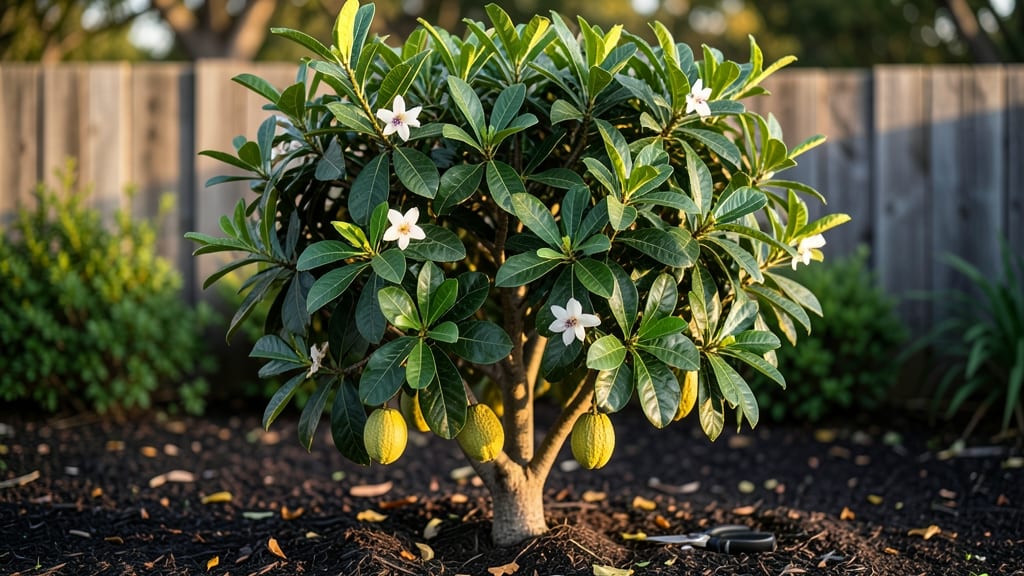
Growing a sugar apple fruit tree in the Pacific Northwest is like taming a tropical wildcard—it rewards patience with creamy, custard-like fruit that tastes like vanilla and pineapple rolled into one. 🌿 I’ve wrestled with these finicky trees through three winters, and here’s how to coax them into thriving despite our chilly summers and damp springs.
The secret lies in microclimates and shelter. Sugar apples need warmth, so plant them near south-facing walls or in containers you can move indoors during cold snaps. They’ll tolerate our zone 7-8 winters if given extra protection, but expect slower growth until they mature.
Start with a well-draining mix of compost and sand—they hate soggy roots—and keep soil slightly acidic (6.0-6.5 pH).
By summer, you’ll see glossy, deep-green leaves and—with luck—tiny green fruits forming. Pruning in late winter removes dead wood and opens the canopy for airflow, while summer trims encourage bushier growth.
The first harvest might take 3-5 years, but once established, these trees produce 50+ fruits per season if you keep them happy.
For PNW gardeners, the key is pushing boundaries. Container growing extends their range, and dwarf varieties like ‘Dwarf Sugar Apple’ make them manageable. Just be ready to baby them through their first few winters—it’s worth the effort when you bite into that first sweet, fragrant fruit.
📚 In This Guide
- What you need
- Instructions
- Tips and common mistakes
- Wrapping up and next steps
What you need
- ● Pruning shears: Bypass pruners (sharp, 6–8" blades) for clean cuts on small branches.
- ● Loppers: 10–14" bypass loppers for thicker branches (up to 2" diameter).
- ○ Pruning saw: Curved-tooth saw for branches over 2" thick (optional but handy for stubborn cuts).
- ● Gloves: Heavy-duty gardening gloves (cut-resistant for safety).
- ● Disinfectant: 70% isopropyl alcohol or 10% bleach solution (1 part bleach to 9 parts water) to sterilize tools between cuts.
- ● Rubbing alcohol or hydrogen peroxide: For cleaning tools post-pruning (3% solution).
- ○ Pruning sealant: Tree wound sealant (optional, for cuts larger than ½").
- ● Buckets or bags: For collecting pruned branches (1–2 gallon-sized containers).
- ○ Tarp or drop cloth: To protect your workspace (optional but tidy!).
- ● Timing: Prune in late winter or early spring (before new growth starts) for PNW’s cold-hardy varieties.
- ● Weather: Choose a dry, calm day (avoid pruning if rain is forecasted within 24 hours).
- ○ Safety gear: Safety glasses (optional but recommended for debris-prone areas).
- ● Tree health check: Inspect for pests/diseases (e.g., fungal spots, borers) before pruning.
- ● Local regulations: Check if your area requires permits for large-scale pruning (rare but good to know!).
How to prune your sugar apple tree for cold-hardy growth in the Pacific Northwest
Pruning this tropical fruit tree for our chilly climate takes patience—here's how to keep it thriving year after year.
✂️ Step 1: Time Your First Cut for Late Winter Dormancy
Wait until late February or early March when the tree is fully dormant but before buds swell. This timing prevents frost damage to fresh cuts and avoids encouraging early growth that cold snaps could harm. I always check the forecast for a stretch of dry, above-32°F weather before grabbing my pruners.
Start by removing any dead, diseased, or crossing branches first. These are easy to spot—they'll be brown, brittle, or rubbing against other limbs. Cut back to the branch collar (that swollen area where the branch meets the trunk) to prevent future rot. For thick branches, make your cut just outside the branch collar at a 45-degree angle to keep water from pooling.
🌿 Step 2: Open the Canopy for Airflow and Sunlight
Sugar apple trees need good air circulation to prevent fungal diseases common in our damp climate. Focus on thinning out the center of the tree first—remove branches that grow inward or upward. You're aiming for an open vase shape that lets sunlight reach all branches. I like to visualize an upside-down cone, with the widest part at the top.
Limit your cuts to no more than 25% of the tree's total foliage in any single year. Over-pruning stresses the tree and reduces fruit production. Look for branches that are one-third the diameter of the trunk or smaller—these are ideal candidates for removal. Larger branches should only be pruned if absolutely necessary, as they provide structural support.
☀️ Step 3: Shape for Cold Protection and Fruit Production
In our Pacific Northwest climate, we need to protect the tree's center from winter winds and frost. Select 3-5 strong, outward-growing branches to form the main scaffold. Remove competing branches that grow straight up or too close together. These vertical growers often become weak points where snow and ice can accumulate.
For fruit production, focus on keeping the tree's height manageable—12-15 feet is ideal for our climate. This makes harvesting easier and reduces winter damage from heavy snow loads. Make your cuts just above an outward-facing bud or branch. You'll see these buds as small bumps along the branch—choose the one that points in the direction you want new growth to go.
⏰ Step 4: Summer Light Pruning for Fruit Development
After the initial winter pruning, do a second, lighter round in early summer when new growth appears. This is when you'll see the tree's response to your winter cuts. Look for water sprouts—those fast-growing, vertical shoots that appear after heavy pruning. These compete with fruit production and should be removed completely at the base.
Also check for any suckers growing from the base of the tree. These energy vampires drain nutrients meant for fruit production. Cut them off at the ground level. During this summer session, limit yourself to only removing dead or diseased wood—no major structural changes. The goal is to encourage fruit development rather than new growth.
✂️ Step 5: Clean Up and Prepare for Winter
After your final pruning session in late summer, collect all your clippings and dispose of them properly. Don't compost pruned branches—they can harbor diseases that might infect your tree next season. I always burn or trash them immediately after pruning. This is also the perfect time to sterilize your pruning tools with rubbing alcohol to prevent spreading any potential pathogens.
Apply a 2-inch layer of mulch around the base (but keep it away from the trunk) to protect roots from freezing temperatures. This helps the tree establish a strong root system that can handle our cold winters. Water deeply before the first hard frost to help the tree store moisture for winter dormancy. Your sugar apple tree will thank you with abundant fruit next season!
Tips & tricks for perfect sugar apple tree pruning
Here's what nobody tells you about pruning sugar apple trees in our damp Pacific Northwest climate.
Timing is Everything: The late February to early March window is non-negotiable for our climate. I learned this the hard way after seeing new growth get nipped by late spring frosts. Check for those telltale swollen buds—if they're starting to plump up, it's time to prune. The 32°F minimum temperature rule is critical too; any colder and your cuts won't heal properly before winter's return.
The 25% Rule: This isn't arbitrary—it's based on how much foliage your tree can support without stress. I've seen gardeners over-prune in one session, thinking they're helping, only to watch their tree struggle to recover. For a mature tree, that means removing entire branches rather than making multiple small cuts. Think of it like giving your tree a haircut—you wouldn't shave someone's head bald in one go!
Branch Angle Matters: That 45-degree angle for thick branches isn't just for looks—it prevents water from pooling at the cut site, which can lead to rot. I always visualize slicing just outside the branch collar like I'm making a clean slice of pizza. For thinner branches, a straight cut is fine, but maintain that angle for anything thicker than your thumb. This small detail makes all the difference in wound healing.
Tool Care Prevents Disease: Sterilizing your pruners with rubbing alcohol after each cut might seem like overkill, but it's the best insurance against spreading fungal diseases. I keep a small bottle of 70% isopropyl alcohol in my tool bag and wipe blades between every 3-4 cuts. This simple habit has saved my trees from multiple outbreaks of anthracnose, a common fungal disease in our region.
Pro Tips for Sugar Apple Fruit Tree
- Here's what nobody tells you about pruning sugar apple trees in our damp Pacific Northwest climate.
- Timing is Everything: The late February to early March window is non-negotiable for our climate.
- The 25% Rule: This isn't arbitrary—it's based on how much foliage your tree can support without stress.
Frequently asked questions
Got questions about growing, pruning, or caring for your sugar apple fruit tree in the Pacific Northwest? You’re not alone! Here are answers to the most common queries to help you cultivate a thriving, cold-hardy tree.
How cold-hardy is a sugar apple tree, and can it survive PNW winters?
A sugar apple tree (Annona squamosa) is typically tropical and struggles in USDA Zones below 10-11. However, with container growing or overwintering indoors, you can protect it in colder PNW zones (like 8-9). Use insulated pots and move it to a garage or bright basement when temps drop below 40°F (4°C). Mulch heavily outdoors if attempting to overwinter in the ground—but expect limited success without extra care!
When is the best time to prune my sugar apple tree for fruit production?
Prune your sugar apple tree late winter or early spring (before new growth starts) to shape the tree and remove dead/diseased wood. Avoid heavy pruning—these trees produce fruit on new wood, so focus on light shaping and airflow improvement. If you’re growing in containers, prune after fruiting (fall) to control size and encourage bushier growth for next year’s harvest.
Why isn’t my sugar apple tree producing fruit, even though it’s healthy?
Sugar apple trees need three key things to fruit: pollination, warmth, and maturity. If yours isn’t fruiting, check for:
- Hand-pollinate with a soft brush if bees are scarce (sugar apples are self-pollinating but benefit from cross-pollination).
- Ensure it gets full sun (6+ hours/day)—partial shade can reduce flowering.
- Wait 3-5 years for maturity; young trees focus on foliage first.
- Verify it’s not over-fertilized with nitrogen (too much = leaves, not fruit!).
If the issue persists, your tree may need more warmth—consider a greenhouse or microclimate in colder PNW zones.
Can I grow a sugar apple tree from seed, or should I buy a grafted plant?
While you can grow sugar apples from seed, grafted trees are far superior for fruit production. Seed-grown trees:
- Take years longer to bear fruit (5+ years vs. 2-3 for grafted).
- May produce smaller, less flavorful fruit due to genetic variability.
- Are more susceptible to disease and pests.
For the PNW, buy a grafted, dwarf variety (like ‘Sugar Apple Improved’) from a reputable nursery to maximize success. If starting from seed, save seeds from store-bought fruit and germinate in a warm, humid environment.
What pests or diseases should I watch for on my sugar apple tree?
Sugar apple trees are susceptible to:
- Scale insects (sticky residue on leaves) – Treat with neem oil or insecticidal soap.
- Anthracnose fungus (brown spots on fruit/leaves) – Prune infected areas and space plants for airflow.
- Root rot (common in overwatered containers) – Use well-draining soil and pots with drainage holes.
- Mealybugs (white cottony clusters) – Wipe off with rubbing alcohol or use horticultural oil.
Prevention tip: Inspect leaves weekly and quarantine new plants for 2 weeks before introducing them to your tree.
Wrapping up and next steps
Growing a sugar apple fruit tree in the Pacific Northwest is a rewarding journey—one that combines patience, care, and a little pruning magic! 🌱 With the right techniques, you’ll unlock abundant harvests even in cooler climates, turning your backyard into a tropical oasis.
Now that you’re armed with pruning know-how and answers to common questions, it’s time to roll up your sleeves and make it happen.
Start small: prune with confidence this season, and soon, you’ll be savoring sweet, fragrant fruit straight from your tree. Happy growing! 🌟