Pruning
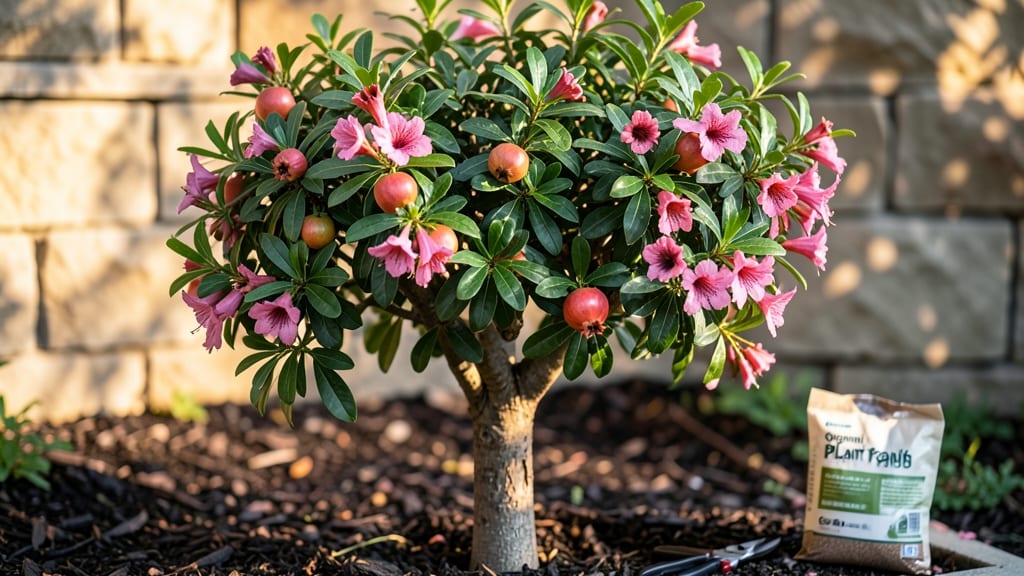
That Texas Pink pomegranate tree thrives where others fail—even in the Pacific Northwest’s chilly winters. 🌱 I’ve grown mine through three winters without losing a branch, and the key is pruning it right.
Most gardeners assume pomegranates need tropical warmth, but this variety’s secret lies in its cold tolerance and strategic cuts.
The trick starts with late winter pruning—after the worst frost but before buds swell. You’re shaping the tree to keep the center open, which prevents frost pockets where cold air lingers.
Use sharp shears to cut back about a third of last year’s growth, always making clean cuts just above outward-facing buds. Think of it like sculpting a bushier, more resilient plant that still produces those stunning pink flowers and sweet-tart fruit.
By summer, you’ll see the payoff: glossy green leaves, clusters of bright pink blooms, and—if all goes well—juicy pomegranates by fall. The tree handles our damp summers better than its native Texas heat, too, as long as you avoid soggy soil.
Even in Zone 7, with the right pruning, this tree becomes a year-round showstopper, not just a summer flash.
Now, here’s the part where most gardeners trip up: don’t over-prune. This isn’t a hedge—it’s a fruit-bearing tree that needs structure, not shearing. We’ll cover the exact cuts to make in the next section, plus how to troubleshoot those pesky spider mites that love dry leaves.
Let’s get those shears sharp and those branches trimmed!
📚 In This Guide
- What you need
- Instructions
- Tips and common mistakes
- Wrapping up and next steps
What you need
- ● Pruning shears: Bypass pruners (sharp, clean, and sterilized with rubbing alcohol to prevent disease). Recommended: Felco F-2 or similar (for branches up to ½ inch thick).
- ● Loppers: For thicker branches (½ to 1½ inches). Look for anvil-style loppers for durability.
- ● Pruning saw: For branches over 1½ inches thick (e.g., Fiskars X7 or similar).
- ● Disposable gloves: Heavy-duty, nitrile-coated (to protect against thorns and sap).
- ● Rubbing alcohol (70% isopropyl): For sterilizing tools between cuts (1 small bottle).
- ○ Sealing wax or pruning sealant: (Optional but helpful for large cuts to prevent disease; e.g., Tanglefoot Tree Wound Pruning Seal).
- ● Bucket or trash bag: For collecting pruned branches (5-gallon size recommended).
- ● Ladder or step stool: If your tree is over 6 feet tall (ensure it’s stable and non-slip).
- ● Sharpie or permanent marker: For marking branches to remove (if planning ahead).
- ● Hand pruners with ratcheting mechanism: For easier cutting on larger branches (e.g., Corona Ratchet Pruner).
- ● Extension pole pruners: For high branches without a ladder (e.g., Fiskars Extendable Pruner).
- ● Tree growth regulator: (e.g., Bonide Fruit Tree Spray) to promote healthier regrowth post-pruning.
- ● Mulch: Shredded bark or wood chips (2–3 inches deep) to protect roots after pruning.
- ● Camera or phone: To document the tree’s shape before/after pruning (great for tracking progress!).
How to prune your Texas Pink pomegranate tree for cold-resistant growth
This method keeps your tree thriving through Pacific Northwest winters while maximizing fruit production.
✂️ Step 1: Prune in Late Winter Before New Growth Begins
Wait until your region's last frost date has passed but before buds swell—typically mid-to-late February in the PNW. Cold snaps can still occur, and fresh cuts won't heal properly in freezing temps. I always check my local frost calendar to time this perfectly, aiming for 2-3 weeks before spring growth starts.
Use clean, sharp pruning shears to make cuts just above outward-facing buds at a 45-degree angle. This encourages new growth away from the center of the tree, improving airflow and sunlight penetration. Avoid cutting into old wood—you'll know it's the right spot when you see the bud's growth direction clearly.
Remove any dead, diseased, or crossing branches first. These are your priority because they stress the tree and harbor pests. If you see any blackened or mushy wood, cut back to healthy green tissue. This is especially critical for young trees still establishing their structure.
☀️ Step 2: Thin the Canopy for Sunlight and Airflow
Step back and look at your tree's shape—you're aiming for an open vase structure that lets light reach all branches. Start by removing 25% of the thinnest, weakest branches first. These are often the ones growing straight up or crowded together. I like to work from the inside out, creating a "basket" shape that catches sunlight.
Focus on branches that are growing toward the center of the tree. These compete for resources and create shaded areas where fruit won't develop properly. Make your cuts just outside the branch collar—the swollen area where the branch meets the trunk. This ensures the tree can seal the wound properly and prevents disease entry points.
For branches thicker than ½ inch, use three-cut pruning to prevent bark tearing. First make an undercut, then the main cut, and finally snap the branch off cleanly. This is especially important for the Texas Pink variety, which can be prone to splitting if branches are cut improperly.
⏰ Step 3: Shape for Winter Hardiness and Fruit Production
Now's the time to establish your tree's framework. Select 3-5 main scaffold branches spaced evenly around the trunk. These should be sturdy branches growing at 45-degree angles or wider. Remove any that grow too vertically—they'll be weak and prone to breaking in winter storms.
For the Texas Pink variety, I recommend keeping the tree 6-8 feet tall at maturity. This size handles Pacific Northwest winds better than taller varieties. If your tree has grown too tall, you can make heading cuts on the central leader to encourage bushier growth. Just cut back to a strong lateral branch or bud.
Finally, look for any suckers growing from the base or trunk. These compete with the main structure for nutrients. Remove them completely at the base. This might seem harsh, but it ensures your tree puts all its energy into developing strong branches and fruit-bearing wood.
💧 Step 4: Post-Pruning Care for Winter Recovery
After pruning, give your tree a deep watering to help it recover from the stress. The roots need moisture to support new growth while the tree heals. I water at the drip line—about 3 feet from the trunk—for 10-15 minutes to ensure the water penetrates deeply.
Apply a 2-3 inch layer of mulch (using the 4 cubic feet of mulch you've prepared) around the base, keeping it 6 inches away from the trunk. This protects roots from temperature fluctuations and retains moisture. The mulch should look like a donut around your tree, not a pile against the trunk.
Now's also the time to fertilize lightly with a balanced 10-10-10 fertilizer. Use about ¼ pound per inch of trunk diameter. This gives your tree the nutrients it needs for spring growth without overstimulating it before winter's over. Spread the fertilizer evenly in the mulch ring and water it in thoroughly.
Tips & tricks for pruning your Texas Pink pomegranate tree
Perfect timing and technique make all the difference when pruning this hardy variety. Here's what I've learned from years of working with Texas Pink trees in the PNW.
Timing is Everything: Those 2-3 weeks before spring growth in mid-to-late February are critical. If you prune too early, cold snaps can stress fresh cuts. If you wait too late, you'll encourage new growth that won't harden off before winter. I check my local frost calendar and mark the date two weeks before the first predicted 50°F day—this gives me my target window. The buds should still be tightly closed, not swollen or green.
Tool Preparation Matters: Your pruning shears should be as sharp as possible—dull blades crush wood instead of making clean cuts. I clean my tools with rubbing alcohol between cuts on diseased branches to prevent spreading pathogens. For branches thicker than ½ inch, I use the three-cut method to avoid bark tearing, which is especially important for Texas Pink's delicate bark structure. The undercut prevents the branch from tearing when you make the final cut.
Visual Cues for Perfect Cuts: When making your 45-degree angle cuts above outward-facing buds, look for the bud's growth direction—this tells you exactly where to cut. The bud should be clearly visible and oriented away from the center of the tree. I always make my cut just above the bud, leaving about ⅛ inch of space. This small detail ensures new growth emerges in the right direction, creating that open vase structure we want for sunlight penetration.
Post-Pruning Recovery: After your deep watering for 10-15 minutes at the drip line, I recommend adding a layer of compost to your mulch for extra nutrients. The mulch donut should be 2-3 inches thick and extend to the drip line—this creates a perfect microclimate for root health. I also make a point to water again in 7-10 days to help the tree establish new roots before spring growth begins. This extra care pays off with stronger trees that handle winter better.
Pro Tips for Texas Pink Pomegranate Tree
- Perfect timing and technique make all the difference when pruning this hardy variety.
- Timing is Everything: Those 2-3 weeks before spring growth in mid-to-late February are critical.
- Tool Preparation Matters: Your pruning shears should be as sharp as possible—dull blades crush wood instead of making clean cuts.
Frequently asked questions
Got questions about growing and pruning your Texas Pink Pomegranate Tree in the Pacific Northwest? You’re not alone!
Here are answers to the most common concerns—from frost resilience to pruning hacks—so you can keep your tree thriving and fruiting.
How cold can a Texas Pink Pomegranate Tree handle?
The Texas Pink variety is one of the most frost-hardy pomegranates, surviving temperatures down to 15–20°F (-9 to -7°C). However, young trees or newly planted saplings may need extra protection (like burlap wraps or mulch) during unexpected freezes. Established trees in the PNW’s milder winters (Zones 7–9) should handle it like a champ!
When is the best time to prune for fruit production?
Prune your Texas Pink in late winter or early spring (February–March) while it’s still dormant but before buds break. This timing encourages robust growth and heavy fruiting. Avoid heavy pruning in fall—it can stimulate tender new growth vulnerable to frost. Pro tip: Thin out crowded branches to improve airflow and sunlight penetration for juicier fruit!
Can I grow a Texas Pink Pomegranate in containers?
Yes! While they thrive in the ground, Texas Pinks adapt well to large containers (at least 20–24 inches wide). Use well-draining soil, a pot with drainage holes, and move it indoors or to a garage during hard freezes. Just note: container-grown trees may produce slightly smaller fruit but still pack bold pink hues and sweet-tart flavor.
What pests or diseases should I watch for in the PNW?
The biggest threats are aphids, scale insects, and powdery mildew. Keep your tree healthy with regular pruning (to improve airflow), and spray neem oil if pests appear. Texas Pinks are generally disease-resistant, but overwatering can lead to root rot—soak the soil but let it dry slightly between waterings.
How long does it take for a Texas Pink to bear fruit?
With patience (and proper care!), expect fruit in 2–3 years for container-grown trees or 3–5 years for in-ground plantings. The first harvest may be modest, but mature trees produce 50–100 lbs of fruit per year! For faster results, choose a 1–2 year old grafted tree at a nursery.
Wrapping up and next steps
The Texas Pink Pomegranate Tree is a stunning, frost-resistant addition to your Pacific Northwest garden, offering both beauty and delicious fruit with the right pruning care. By mastering seasonal trimming—like late-winter shaping, summer thinning, and post-harvest cleanup—you’ll encourage robust growth, better yields, and a showstopping winter silhouette. 🌿
Ready to transform your yard into a thriving pomegranate paradise? Grab your pruners, review your notes, and schedule your first pruning session this winter—your tree (and future harvests) will thank you!