
Pruning
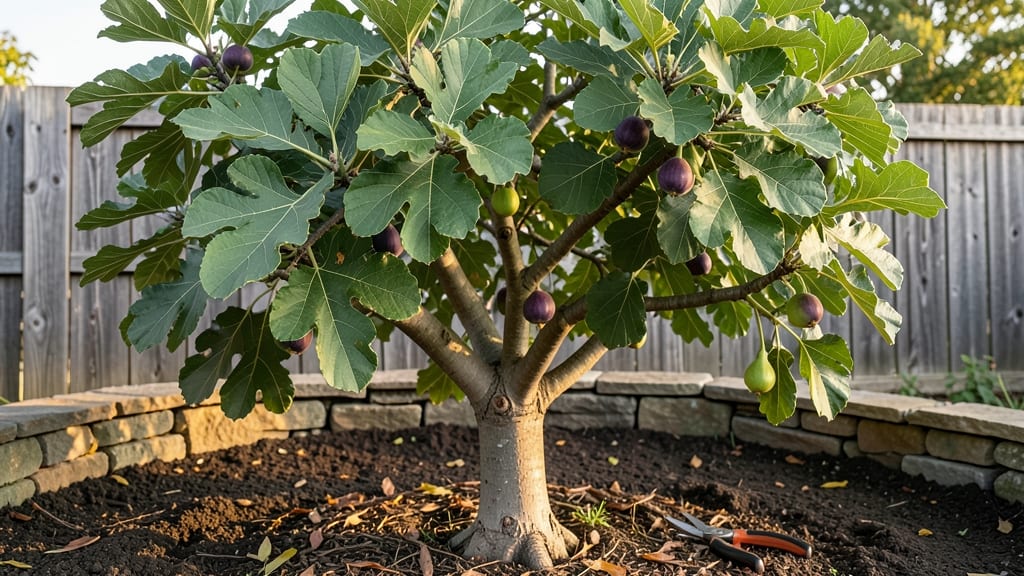
Growing a Turkish fig tree means you’ll have sweet, sun-ripened fruit even in colder climates—if you prune it right. 🌿 I learned the hard way that skipping winter cuts leads to weak growth and fewer figs, but mastering this one technique changed everything.
The secret lies in shaping the tree to survive frost while still producing fruit year after year.
These trees thrive in full sun with well-draining soil, and they’re surprisingly tough once established. You’ll need basic pruning tools—a sharp pair of shears and gloves—and about 30 minutes every late winter to shape the tree.
The first year is all about establishing strong branches, while later seasons focus on opening the center for airflow and sunlight.
By spring, you’ll see lush, glossy leaves and clusters of those familiar green figs turning sweet and ripe by late summer. The frost-resistant pruning keeps the tree compact, productive, and healthy through winter.
Plus, the ornamental value doesn’t hurt—those deep green leaves and cascading fruit make it a standout in any yard.
Works in zones 6-10, making it one of the hardiest fig varieties. Whether you’re growing for fruit, shade, or just beauty, this method ensures your tree stays strong and fruitful. Let’s get those shears ready!
📚 In This Guide
- What you need
- Instructions
- Tips and common mistakes
- Wrapping up and next steps
What you need
- ● Turkish fig tree (Ficus carica 'Turkish') – Purchase a 1-3 year old sapling from a nursery (ensure it’s labeled frost-hardy or cold-resistant).
- ● Well-draining soil mix – Combine: 60% garden soil
- ● 20% compost
- ● 10% perlite or sand
- ○ 10% aged manure (optional, for extra nutrients)
- ● Container (if growing in pots) – Minimum 15-gallon pot with drainage holes (for potted trees).
- ● Organic mulch – 2-3 inches of straw or wood chips to retain moisture and protect roots.
- ● Balanced fertilizer – 10-10-10 NPK ratio (apply sparingly, 2-3 times per year).
- ● Bypass pruners – Sharp, clean tools (sterilize with rubbing alcohol between cuts).
- ● Loppers – For thicker branches (½-inch diameter or larger).
- ● Hand saw – For large, woody stems (pruning saw with a curved blade works best).
- ● Gloves – Heavy-duty gardening gloves (fig trees have thorns!).
- ● Disinfectant spray – 70% isopropyl alcohol or bleach solution (1 part bleach to 9 parts water).
- ● Tarp or drop cloth – To collect fallen leaves/debris during pruning.
- ● Root stimulator – Mycorrhizal fungi powder to boost root growth (mix into soil at planting).
- ● Frost cloth or row covers – For young trees in cold climates (use during late fall/winter).
- ● Drip irrigation system – To automate watering and prevent over/under-watering.
- ● Tree support stakes – If planting in windy areas (use 3-4 stakes tied loosely to the trunk).
- ● Pest control spray – Neem oil or insecticidal soap (for aphids or fig beetles).
Step-by-Step guide to planting and pruning a Turkish fig tree
Here's how to establish a hardy tree that thrives through winters and bears fruit reliably.
🌱 Step 1: Plant in Well-Draining Soil with Full Sun
Choose a site with at least 6-8 hours of direct sunlight daily—Turkish figs need this for strong growth and sweet fruit. Dig a hole twice as wide as the root ball but only as deep. The top of the root ball should sit 1-2 inches above ground level to prevent water pooling around the trunk.
Amend the native soil with 3-4 inches of compost mixed into the bottom of the hole. Turkish figs tolerate poor soil but fruit best when roots can spread easily. Water the hole thoroughly 24 hours before planting to help settle the soil and prevent air pockets around roots.
Gently remove the tree from its container and loosen any circling roots with your fingers. Place it in the hole, backfilling with native soil mixed with 1 part compost to improve drainage. Water deeply after planting to eliminate air gaps and encourage root contact with the soil.
☀️ Step 2: Water Deeply During Establishment
Keep the soil consistently moist for the first 6-8 weeks—you'll know it's right when the top 2 inches feel damp but not soggy. Water at the base, avoiding the leaves to prevent fungal diseases. Turkish figs are drought-tolerant once established, but young trees need steady moisture to develop strong roots.
After the initial establishment period, reduce watering to once weekly during dry spells, increasing to 2-3 times weekly in extreme heat. Mulch around the base with 2-3 inches of organic mulch (like wood chips) to retain moisture and regulate soil temperature.
Real talk: Overwatering is the biggest mistake with figs. Yellowing leaves often signal too much moisture—let the soil dry slightly between waterings. The tree will tell you when it's thirsty: wilted leaves that perk up after watering are normal; crispy, brown edges mean it's too late.
✂️ Step 3: Prune for Frost Resistance and Fruit Production
Prune in late winter or early spring before new growth begins. Remove any dead, diseased, or crossing branches first—these compete with healthy growth. Cut back to the nearest outward-facing bud to encourage an open canopy that lets sunlight reach all fruit.
For frost resistance, focus on shaping the tree into a low, bushy form. Turkish figs handle cold better when they're compact. Thin out 20-30% of the branches, prioritizing those growing inward or upward. This improves airflow and reduces winter damage.
Here's the thing—figs fruit on new growth, so don't prune too aggressively. Leave enough branches to support 3-4 feet of canopy height at maturity. After pruning, apply a thin layer of dormant oil spray to protect any exposed cuts from pests and disease.
🪴 Step 4: Protect Young Trees from Winter Chill
While Turkish figs are more cold-hardy than other varieties, young trees need extra care in their first 2-3 winters. Wrap the trunk with burlap or tree wrap in late fall to prevent sunscald. This protects the bark from temperature swings that can crack it open.
Mound 6-12 inches of mulch around the base in late autumn, leaving a 2-inch gap around the trunk to prevent rot. This acts like a blanket, insulating roots from freezing temperatures. In areas with below 10°F winters, add a lightweight frost cloth over the canopy for extra protection.
Don't skip this (I learned the hard way): Remove winter protection in early spring when daytime temperatures consistently stay above 40°F. Leaving it on too long smothers new growth as it emerges.
Tips & tricks for frost-resistant Turkish fig trees
Between us, the difference between a tree that survives winter and one that thrives is often in the details. Here's what nobody tells you about keeping your Turkish fig productive year after year.
Soil Prep Secret: That 3-4 inches of compost in Step 1 isn't just about drainage—it's about creating the right microbial environment for roots. I always mix in a handful of mycelium-rich soil (from mushroom compost) if I can find it. This helps establish beneficial fungi that protect roots during cold snaps. The key is working that compost into the bottom of the hole first, not mixing it with the native soil—this creates a nutrient-rich zone where roots will naturally grow downward.
Pruning Precision: When you're thinning those 20-30% of branches in Step 3, focus on creating a "candelabra" shape with 3-5 main trunks. This open structure lets sunlight penetrate to the center where fruit develops. I mark my cuts with a piece of chalk before making them—this prevents over-pruning when I get carried away. And remember: you're not just shaping the tree, you're training it to handle cold by keeping its center warm.
Winter Protection Hack: For that 10°F protection in Step 4, I've found that wrapping the trunk with burlap after applying a thin layer of petroleum jelly works better than burlap alone. The jelly creates a moisture barrier that prevents sunscald cracks. When you mound mulch, make a little "well" around the trunk—this helps water drain away from the base during spring thaws. And pro tip: use straw mulch instead of wood chips in winter—it insulates better and breaks down more slowly.
Pro Tips for Turkish Fig Tree
- Between us, the difference between a tree that survives winter and one that thrives is often in the details.
- Soil Prep Secret: That 3-4 inches of compost in Step 1 isn't just about drainage—it's about creating the right microbial environment for roots.
- Pruning Precision: When you're thinning those 20-30% of branches in Step 3, focus on creating a "candelabra" shape with 3-5 main trunks.
Frequently asked questions
Got questions about growing and caring for your Turkish fig tree? You’re not alone! Here are some of the most common queries—plus quick, practical answers to keep your tree thriving and productive.
How cold can a Turkish fig tree tolerate before frost damage?
A Ficus carica variety like the Turkish fig is one of the most frost-resistant figs, surviving light freezes down to 15–20°F (-9 to -7°C). However, prolonged exposure below 25°F (-4°C) may damage leaves or fruit. Protect young trees with mulch or burlap wraps in winter for extra safety.
When is the best time to prune a Turkish fig tree for maximum fruit?
Prune your Turkish fig tree late winter or early spring (just before buds swell) to shape the tree and encourage new growth. Avoid heavy pruning in summer, as it can stress the tree. Focus on removing dead wood, crossing branches, and thinning out overcrowded areas to improve airflow and fruit access.
Why aren’t my Turkish figs ripening, even though the tree is healthy?
Unripe figs often stem from insufficient sunlight (figs need 6+ hours of direct sun daily) or overwatering. Check for drainage issues—figs hate soggy roots! Also, patience is key: Turkish figs may take 2–3 years to bear fruit after planting. Pro tip: Hand-pollinate flowers with a soft brush if bees are scarce!
Can I grow a Turkish fig tree in a container, and what’s the best soil mix?
Yes! Turkish figs thrive in containers with well-draining soil. Use a mix of 50% potting soil, 30% perlite, and 20% compost. Add a slow-release fertilizer in spring. Choose a large pot (15+ gallons) with drainage holes and move it indoors or to a sheltered spot when temps drop below 30°F (-1°C).
Do Turkish fig trees need pollinators, or can they self-pollinate?
Most Turkish fig varieties are self-pollinating, meaning they don’t require bees to produce fruit. However, cross-pollination can increase yield—so if you have multiple fig trees nearby, even better! For indoor or isolated trees, gently brush flowers with a soft paintbrush to mimic pollination.
What should I do if my Turkish fig tree’s leaves turn yellow?
Yellow leaves usually signal overwatering, nutrient deficiency, or fungal issues. First, check the soil—it should be dry 1–2 inches deep before watering. If leaves are crispy or brown, it may be underwatering or heat stress. For yellowing with spots or mold, treat with neem oil or copper fungicide. Pro tip: Test soil pH (ideal: 6.0–7.0) and amend with compost if needed.
Wrapping up and next steps
The Turkish fig tree is a resilient, rewarding addition to any garden—especially for those in cooler climates! With the right frost-resistant pruning techniques and a little patience, you’ll enjoy year-round fruit and a thriving, healthy tree.
Start small, stay consistent with your pruning schedule, and soon, you’ll be harvesting sweet, homegrown figs like a pro.
Ready to take the next step? Grab your pruners, mark your calendar for late winter/early spring, and give your Turkish fig tree the care it deserves! 🌱✨